
News of the Week

Irianto lands $2.8 million for pancreatic cancer research

By Patience Moseley, Ph.D.

FSU College of Medicine

Jerome Irianto, Ph.D., assistant professor at the FSU College of Medicine, has secured $2.8 million from the National Cancer Institute to support his lab’s efforts to understand how physical changes in cells contribute to pancreatic cancer progression. 

Pancreatic ductal adenocarcinoma, the most common type of pancreatic cancer, is the third-leading cause of cancer death in the United States. The five-year survival rate at detection is 44%, and the prognosis worsens when the cancer spreads beyond the pancreas.

Irianto is channeling his bioengineering and cell biology background to understand how the shape and organization of pancreatic cells change as cancer develops, and whether these physical changes help tumors grow and spread to other parts of the body. 

Changes in cell structure and organization are a hallmark of pancreatic cancer progression and are routinely used by pathologists to assess disease stage and progression. Using human-derived pancreatic organoids — miniature 3D models of pancreatic tissue grown in the lab — the Irianto Lab recreated key structural features seen in real patient tumors, from normal pancreatic tissue to advanced cancer.

“When we cultured organoids from normal pancreatic tissue, primary tumors, and metastatic tumors, we immediately noticed that they looked very different,” Irianto said. “Normal organoids have a central hollow space, called a lumen, surrounded by a thin layer of cells, similar to the structure of a normal pancreatic duct in the body. Primary tumor organoids still have a lumen, but the surrounding cell layer becomes much thicker. In metastatic organoids, the central lumen collapses and is replaced by multiple small lumen-like structures, resembling the disorganized architecture seen in advanced pancreatic tumors.”

“This led us to ask two important questions: What drives these structural changes, and what are the consequences for cancer progression?”

Their biggest question centers on the lumen, the fluid-filled space surrounded by pancreatic epithelial cells. Through years of experimentation, the Irianto Lab has identified ion and water channels as potential drivers of changes in lumen structure. In pancreatic tumor organoids, genes responsible for these channels are expressed at lower levels than in normal pancreatic cells. Their expression decreases even further as tumors progress and spread, suggesting a connection between these channels, changes in lumen structure, and cancer progression.

The lumen depends on the movement of ions and water to maintain its shape and fluid balance. As ions are transported into the lumen, water follows to maintain the proper concentration. The surrounding layer of epithelial cells contains this fluid, creating physical forces that help shape the organoid.

When fewer ion and water channels are present, this delicate balance is disrupted. 

“A major factor driving the collapse of the lumen is the loss of ion transport that normally helps build pressure inside it, almost like filling a balloon,” said mechanobiologist Tristan Driscoll, Ph.D., assistant professor at the FAMU-FSU College of Engineering and a co-investigator on the grant. “When that pressure changes, it also changes the mechanical forces experienced by the surrounding cells and how those cells sense and respond to those forces.

“We have tools that allow us to measure forces between neighboring epithelial cells and forces transmitted to the nuclear envelope surrounding the cell’s DNA. This helps us understand how changes in lumen pressure may ultimately affect cell behavior.”

These physical changes may have important consequences for tumor progression. As ion and water transport decreases, the pressure inside the lumen changes, altering the forces experienced by the surrounding cells. 

Under normal cellular conditions, YAP remains outside of the nucleus in an inactive state. When physical forces change or the cell is compressed, YAP is triggered to move into the nucleus in its active state to turn on genes that control cell growth, survival and other behaviors important in cancer. As tumors grow, the tissue around the cells becomes more rigid, perpetuating the influx of YAP into the nucleus and contributing to cancer progression.

The Irianto Lab will investigate whether these changes affect a force-sensitive protein called Yes-associated protein (YAP).

Using gene-editing techniques, Irianto and his team will test how changes in ion and water transport, lumen structure and YAP activity work together to influence pancreatic cancer progression.

Irianto has assembled a multidisciplinary team that includes Driscoll; mathematical modeler Katarzyna Rejniak, Ph.D., of Moffitt Cancer Center; pancreatic cancer biologist Chang-il Hwang, Ph.D., of UC Davis; and pathologist Jose I. Diaz, M.D., of the FSU College of Medicine.

For Irianto, bringing together these different areas of expertise is essential. By combining engineering, cell biology, cancer biology, mathematical modeling, and pathology, the team hopes to uncover aspects of pancreatic cancer that cannot be fully understood by studying genes or biochemical pathways alone. Irianto hopes the NIH-supported work will ultimately reveal new vulnerabilities in pancreatic cancer that could shape future therapeutic strategies.

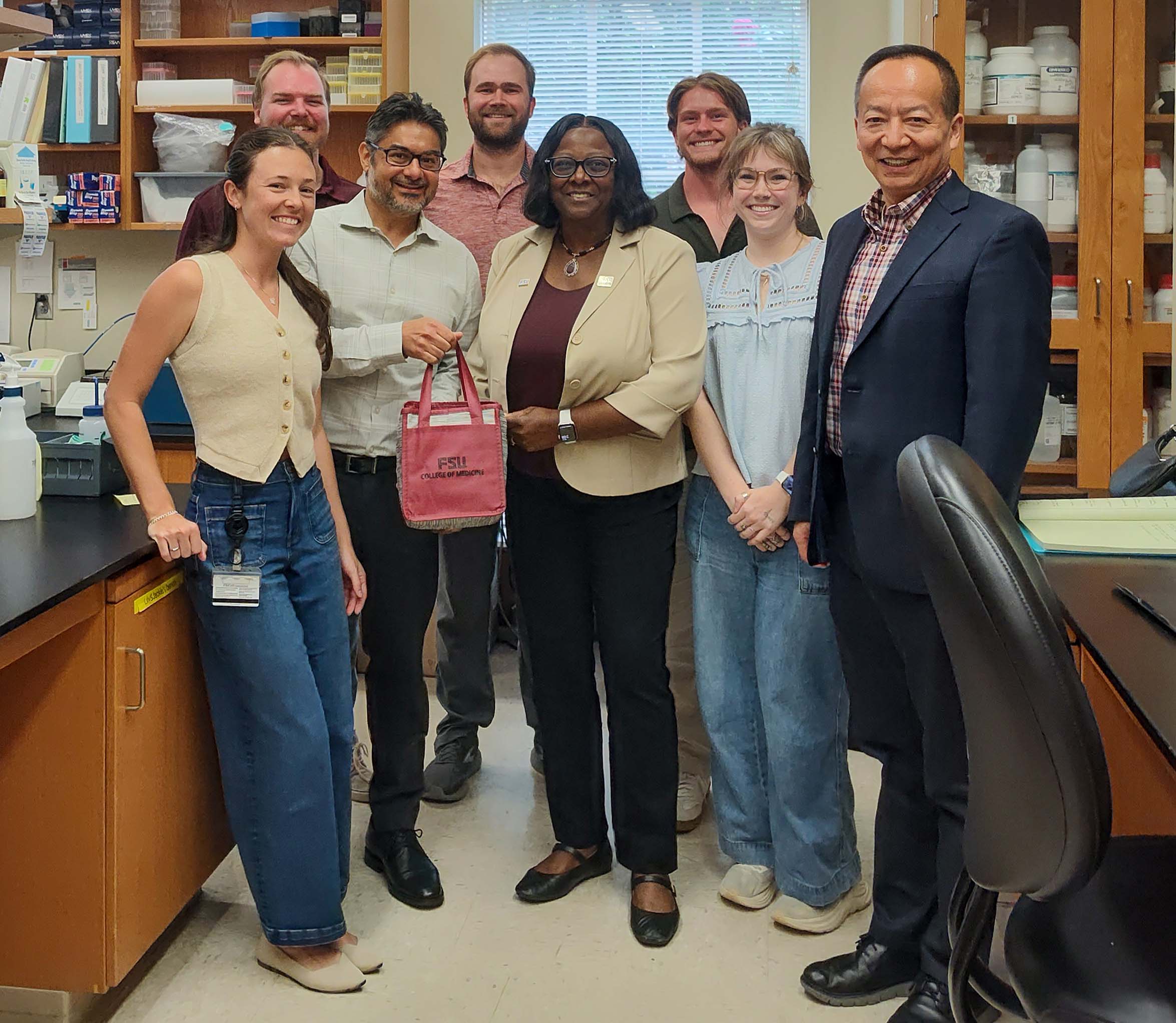
From left: Xian Jin Xie, senior associate dean for research and graduate programs; Yueling Hao, research assistant in the Julia Wang lab; Dr. Alma Littles, dean of the College of Medicine; Carson Mickey, graduate student in the Wang lab; Jyoti JC, research assistant in the Wang lab; Ryan Kiddle, graduate student in the Irianto lab; Hyeje Sumajit, graduate student in the Irianto lab; and Jerome Irianto, Ph.D., assistant professor of biomedical sciences.

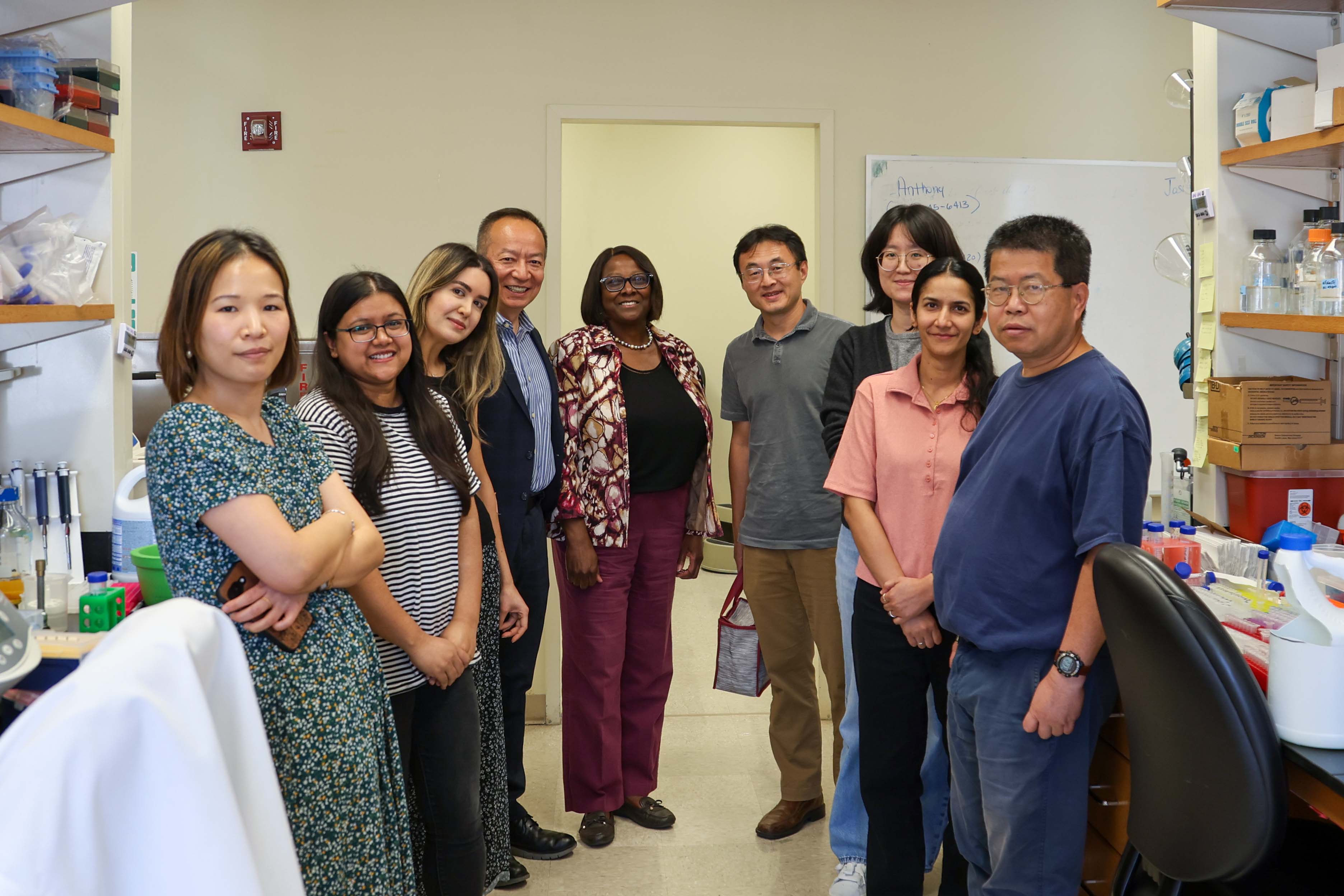
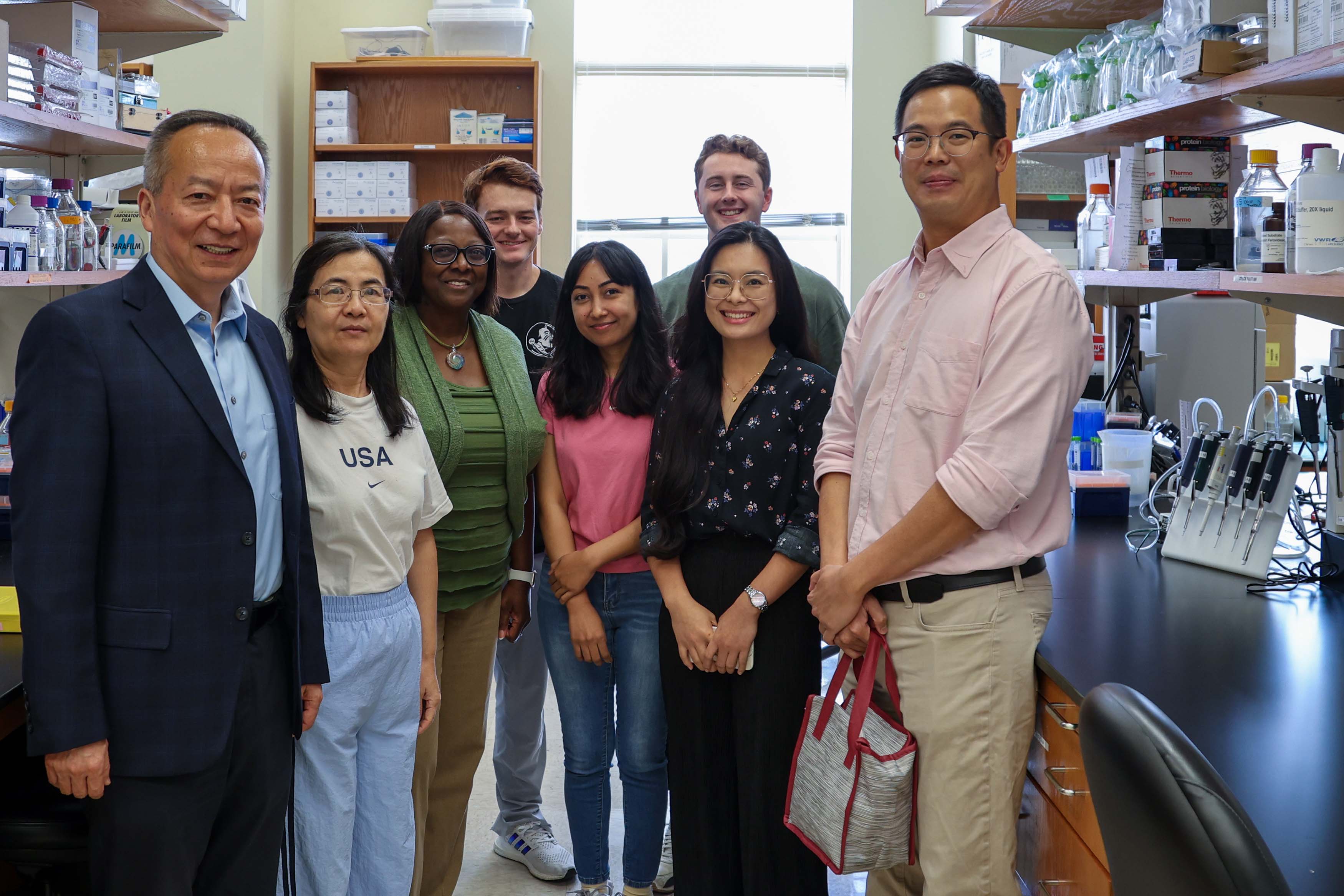
From left: Xian Jin Xie, senior associate dean for research and graduate programs; Yueling Hao, research assistant in the Julia Wang lab; Dr. Alma Littles, dean of the College of Medicine; Carson Mickey, graduate student in the Wang lab; Chaity Modak, graduate student in the Irianto lab; Ryan Kiddle, graduate student in the Irianto lab; Hyeje Sumajit, graduate student in the Irianto lab; and Jerome Irianto, Ph.D., assistant professor of biomedical sciences.

July 2026 Newsletter

Jul 31, 2026

Two updated Harrison's Principles books available

Aug 04, 2026

Book covers for two Harrison's books

The 22nd edition of Harrison’s Principles of Internal Medicine is now available, including updated Review Questions

News of the Week

FSU CARD partners with TPD for autism awareness

The Tallahassee Police Department launched its Approach with Care Autism Awareness Initiative on July 22, and the College of Medicine’s Catherine Zenko, director of the FSU Center for Autism and Related Disabilities (CARD), joined Chief Lawrence Revell and his team for the announcement.

Catherine Zenko
CARD Director Catherine Zenko

The initiative is a community partnership focused on increasing autism awareness and helping create safer interactions between law enforcement officers and individuals with autism spectrum disorder (ASD).

For many individuals with autism, emergency situations can be overwhelming. Delayed responses, sensory sensitivities, or difficulty processing verbal instructions may be characteristics of autism, rather than signs of noncompliance. 

"Every interaction between an officer and a member of the public is an opportunity to build trust," Revell said. "Initiatives like Approach with Care help us better understand the needs of the people we serve, so we can respond with greater awareness while continuing to keep our community safe. We are grateful to our community partners for helping make this initiative possible and for their continued commitment to the families of Tallahassee and Leon County."

According to the Centers for Disease Control and Prevention, approximately one in 31 children in the United States has been identified as having ASD, making it one of the most common developmental disabilities nationwide. As research continues to allow increased and earlier diagnoses, TPD continues to ensure its officers receive the training, resources and community partnerships needed to better serve every member of the community. 

As part of the initiative, families and adults with ASD can receive a free vehicle decal that discreetly alerts first responders that someone inside the vehicle may be on the autism spectrum. The decal serves as an additional communication tool, providing officers with important context before an interaction begins.

Zenko said FSU CARD is honored to partner with TPD on this important initiative. 

“By giving law enforcement officers a visual cue to alert them that the vehicle they are approaching may have a passenger with autism, it allows the officer to shift their mindset before initiating any interaction,” she said. “This decal, in combination with autism education for law enforcement officers, sets the officers and the community members up for success during potentially stressful situations.”

Approach With Care decals are available at no cost through TPD’s Community Relations Unit, FSU CARD, Leon County Schools through Exceptional Student Education teachers, and MidTown Print. Other community partners include Behavioral Management Consultants, Cayer Behavioral Group and Children’s Home Society Early Steps.

FSU CARD is one of seven regional, non-residential resource centers funded by the Florida Legislature through the Florida Department of Education. They provide free support, consultation and training across the lifespan for individuals with ASD and related disabilities. Led by Zenko and Executive Director David Ledbetter, FSU CARD has offices in Tallahassee, Panama City and Pensacola serving the Florida Panhandle and Big Bend.

In addition, the College of Medicine has been heavily involved in autism research for years, primarily through the team built by Professor Amy Wetherby, Ph.D., an internationally respected expert in the field.

Photo of sticker for auto back window saying "Approach with Care" and "Occupant with Autism on Board" circling a Tallahassee Police Department badge.

Learn about Bate's Guide to Physical Examination

Jul 15, 2026

Healthcare worker providing physical assessment exam; image retrieved 6-25-26 from https://www.wolterskluwer.com/en/solutions/lippincott-clinical-context/bates-visual-guide-to-examination

Watch and learn! Bate’s Visual Guide to Physical Examination features head-to-toe and systems physical exam, communication skills, and OSCE clinical skills videos.

June 2026 Newsletter

Jul 01, 2026

News of the Week

BSSM faculty, med students publish on teen vaping

By Audrey Post
FSU College of Medicine

Three Department of Behavioral Sciences and Social Medicine (BSSM) faculty members and three medical students recently published an article in Public Health Reports about e-cigarette use among adolescents.

“Evaluating the Impact of the Federal Tobacco 21 Legislation on Adolescent E-Cigarette Use and Risk Perceptions” was led by faculty members Karen Geletko, MPH, Jons Mills, Ph.D., and Jeffrey Harman, Ph.D. It included contributions from two current students and one recent graduate – Natalie Dix, (M.D. Class of 2026), Meghana Bomma, (M.D. Class of 2028), and Aidan Price, (M.D. Class of 2028).

Their research concluded that “federal legislation, such as increasing the minimum age for purchasing tobacco and nicotine products, may be an effective strategy in reducing and preventing e-cigarette use among adolescents. Future research should assess the sustainability of the effects of T21 legislation over time and examine how federal policies interact with other public health interventions to influence adolescent e-cigarette use.”

The authors received no external funding for the research, authorship, and/or publication of this article. Geletko, the lead author, is Research Faculty I within the FSU Area Health Education Center, which was created as part of the legislation creating the College of Medicine. It focuses on critical areas in public health, including tobacco use.

Faculty in both BSSM and the Department of Biomedical Sciences, the two research departments within the Florida State University College of Medicine, routinely mentor students and welcome them into their research. This reflects the college’s commitment to expanding meaningful research opportunities for students early in their training. 

Graphic with head shots of the three faculty and three students who authored the article.

Spring 2026

Apr 28, 2026

Winter 2026

Mar 03, 2026

News of the Week

Remapping the blueprint for DNA Repair

By: Patience Moseley
FSU College of Medicine

Roughly 20 million people receive a cancer diagnosis each year, and an estimated 1-in-5 people will receive a cancer diagnosis in their lifetime. Cancer cells arise from damage to the cell’s instruction manual – DNA. 

Our cells contain natural repair machinery that, under normal conditions, can cut out the damaged DNA and fill in the blanks to provide working instructions, preventing healthy cells from becoming cancer cells. Failure to repair DNA damage can lead to cancer cell growth and division. In fact, many cancer cells use the same, but deficient, repair machinery. When these repair systems do not function properly, DNA damage can persist and additional mutations can accumulate.

Researchers in the Department of Biomedical Sciences at Florida State University’s College of Medicine are changing the way scientists think about the DNA repair process, paradoxically, a key player in both cancer prevention and growth. 

For decades, scientists thought that polymerase beta (Polβ), one of the main players in the repair machinery, would form multiple temporary bonds with the DNA during the process.

It was thought that Polβ would bind to the DNA strand, cut out the incorrect sequence, break the bond, and bind again to fill in the blanks.

It seems that may not be the case. 

One research team, led by Eminent Professor and Dorian & John Blackmon Chair in Biomedical Science, Zucai Suo, Ph.D. has discovered that Polβ forms a chemical bond with DNA, and proceeds with cutting and repairing the damaged DNA while covalently bonded, or crosslinked, to the strand. By remaining attached during this critical stage of repair, the enzyme is less likely to disengage before the repair process is complete.

“We found that crosslinked Polβ actually enhances the flux — so, basically, enhances its likelihood to move forward and complete the reaction,” said Daniel Betancourt, a doctoral candidate and the lead author on the team’s publication in Nucleic Acids Research. “So that changes a lot; Polβ has only really been studied when the DNA is not covalently linked to the enzyme.”

Using these findings together with X-ray crystallography snapshots, the Suo lab established a kinetic model that outlines the different step-by-step process for DNA repair while chemically attached to the strand. The model revealed that important repair activities occur while the enzyme remains covalently bound to DNA, a state that had received relatively little attention in previous studies. In this case, Polβ doesn’t detach, or dissociate, after the initial bond is formed; it’s work is done while it’s bound to the DNA.

This work, published in June 2026, provides a wider-angle view of DNA damage and repair and lays the foundation for future research to explore how this process occurs naturally and how different forms of DNA damage might influence the repair process. 

With these findings in mind, the Suo lab hopes to determine how the initial crosslinking reaction between Polβ and DNA occurs and how that bond sets the stage for successful DNA repair. Their work also establishes a foundation for future studies of at least five other human DNA polymerases involved in DNA repair and damage bypass.


Schematic of crosslinked DNA and Polymerase beta from the Suo lab's recent publication.

Schematic from a figure in the Suo Lab's recent publication shows the crystal structure of Polβ and DNA crosslinked complex.