

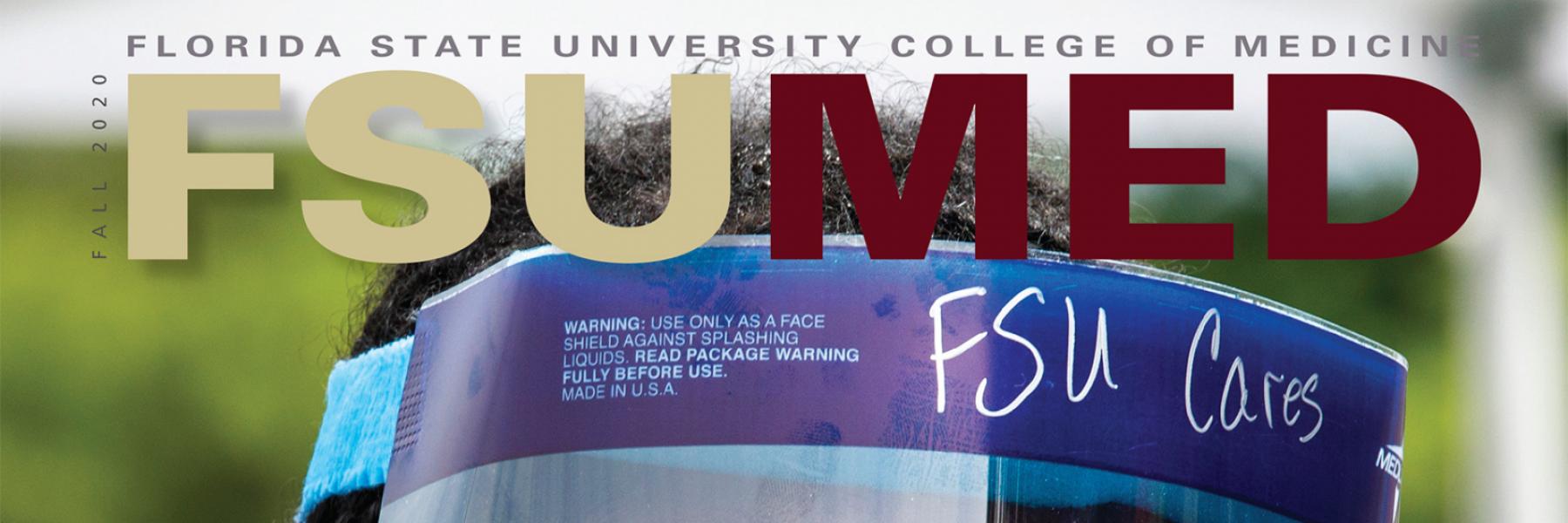
Headlines
Click the links below to read the Headlines stories from FSU MED (pages 2-3) in full.
Twenty, with plenty to celebrate
New insight in preventing seizures
Skin deep – and effective
Avoiding backups on molecular highways
Selective and mission-focused
To read more of the latest College of Medicine headlines, click here.
VOICES
To read more from our students, faculty and staff, click the names below.
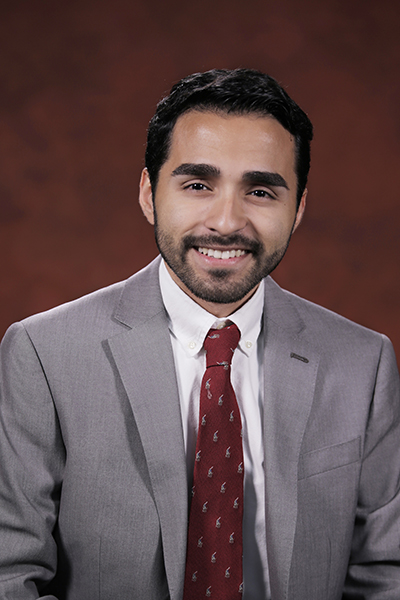
How were you affected by events of 2020?
“You’re in an ICU rotation, working hard, long hours, enjoying the experience. But you’re definitely impacted by the pandemic we’re living in. The hardest thing is family members not able to be there with patients, limiting the entry of visitors. It breaks the hearts of people who could not see their loved one for weeks, months, before they pass away
“Training? There’s no real training, but we knew what we were going into. We’d gown in and gown out. We initially weren’t allowed to see COVID; they preferred using senior residents. But as weeks progressed, they needed help, so, where they needed someone, I asked to help. You just jump in the water and learn to swim.
“Going through this, being in ICU, dealing with patients who are very sick, at some point the medicine and the knowledge isn’t necessarily the most important thing. You have to be able to convey knowledge and present it to family members in a way that easily understood, no medical jargon, and you have to be able to Bb empathetic while still being honest and truthful about the situation their loved one is facing. So, it’s the idea that FSU teaches us to treat the person and not the disease.
“I think the world paused to see the real issues that our country and world are facing. I don’t necessarily think there’s been a complete shift; it takes many years to produce change; I think the big thing is we paused to see the situation and see what other people go through.
“The first step in enduring change is to recognize the problem, and I think that’s what happened in 2020: we paused saw some of the issues that are affecting our country, our world, and from here on it’s going to take a lot of time and continued push to make those changes.
“I was one of those who thought FSU was already good at some of these things, but there’s always room for improvement. The biggest thing we can do is try to enact change within the Tallahassee community, just because it’s so close to the representatives who govern our state. When you enact change here, you set the example for what other cities need to do.
“I think Tallahassee continues to have a big underserved community. There continues to be racial disparity and health-care disparity that affect many people including the African-American population, and the nearby migrant farmworkers in Quincy. The biggest thing is to continue going out into the community and be a part of making big changes that, over time, are going to have a ripple effect. I think FSU needs to continue to push for that.”
Are you optimistic, still?
Yeah, I think this is going to be a big year with the election, but there’s always going to be bumps along the way; and I think healthcare wise we’re a bit smarter in some things and we’re going to gain some knowledge that we wouldn’t have gained if this pandemic didn’t happen.
“I think overall life is going to continue and 2020 is going to serve as a year where we took time to recognize what changes need to be addressed and hopefully we are going to continue to address them.”
Know at some point this is going to pass and we’ll have new issues to face five years from now
Are you glad you became a doctor?
Absolutely, no doubt about that one. It’ s the change we can effect for people more than anything. It’s a privilege to take care of peoples’ loved ones and I think that’s the thing I’ve enjoyed most so far.”
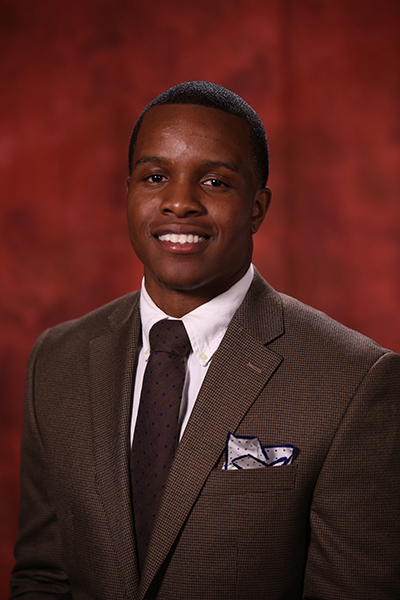
How has the landscape changed for you and your classmates in light of both the pandemic and the need to address social inequalities, whether in health care or society, in general?
“To my black classmates, nothing has changed, but has been exacerbated. I guess there is a change, but as far as our visceral understanding of what is going on in society, we were well aware of these things.
“Becoming professionals and entering undergrad. … even as 5-6 year olds, we knew the world we lived in, but for the majority of our peers at Florida State perhaps their eyes were opened to the things we see every day. But this is not an uncommon thing in our society. In our world, there are many things about being Black in America that I’m not aware of, but when something happens to a specific community I become aware. Those who are not of the community are forced to watch those things. Because now we’re at home during quarantine, there are no distractions, there are no, ‘Oh, I didn’t watch the news,’ or, ‘I was at work,’ or, ‘I had a paper to do.’ No, we all have extra time and during that time we were all exposed to the underbelly of our society and many of us decided to do something about it.
“My peers in Pensacola designed a marathon or a 5k for a Black American cause. Many of us were ready to make a difference, regardless of our SES status or our racial status or whatever you want to call it. So, for sure, there was a change in that, and there is still a momentum to it.
“Some people call it a movement. For me, being Black for 26 years, it’s a lifestyle – it’s not a movement; it will still be here after many of us move on to the next serious thing. We will always have it in the forefront of our mind.
What are the things you and your classmates are talking about? Did some of the curricular changes after we went to online instruction prompt more thought and discussion about these topics?
“When Ahmaud Arbery was killed, the second Saturday of February. … this summer when we got exposed to it, myself and one of my [University of] Suwanee peers, we established a Zoom call with a district attorney, a USA Today reporter, and the NAACP, and with lawyer [Ben] Crump. We sent invites to friends on Instagram and a large contingent of my [FSU med] classmates joined the call to listen to a discussion on what we want to do next.
“Whether it was fourth years or third years, they were eager to listen; we had over 75 people and the majority were Florida State College of Medicine students on there.
“We had some heavy hitters involved. Lawyer Crump being there – the vibe changed and set us all into action.
“So we’ve had many conversations, one-on-ones and 75-plus people. The intimate conversations ask the obvious question: What can I do? I’m not gonna try to be the voice of every Black person in America, but I can say from my perspective – if I ‘m not in a room and none of your peers is in the room and someone is saying certain things about us, or the general ‘us’ – I ask you to speak up. I’m not asking you to be aggressive, but just speak up.
“Regardless of who you are – if you’re from an underserved community, or an oppressed community, whether it’s LGBTQ, or the Black community or Hispanic. … whatever it may be, I owe it to you to speak up – and show love. That’s what it all boils down to, right? What we learned in the sandbox, treating people the way we want to be treated, and love one another. And then knowing the definition of love and then implementing that into our daily lives – and if we did that as a society, we wouldn’t have many of these problems. But we live in an imperfect world, where we are going to have hate – and we have to combat it with love.”
You also participated in a Town Hall meeting following George Floyd’s death?
“I spoke with [FSU President John] Thrasher, [Tallahassee Mayor John] Dailey, [Leon County Sheriff] Walt McNeil. … and I mentioned the med school has this very specific mission. Right now, of those many groups in our mission, there’s one in particular need – the minorities, the Black people in our country.”
Is our medical school doing the right things in what we teach – whether it be about cultural awareness or public health?
“We receive funding from the state to help the underserved. The mission right now should emphasize the Black people in our community. We’re young, we’re still in our adolescent years, we’re learning on the fly. … We’ve added a few things to our curriculum, such as the [first-year med students] in their Summer Clinical Practicum did a Racism in American topic.
“I believe you can praise and critique at the same time. That’s how I got better as an athlete – my coach would tell me what I did right, and what I did wrong. The question I would have for the university: Did we do that because we were in quarantine, or because we actually want to do it? That’s my question?
“I do think as a whole there are many professors and attendings, if you will, who have interest to do good and to make changes and they are doing so, but there’s always room for growth. And I think for the young FSU medical school there’s a lot of room for growth and I think we are willing to learn.
“I think we should always step back and say, ‘Did we do enough? Did we do enough for our students today?’ And I think the answer is, yes, we should step back, and bring people to the table who have the same mindset and are invested in making those changes. There are many individuals at this university and across the way at FAMU who can provide a lot of knowledge to our curriculum and into our university, or our college.”
So where are we going? Will we recover and become better and stronger?
“Looking at our history, we’ve been through much worse, and we’ve always gotten better. We’ve always come out on top. Progress is always taking steps forward, and steps back. I think that’s life.
“Many years ago, I want to say in the Caribbean, when Cristopher Columbus came, they were literally stabbing women in the stomach and taking children out of their bellies and smashing them with rocks. People say this is the worst thing we’ve seen – and it’s not. We can talk about slavery, we can talk about Jim Crow, we can talk about what’s going on now in Yemen. History shows that we have gone through so much more and we have overcome them. As a country we still can overcome the divisions we see now.”
Are you optimistic about where we’ll be as a country five or ten years from now?
“Is there fear of acute decline? Yes, there are obvious way things could get worse, but taking the long view I think things can get better, but we have to want to get better and take action. If we take our hand off the wheel, there’s always someone – always someone who will hate and turn left on us. But as a country if we all grasp that wheel with love we can do better.
“I’m optimistic, but realistic as well, in the sense that there are many opponents who want us to fail, and if we don’t outweigh them, we could fail.”
Are you still glad you decided to go to medical school?
“One-hundred percent. But there’s more to life than being a physician. If society were to be wiped away, nobody is going to care you were a physician. The number one thing is being a good person. I’m glad I went to medical school – it gives us a platform to do good. I’m happy I’m here, but that’s not the primary thing in my life.”
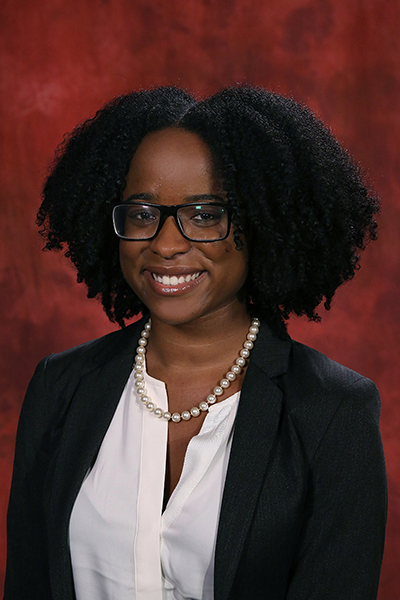
How has the landscape in medicine changed in your eyes in light of both the pandemic and the need to address social inequalities, whether in health care or society, in general?
“There seems to be more of a sense of urgency to address social inequalities. While it can be frustrating to feel as if centuries of mistreatment against black lives in healthcare and our broader society have been largely neglected, I have noticed more willingness to address these issues and consider how they affect the care of patients. As students in training during recent events, these experiences will follow this generation of physicians. I am hopeful that this will lead to positive changes in the long run.”
Is our medical school doing the right things in what we teach – whether it be about cultural awareness or public health? Should we step back and reevaluate – make any changes to the curriculum, to better prepare our students for the world they will be practicing in?
“By providing a platform for discussions to be held about cultural awareness and health equity, FSU COM has made strides in teaching its students. From my personal experiences as the co-chair of Racism Awareness Week, I saw firsthand the willingness of administration to support our student run initiative with their presence and contributions. However, no system is perfect and there is always room for improvement. I believe that our school can best prepare the future generation of physicians by providing more practical skills and training on these topics. Much like we practice physical exam maneuvers and procedures, we should also practice having conversations about race and role-play these common, difficult scenarios.”
Are you still glad you decided to go to medical school? And are these events shaping what kind of physician you will become?
“The events of the past several months have demonstrated exactly why it is so important for me to complete medical school and become a physician. This sense of purpose is far greater than any personal goal or aspiration. A representative workforce within medicine is crucial in improving patient outcomes and saving the lives of black patients and other people of color. I will undoubtedly hold onto this purpose as I advance in my career while encouraging the next generation of minority medical doctors along the way.”
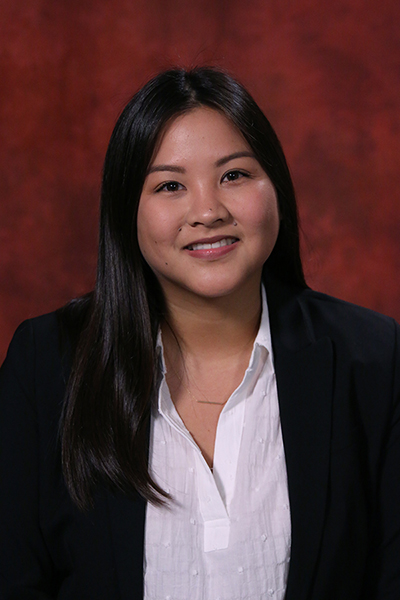
In what way were you involved in the College of Medicine’s Strength in Unity March for Justice and the demonstration at FSU PrimaryHealth?
“For both events, I was involved in contacting students and asking them to speak at these events. I was excited to involve students from FSUCOM to speak at these demonstrations in order to uplift their voices and amplify what they believe in and their fight for equality and justice. However, limited by not being in Tallahassee, my peers had the large responsibility of implementing these plans and seeing the event through. I am grateful for their work and the spaces these events created.”
What motivated you to become involved? What was the experience like?
“Due to the global pandemic, at the time of these FSU events, I was not only away from Tallahassee, but I was out of the country with my family. Being so physically distant from the community, I was limited in how I could participate in the many happenings across the nation, but ultimately standing up for justice is far broader than any one event. The current social injustice plaguing our nation is not new, it remains a reality and daily experience for minority individuals, but we are in a moment that demands attention and social restructuring. I am focused on providing continuous support to my peers and community members and so, despite my distance, I found it important to participate in the planning of these events. These community events, which were strongly supported by the College of Medicine, were designed to not only take a definitive anti-racism stance, but also to support minority individuals and communities.
“It is important for us as future health-care professionals to support minority communities, and specifically Black individuals, as we actively work to alleviate the grave injustices in our community, and around the nation. The College of Medicine’s virtues must continue to align with matters of justice, and in putting our virtues into action. Thus, I was grateful to be part of the team representing the College of Medicine in these spaces. It was comforting to see, through their support for events and student leaders, how many of the faculty and staff at the College of Medicine shared our passion for not only speaking out but also working to alleviate these issues.”
Why do you think it’s important for students and those in the medical community to actively support the BLM movement?
“The happiness and success of all our peers and community members are important in the larger success of our school and community, and thus in a time of social and racial unjust, those facing the greatest adversity should be put at the forefront. It is important for all of us to learn that even when we do not personally identify as a member of a particularly affected group, that this is no excuse to distance ourselves and disregard these issues. Collectively, we cannot ever truly thrive if we are not all able to thrive individually.
“Black individuals face inequities in a countless array of systems and structures within society, including our medical systems. As future health professionals and even more simply – as human beings – it is important for us to firstly acknowledge the disparities that exist, and then figure out how to always be working to alleviate injustices. At FSUCOM, we are taught to prioritize patients, work to make their health and lives better, and these standards remain true in the face of systemic injustice. Currently, the Black Lives Matter movement highlights the extreme marginalization faced by Black individuals throughout our country, and it is necessary to continue to support and work alongside these efforts to make Black lives better.”
How do you think experiencing the COVID-19 pandemic, BLM movement, and other strong calls for societal changes as a medical student might impact your career or future outlook as a physician?
“This year has hit us with one challenge after another. Yet, I think for many of us, this year has shown us how intertwined many societal issues are, and how truly relevant they are in our lives.
“For all of us, these issues are a reality, and they exist around us, whether we will them to or not. But of course, they do not have the same impact on each individual. We all have our unique view and our own biases on the world, however, it is important to recognize the inequity that exists. We must remind ourselves that there is a shared humanity that all of us contribute to, and we must work to ensure that our contribution to this world is not one that constrains other people and their humanity.
“Beyond all the glory that comes with being a medical student, the title also comes with massive responsibility. We are in a field and enrolled in a university, which prioritizes helping others, and thus we must serve our communities relentlessly, by supporting and standing with them to demand equality and fairness. While educating ourselves on issues that affect our nation at large, we must also specifically learn about the impact these same issues have on our peers and community members. We must never get too caught up in the macrocosm that we forget to humanize our collective work and see every individual for who they truly are.
“I am inclined to believe that this year has set in motion a long-awaited awakening. This year has highlighted how prevalent and harmful social and systemic injustices are, in a way that I hope has impacted people deeply and in such a way that it has sparked action and a momentum for change. We have heard a determined call to action from individuals, communities, organizations and governments to actively work to alleviate these injustices. Our generation is on a mission to fight for what is right, and I think that with valiant effort and an unwavering spirit, change might be slow, but it will be steady.
“Ultimately, this year has made me realize the importance of social change and support. In medical school, we are taught patient autonomy, fairness, and rights. These current social movements highlight a major part of what we need to understand and be a part of to be successful caregivers, as future healthcare professionals. But this does not end with only the healthcare field – across all fields of work and sectors of society, we must all support one another to collectively make every individual’s life better.”
Anything else you’d like to add?
“I want to highlight the great help and support that we, as students, received from the College of Medicine. Our student efforts were mirrored by each faculty and staff member, who were all readily available and supportive of our mission to stand against racism. These events were important displays of FSUCOM’s commitment to support our communities and marginalized groups, and all of the outcomes would have been impossible without their help.”
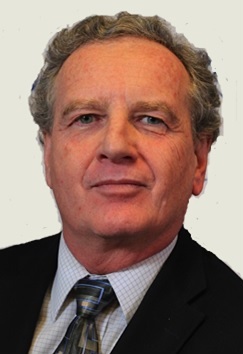
What are the challenges we face in addressing both the pandemic and social inequities?
“The polarization, the political environment, have come home to roost a bit. Even wearing a mask has become a political thing. Why? How is that polarizing? Public health officials have had threats on their life because they are trying to help their communities stamp out a pandemic outbreak, but it has its own consequences for individual rights and sometimes even the balance of individual rights, and individual responsibility and collective responsibility.
“The polarization around COVID and science and research and ideology is not unlike some of the polarization around race and diversity vs. somehow nostalgic views some white folks have for times gone by.”
Are we as a med school in a better position to listen?
“I think so, I think our leaders are open. I’ve really seen that from the dean and really all the leaders here – just a real responsiveness. A few months ago, the session we put together for second-year med students around COVID and racism – I thought it was a wonderful series of activity including some planned by the students, and embedded in the curriculum and replaced other things that we knew we couldn’t do in clinical settings.
“And one of the things that it made us do that I think is going to make us a better medical school, if we stick with it, is we acknowledge that maybe we don’t have all the right people in place with the lived experience to speak to some of these issues. That is, we needed to hold a dozen small groups, we needed to find at least a dozen people with real lived experience of racism, with real lived experience in how their underrepresented minority community was being affected by COVID, and so we ended up asking some community partners to come and be co-facilitators in those small groups. A couple of faculty from Morehouse ended up coming in on Zoom to be co-facilitators. We just had a wonderful session on thing students put together on mental-health awareness week – Dr. Sarah Vinson, connecting the dots between mental health and racial injustice in this country. … and incarceration and the ways people are treated by the mental-health system and stigma and all those things. … and the intersection of mental health and race.
“So, our students get it. They give me tremendous hope for the future. They get it. They insist that we get it – and that we have it in the curriculum and I think as they mature as leaders the next generation is going to have a better shot at getting this right than we do.”
Are these curricular changes going to be permanent?
Yeah, I think small groups of first-year medical students around racism and intersectionality around this notion that all of our different identities can tie together to affect our health, but taking it a step further it used to be okay to talk about racial disparities, but not racism. And you can say that word now. It’s going to be part of the curriculum. It can be a topic area of learning that it’s not just on the individual or the community that is experiencing the burden of disease.
“It’s the surrounding system, the forces that are putting them in that position, that we need to acknowledge and to the extent that we have the power to address those, to take those on as part of the role of the doctor.
“We used to have a one-hour talk I give on outbreaks and pandemics and now that’s two hours. Obviously, we have a much more lived experience where we can make that teaching much more granular and much more vivid because of what we’re experiencing now. We’ve lived through it, and even if we are covering the same material, it will have a whole different feel to it now.
“There are other places in the curriculum where it comes up. Clearly, we’re teaching a lot more and I think people understand the interconnectedness of the issues we’re seeing. On the one hand it has disproportionately affected people of color, people of low income, people who are essential workers, people who rely on public transportation; Undoubtedly, at the same time, as a country we realize there’s no gated community we can hide behind. There’s no place to hide when the virus comes. There’s no boundaries for that kind of stuff.”
Have our students been prepared for the world they will practice in?
“I think so. Certainly, we’re doing a way better job than my medical school did while I was in training. I think we’re doing a better job than a lot of medical schools, but I can’t judge that. When we look at the people in a health-care system, the panel of patients, 20% of the people end up having 80% of the bad outcomes and represent 80% of the costs and 80% of the human suffering – the hospital bed days and the trips to the emergency room and all that stuff.
“That 20% is typically a population characterized not just by being medically complicated, but by having social complexities. Maybe they’re caregiving for a family member and are exhausted. Maybe they’re low income. Maybe they don’t have insurance. There’s just a lot of social context to these problems, and so that leads to their health outcomes. And then there’s a halo complexity – depression or substance abuse, maybe self-medicating with alcohol because of anxiety or stress. The kind of childhood experiences people go through when they’re young can lead to these social complexities, maybe behavioral complexities. And the health-care system is beginning to recognize that if you’re not willing to address the whole person in context you’re not going to get them to a good health outcome consistently over a large percentage of people.
“Our students are getting that base, that foundation, and hopefully if they continue it in residency programs they’ll find how to operationalize that in their own practice. But they absolutely are getting that foundation here – to understand whole people in context, rather than studying the human body as a bag of cells or a bag of organs.”
Our mission statement is written for that 20%?
“It doesn’t say it in those words, but it’s about training p[physicians to serve. It’s the uninsured; it’s the rural population; it’s the elderly population that is complex. It’s communities of color; it’s anyplace where we can go and make more of a difference. We want to train doctors to do that.”
Have you seen these circumstances produce leaders amongst students?
“Yes, watching how they’ve organized a vision and pulled together other student leaders and suddenly we have Mental Health Awareness Week with a whole range of activities trying to make sure we don’t miss people with mental-health issues and that stigma. Our compassion has been dignified.
“I’m so proud of our students. When we were doing COVID testing, and obviously the school has appropriate concerns for safety, but that notion that if you’re training firefighters you have to train them to run toward the fire. … when we got approval to do that, for them to volunteer if they wanted to, we were inundated with students who wanted to do that, who wanted to do their part. … to make a difference.
“The way that political leadership has expressed itself has made people feel somewhat powerless, so the opportunity to do something, to make a difference, it’s really encouraging to see how they responded.”
Will we look back at how we reacted in 2020 and assess what we did right, or wrong?
“I think history will write that chapter when it’s ready to be written. I think there’s things we’ve done well as a college of medicine – particularly the leadership of the administration and university. At the same time there are things we can do better.
“Of all the things we’ve talked about, the mission part is the most important. That notion of contrasts in how different people were being impacted. The COVID came in and there was an understanding we need to teach about it in the larger picture of social determinants of health, that that was an appropriate part of our training as medical students and an appropriate thing for us to engage leadership on.
“If we stay on our mission, then whatever new bumps come up in the future – and we couldn’t have predicted this one – whatever new bumps and challenges come up in the future, we’ll be fine. Stay on the mission, train our students to be the doctors Florida needs, the country needs, and whatever issues come up, we have a framework for dealing with it.”
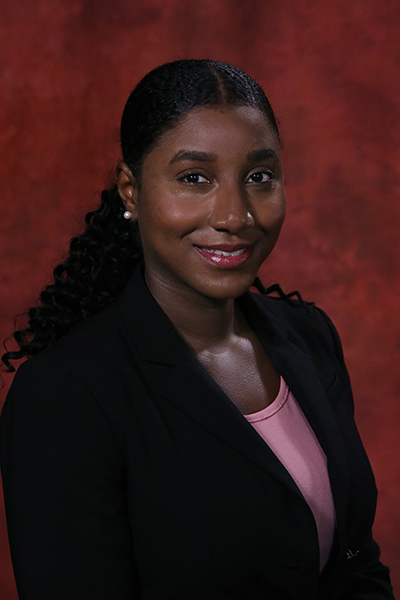
In what way were you involved in the College of Medicine’s Strength in Unity March for Justice and other White Coats for Black Lives initiatives?
“I became the student leader for the event after Dr. Brown Speights reached out to me regarding a march at the Capitol for White Coats for Black Lives and asked me to gauge student interest. We later found out that another march was occurring at the same time entitled the ‘Strength in Unity March’ and was being led by Samantha Vance.
“After deciding to combine the event, I gathered a core group of student volunteers who helped with a myriad of things from making posters, helping at the registration table and setting up for the event. Gabrielle Yap Sam and Gabby Sehres contributed greatly to the success of the event by helping with securing student speakers amongst many other things. Two students, Diamond Paulk and Amber Hannah also reinstated FSU COM’s White Coats for Black Lives Chapter.
“In addition to Dean Fogarty and senior leaders at FSUCOM, several community leaders collaborated and joined us.
“At both of these events, I read a poem written by my mother, Charmaine Allwood-Hanson, which she wrote in the wake of George Floyd’s murder entitled ‘The Saga of George Floyd.’”
What motivated you to become involved? What was the experience like?
“As the President of the Student National Medical Association and as a Black woman, I felt obligated to participate. But as I moved forward in the planning process it felt more empowering to be a part of such a historic movement. A part of my organization’s mission is to increase the number of culturally competent and socially conscious physicians. I felt like I was embodying this mission by participating in the events this summer and inviting my classmates to join the cause. As a member of the Black community, I needed to be involved so that those in my community could see that there are in fact Black people in white coats and that white coats of all races support them.
“I was also motivated to become involved because the events occurring at that time were directly affecting my people. George Floyd could have been my father, my brother, my son, my husband. It’s hard to sit and do nothing when those who look like your loved ones are dying at the hands of those who were meant to protect their lives. Because of that, I wanted to show that we, in white coats, stand in solidarity with the Black community although history paints a different picture. The Black community is oftentimes fearful and distrustful of the medical community due to medically unethical things that were done to Blacks in the past.”
Why do you think it’s important for students and those in the medical community to actively support the BLM movement?
“Racism is a public health issue; it actively affects the health of those who experience it, leading to poorer health outcomes, higher rates of depression and higher rates of being killed by police officers. It affects all aspects of life and I believe that we, in the white coats, have a responsibility to our Black patients to let them know their lives matter today, yesterday and indefinitely.
“Unfortunately, systemic racism is still active in the medical field, which is a scary notion when you’re a Black person in this country. Why is it that Black women are four times as likely to die during childbirth than white women, or that Black babies are 2-3 times more likely to die when cared for by white doctors? This is just more evidence that racism in medicine is not just a thing of the past, such as HeLa cell’s being taken from Henrietta Lacks without her consent, or the Tuskegee syphilis experiment where Black men were not informed they had syphilis and treatment was withheld from them, or the experiments Dr. Marion Sim’s performed on enslaved Black women without anesthesia.
“Racism in medicine is still very much alive and present; its right here in our medical books where we don’t see pathologies on people of color; it’s right here in our glomerular filtration rate (GFR) calculations where we use race to estimate kidney function; it’s right here when we don’t believe the Black patient who says they’re in pain because we subconsciously believe they have thicker skin. This is why the medical community needs to actively support BLM, and it shouldn’t stop at just wearing your white coat to a march, and it shouldn’t just be Black healthcare workers holding this mantle. Healthcare workers of all races should work to dismantle the systematic racism in medicine. Let your support for BLM be seen in how you interact with your Black patients, in how you advocate for your Black patients, how you listen to their complaints and take their pain seriously, how you treat their babies the same, and how educated you are of how chicken pox looks on their skin.”
How do you think experiencing the COVID-19 pandemic, BLM movement, and other strong calls for societal changes as a medical student might impact your career or future outlook as a physician? From your point of view, what impact do you think these events and movements may have on medicine?
“I believe experiencing all of these events as a medical student will make me a more resilient and appreciative physician. Experiencing COVID-19 as a medical student has shown me the bravery of physicians, nurses, respiratory therapists, janitors and all members of the healthcare team. Seeing them on the frontlines everyday trying to save lives while risking theirs will be something that will be forever etched in my memory. As a physician, I think this experience will humble me and cause me to be very appreciative of all occupations in the hospital whether it be the chief resident, the janitor or the infectious disease specialist. This experience has confirmed my previous belief that no job is more important than the other. We all have an important role to play and if one aspect is missing then the whole team fails at their mission.
“I believe the BLM movement will impact me as a future physician because of the impact on my peers. Being a Black woman, I am already privy to the inequities we face as a race; however, many of my classmates do not share that lived experience. So, with BLM bringing light to the social injustices Black people face at the hands of some law enforcement and in other aspects of life, I hope to see a paradigm shift in racism in medicine, as those who I am studying with now become the new residents, attendings, professors and deans who are culturally conscious.
“I think the impact of these events on medicine has already begun. It began with conversations that led to marches, protests, petitions, and mandatory classes on diversity. BLM and COVID-19 are intertwined in many ways. This year, the world saw first-hand how a global pandemic seemed to overwhelmingly target those of lower socio-economic status which includes a large part of the Black population in the United States. Maybe if Black lives mattered more this wouldn’t be the case.”
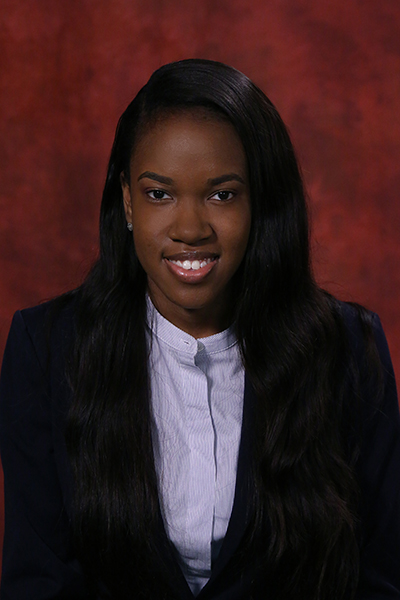
In what way were you involved in the College of Medicine’s Strength in Unity March for Justice and/or the demonstration at FSU PrimaryHealth? Or, what did you do to help coordinate these events or other White Coats for Black Lives initiatives?
“I helped draft the ‘call to action’ from SNMA to our FSU community and participated in ongoing discussion and innovation to what we learn about in our curriculum. In addition, an FSU chapter of White Coats for Black Lives is in the works. We want to establish something that will continually take strides to make changes locally to embody what the movement represents. The movement is happening in this present moment, but it has always and will always be relevant.”
What motivated you to become involved? What was the experience like?
“For some reason, this time watching our current events felt impossible to ignore as a medical student and as an African American individual. In the past, it seemed easier to shield myself from what continually happens. There wasn’t and still isn’t anywhere to hide from it now. It feels heavy… traumatizing even. It seemed the only way to mitigate that was to be vocal and find ways to be active.”
Why do you think it’s important for students and those in the medical community to actively support the BLM movement?
“The BLM movement simply represents a population of people calling for our lives to matter just as much as any other group, no more or no less. Aside from supporting fellow citizens, neighbors, peers, we as students and those in the medical community would be supporting the people we strive to and attempt to care for. People are multifaceted as are the issues they face. To care for a person adequately is to care for a person completely.”
How do you think experiencing the COVID-19 pandemic, BLM movement, and other strong calls for societal changes, as a medical student might impact your career or future outlook as a physician? And/or, from your point of view, what impact do you think these events and movements may have on medicine?
“The events this past year have made me realize the world as we know it could change at any given moment. Although life and the things you’ve seen can make you jaded, there is always the possibility of progress and the need to be vocal about what you care about. More now than ever am I aware of what kind of physician I want to be characteristic wise even if I am still unsure about what kind of physician I want to be specialty wise lol. I have also been reminded of my why. I may only be able to help few in my lifetime, but I will be sure to do it well. I am hoping these events will make us more conscious and compassionate providers.”
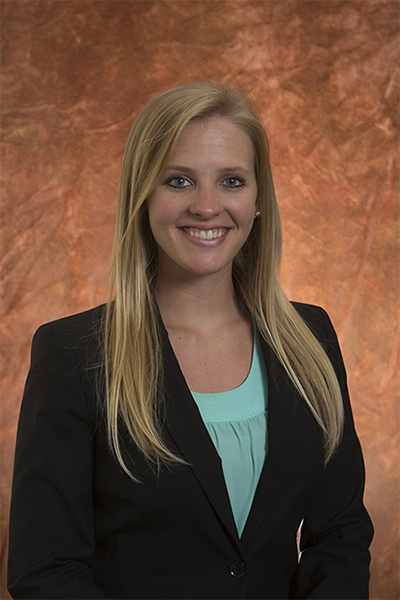
When and why did you first decide you wanted to become a physician?
“As early as age 16, I was drawn to how people’s stories shaped their health and the care they received. The interplay between culture, resources, and chronic disease fascinated me. The idea of getting to know patients, empowering them with knowledge and solving diagnostic dilemmas is the dream. I also had very encouraging mentors along the way - starting with my grandmother and a group of wonderful people at a local surgery center where my mom worked.”
How has that vision/dream been altered by the last semester of medical school, when suddenly everything in medicine seemed to change?
“If anything, that vision has become more real. Now, more than ever, understanding where patients are coming from _ their understanding of viral illness, mental health amidst social isolation, hesitancy to get their chest pain checked out _ is extremely important.”
What was the worst part of this period (since the impact began to be felt in things like no clinical rotations, etc.)?
“The many unknowns. When this all began, we were glued to the news, worrying about our families, our patients, and whether we would celebrate our fourth-year milestones (Match Day, Graduation, etc.) or even start residency early. My heart goes out to our second- and third-year students who are navigating board exams, residency applications, and scheduling mayhem during this time.”
Was there anything good that came from this as a graduating med student (getting to spend some time with family, etc.)?
“As fourth-year students, we all mostly completed graduation requirements before stay-at-home orders. We’ve been fortunate to have extra time at home with family to relax before the exciting demands of residency begin. “
What are your emotions as you head off into residency?
“I’m so excited - this is the dream! It feels good to hopefully be able to help since we’ve been stuck at home watching things unfold. Also, some anxiety and sadness about social distancing - Will I get to see my family once I have increased exposure? Will I get the opportunity to get to know my co-interns before we start?"
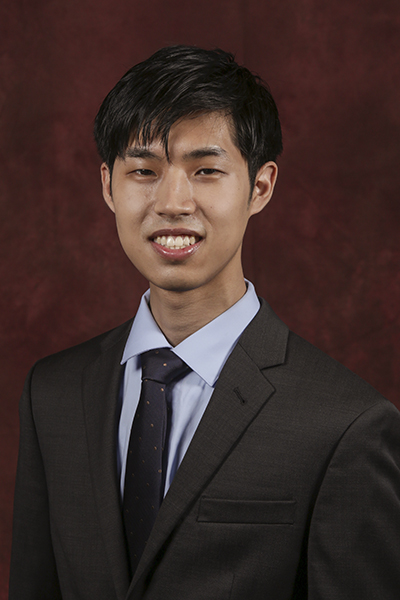
What do you hope to get out of your med school experience – whether it be about cultural awareness or public health (or something else)? Are you optimistic about where we’ll be five or ten years from now? About practicing medicine for a living?
“Despite the challenges that were presented to us this year, I continue to have faith in both humanity and in the medical profession. Yesterday, for example, I did my first cadaver dissection and was reminded of the generosity and trust that this person had in order to help students like me be part of such an incredible learning experience. Moreover, Dr. [Eric] Laywell [course director for clinical anatomy] and other faculty worked hard to ensure safe guidelines for in-person dissections to occur. This shows just how much they wanted us to have the same opportunities as classes before. I cannot thank them enough. Over these next few years, I hope to learn what it means to become a physician working within a public-health crisis and a diverse team of health-care professionals. We have already had required class lectures about coronavirus (SARS-CoV-2) and racial inequities in health care. I am sure that clinical rotations in our third and fourth years are also meant for this kind of learning.
“I also believe that the future will require more physicians like the ones FSU College of Medicine produces. Before submitting my medical school application, I carefully read FSU’s mission statement to understand what vision they had for their medical students. Very clearly in their statement, FSU seeks to produce patient-centered, knowledgeable physicians who want to serve the underserved and practice compassionate care. This is proving to be important now, when racial injustices have been revealed and there is a need for diverse and compassionate health-care professionals.
“Both COVID-19 and racial injustices have a huge impact on the health-care field. Five to ten years later, our class will have the opportunity to bring about change as future residents and eventually as full-fledged physicians. Based on the interactions I have had with classmates, I am confident that the people at my school will inspire positive change and promote a better environment of understanding health disparities, public health measures, and patient-centered care.”

What motivated you to become involved in the College of Medicine’s Strength in Unity March for Justice and the demonstration at FSU PrimaryHealth? What was the experience like?
“In recent years, I’ve begun to understand that there is power in my voice and although what I have to say may not seem impactful to me because it is an experience in which I have to live through every day, it will likely have an impact on someone who doesn’t share in my experience and desires to become more aware. I can’t expect others to seek change if they are unaware that issues exist in the first place. I know it is difficult to see beyond your own experience. By speaking at those different events, I was hoping to add to someone else’s perspective of what being a Black female is like in America. Black people aren’t a monolith and I know my life experience is only one small speck in the overall grand scheme of things, but I hope to add a little more color to the canvas as I speak.
“As minorities, we often choose to shrink ourselves and keep quiet when an opportunity like the Strength in Unity event arises for us to speak up out of fear that we’ll receive backlash or become a target for discrimination. By choosing to speak, I’m also pushing myself to overcome this subconscious barrier that has kept many of my peers and I quiet for far too long. It is exhausting to continuously have to share your burdens with people in a way that doesn’t offend or cause further strife and while I believe black people shouldn’t have to share the brunt of the work in starting these conversations, we do have a valuable part to play in this. There are many more reasons why I could convince myself to keep quiet, push past the microaggressions, and just focus on graduating, but there are medical students coming after me, future patients that will be treated by my peers, colleagues that will work alongside us, etc., that could potentially have a better experience because I chose to use my voice so I will continue to do so.”
Why do you think it’s important for students and those in the medical community to actively support the BLM movement?
“Declaring that ‘black lives matter’ isn’t a radical statement, it is isn’t an argument, it isn’t even a cause for a debate—if you believe that every life on this Earth is significant, then you also believe that includes Black lives too. While it is discouraging to see people argue about whether black lives matter, it is even more painful to see it in action. Police brutality and systemic racism are an everyday reminder that our lives still don’t matter in this country. We can protest, make social media posts, participate in Diversity & Inclusion programs and still see how undervalued we are as a people when the smoke clears.
“We witnessed blatant examples of medical racism when Breonna Taylor, George Floyd, Elijah McClain — and I’m sure many others — didn’t receive the proper health care from first responders like they should have. It is important for students and medical professional to take note of the part we play in this and actively declare with the lives we live that Black lives matter because people are dying at the expense of our inaction. We see Black people die at a disproportionate rate from COVID-19, Black women dying at a rate of 42.4 deaths per 100,000 compared to 13 deaths per 100,000 in White women in child birth according to the CDC, we see the Black infant mortality rate continuously increasing compared to white infants, and many more examples that showcase disparity, inequality, oppression, disadvantage, etc. We have to stand in the gaps to address it. Yes, there are more factors than medicine working to create the experiences we live and witness, but any effort on our part to address the inequities is a step forward.”
How do you think experiencing the COVID-19 pandemic, BLM movement, and other strong calls for societal changes as a medical student might impact your career or future outlook as a physician?
“This year has weighed tremendously on my heart and mind and has forced me to reconsider my role as a future physician. I’m not tasked with just treating illnesses and being empathetic. To be a Black female physician, I have to actively combat valid skepticism amongst my community about different facets of health care, raise awareness amongst my colleagues about previous wrongdoings in health care and how that has negatively impacted black patients, seek to find the inequalities in our current health-care system and find a way to bring them to attention without jeopardizing my position, and get in a position that will support the development of more future Black medical students.
“COVID-19 has revealed to us all that our health-care system is worse off than we previously suspected and while that is terrifying in a sense, that doesn’t come without hope. I believe many health-care workers have figured out ways in which they can evoke change from their position, where the system needs more representation from those in position, and how valuable they are to patients. ‘White Coats for Black Lives’ will be a movement that drives change in our system, and medicine as a whole will be better because of it. I wish I had all the solutions and the knowledge of how to go about this, but I’m hopeful that there are others who are far more intelligent than I putting in the work that I will soon be an integral part of.”
Anything else you’d like to add?
I’m grateful that Florida State continues to support the Black Lives Matter movement, encourage students to speak up, and create safe spaces and discussions about racism/bias in health care. Just because the news has seemed to slow down with reporting about what is happening in the world, the work here has not stopped. I hope we eventually reach a point in society where talking about race and inequalities doesn’t require a spotlight or a special feature in a magazine, but instead it will be ingrained in our conversations. We have to normalize our discussion of race and make it a point to address inequalities at every turn if we ever want to move forward. Lastly, to my friends, peers and strangers that may be reading this—when the weight of being Black in America has felt more like a burden than you care to admit know that it will ALWAYS be your biggest blessing. Thanks for reading!
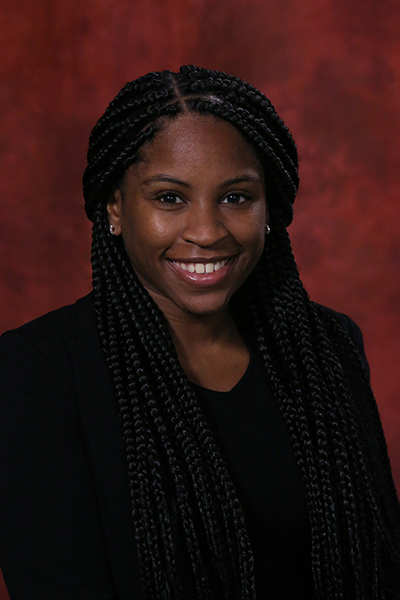
In what way were you involved in the College of Medicine’s Strength in Unity March for Justice and/or the demonstration at FSU PrimaryHealth? Or, what did you do to help coordinate these events or other White Coats for Black Lives initiatives.
“I was here for the summer, so I had a hands-on experience with the events. I helped make posters for the FSU PrimaryHealth demonstration. I was also one of the student speakers, along with M3 Shanquell Dixon, at the Unity March for Justice. Through SNMA, I also helped draft the Call to Action sent out to students and faculty. White Coats for Black Lives (WC4BL) was in partnership for the Unity March for Justice. A few classmates and I worked on reestablishing WC4BL back on FSU’s campus officially, in time for that event.”
What motivated you to become involved? What was the experience like?
“As an African American female, the recent events warranted action. Being in medical school as a double minority is an extreme privilege, and I feel that privilege should be used to uplift our unrepresented communities. This past year has been filled with civil unrest. While I may not be able to protest or change policies and laws, I can help shed light on inequalities and promote unity within healthcare. That is why reestablishing White Coats for Black Lives was so important to us. WC4BL gives us the opportunity to highlight societal issues and promote better outcomes for Black and other minority patients. Being action-oriented about social issues that affect my future patients embodies the type of physician I one day hope to be. The aim is always to ensure that minority voices are heard, appreciated, and acted upon through medicine. It feels amazing to be a small part of a big movement of current and future healthcare professionals that demand change both in the field and in patients’ outcomes.”
Why do you think it’s important for students and those in the medical community to actively support the BLM movement?
“Uplifting Black lives to the level of all lives is a must in basic human compassion. Compassion is the cornerstone of well-practiced medical care. Compassion must be equality given regardless of background … that is exactly what BLM is about: leveling the playing field. Championing for better health outcomes in African American patients teaches us to become better providers for all patients. I do not believe medicine is immune to playing an active role in social justice; our jobs intersect with the remnants of social injustice. Societal problems play a role in negative health outcomes and thus medical providers have a duty to act. Support of BLM means support of achieving true health equity and health equality, which I believe is the ultimate goal for eliminating health disparities in medicine.”
How do you think experiencing the COVID-19 pandemic, BLM movement, and other strong calls for societal changes, as a medical student might impact your career or future outlook as a physician? And/or, from your point of view, what impact do you think these events and movements may have on medicine?
“Changes that have occurred in 2020 will positively impact how I will practice medicine. Systemic inequalities for minority groups in health, policy and society have always been problems; this year ignited the fire once more. COVID-19 has shed light on this, and push-back about the BLM movement has as well. This generation, much like the Civil Rights Movement of the 1960s, is demanding change. As we are seeing now, these demands have turned into action that is dismantling the old systems of inequality. I expect this action to move forward into all sectors of medicine, from academia to the bedside. I expect more research and curriculum shift for medical schools and hospitals to truly assess how diversity and inclusion is integral for the well-being of patients and diversity in medicine. Also, I hope healthcare workers and systems remain cognizant of their role in caring for patients, regardless of cultural background. Overall, this year’s adversities will probably shape a more diverse and empathic healthcare field.”
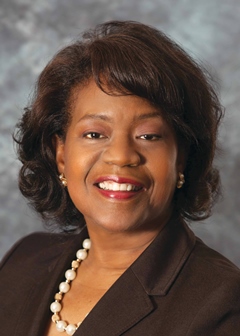
Is our medical school doing the right things in what we teach – whether it be about cultural awareness or public health?
“I believe that most students are happy that we are beginning to discuss today’s current events. Many of them state that they have been discussing all of these issues since their first year of medical school, but wish to have more direction on what to do about all the disparities.
“I believe that in addition to the thoughtful curricular choices such as community medicine and rotations in the immigrant community of Immokalee, and the rural community of Marianna, we will now be inclusive of population-specific medical treatments, as well as ways to address the compliance issues patients may have secondary to financial insecurity. Students should be aware of the unintended consequences of patients with no insurance, and learn to treat patients successfully using such tools as the Walmart generic list, and the free or highly discounted Publix list of meds as well as Target.
“I believe that students are looking forward to having their faculty teachers serve as role models to learn to care for patients as our mission suggests – to care for the elder, minority and underserved members of our community. We do an excellent job on our focus on elder care, but have opportunities for improvement in other areas. This may involve the incorporation of additional or different clinical sites of care, as well as targeting faculty that specifically have made a career in caring for this population of patients. Many of our students do note that many of their patients seen on rotation are well cared for patients with chronic conditions, who may not have difficulty with access to care issues, financial instability or live in medical deserts.
“The College of Medicine has an open ear, and is looking forward to enhancement of its many programs. Its goal is to remain contemporary, and is supportive of faculty as they adapt to the need to modify.”
Are you optimistic about where we’ll be five or ten years from now?
“The simple answer is yes. We will experience growth and development over that time, and some of us are pleased that the conversation has been started. Some of us experienced segregation and the wonderful gifts it gave us, as well as the problems of omission, especially in terms of education and opportunity. Many of us still remain annoyed at the conversations and will avoid the subject of race and cultural differences because it remains an uncomfortable topic.
“Over the next 5-10 years our medical students will come of age. We hopefully will teach enough regarding the history of medicine – a medical sociology course, if you will, that will address some of the historical wrongs of medicine. This could serve as a formal lesson to both faculty and students to assist the next generation of physicians who will not allow those problems to continue. Topics that come to mind – informed consent as it relates to female sterilization, the Tuskegee experiments, etc., and the importance of adequate translation services for patients where English is not their first language. Some of our faculty will retire, being replaced with a generation of new thinkers – those who have been socialized from an early age to be inclusive of others with cultural differences, and likely many who lived and were educated in very diverse communities.
“Students want to graduate from medical school prepared for the real world. We owe it to them to give them a snapshot of the history and the basic foundational tools for growth.”
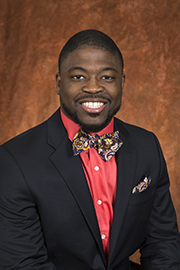
“My heart is saddened at the state of division this country is currently seeing. Now more than ever the effects of racial disparities is having an overwhelming stronghold on socioeconomic and health-care outcomes. The statistics are glaring. For example, people of color represent 57% of COVID-related deaths in Chicago while only making up about 30% of the city’s population.
“Medicine is currently in need of pioneers and advocates for equity and equality when it comes to medical care and medical education. FSU’s mission-driven curriculum gives insight into what you may face while you begin your practice. My experiences while at FSU COM, whether good or challenging, have helped me to realize our vision as agents of change. There is a need for a more diverse core of physicians representative of the communities we serve, and that vision has been made clearer now more than ever. Students of the future are the innovative face of medicine; be bold in your pursuit of excellence. Tackle racial inequities in medical care with surgical precision. Change comes one person at a time and one patient at time. Seek to live your life and pursue your medical career with a sense of purpose and you will always be fulfilled!”
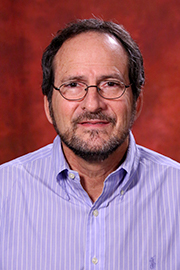
Should this be a cause to reflect on what we teach?
“To give an example, telehealth is an area under discussion for a long time here – now it’s integral to how we provide care to people in all kinds of different settings. People who are largely shut in, which is going to be an issue for a number of populations post-pandemic, people who are shut in for a variety of reasons; someone who is in assisted living, why do they need to come out of that setting to do a health-care visit for everything?
“That’s an example of how this may cause us to reflect on what we’re teaching.
“I do think work done by Drs. Nancy Hayes and Suzanne Harrison – the course we introduced late spring for some students who could not do Summer Clinical Practicum; COVID and racism; structural racism and social injustice. … I think really offered an opportunity to study the crisis that we were experiencing in real time. That’s an instructional opportunity that you seldom have – a chance to put everything into a nice context, but students need to read about it and get some historical context, as well.
“There’s some irony in that we’ve been trying to get more of that into our curriculum over the last several years and it has been a struggle; not because people at our school don’t like this content, but because there’s limited hours in what you’re trying to do whether it’s telehealth or more about social injustice and other things.
“I think 2020 has been a huge awareness-building kind of thing for our students, but I think it’s also been challenging when I think about our first-year students. I facilitate clinical skills small-group learning during the summer; we don’t always do this, but in the fall it’s the same small group, so I’m getting them two semesters in a row, and they still haven’t met one another [as of mid-August].
“What set of circumstances in a medical school allows you to be in your second semester without having met your classmates? Some of them may know one another from their undergraduate studies, but most do not and we’re in a position with this pandemic where we’re asking them to work from home and that’s got to be surreal. We’re asking them to be professional, to start medical school, and it’s got to be a challenge and to be stressful for them, yet they’ve done a great job from what I can tell.”
Is this a time for medical schools and the health-care system, in general, to reassess?
I do think what we’re going through, it’s historic, but some things that have made me feel really good during this time: All of medicine has spoken with a single voice about certain things, ‘Just wear a mask and put regulations in place.’ You’re hearing that from the FMA, you’re hearing that from the AMA, you’re hearing that about going back to school from the American Academy of Pediatrics. You’re hearing medical organizations looking at the limited science we have and trying to make some recommendations that are about public safety and that’s not always been the case that medicine and public health are on the same page. It’s really great to hear it.”
You’ve been a leader in public health, past Secretary of Health in Florida and Oklahoma. What has it been like to watch this unfold?
“We did a three-hour talk on the pandemic at the FMA summer meeting and my part was the public health side of it. I was fairly critical of where we are. It wasn’t about any person, it was fact-based, just delivering numbers and what we’re doing and where we are and it was refreshing to me to be able to do that when most of the time when I’m speaking to my medical colleagues they don’t know what public health people do; they don’t know what preventive medicine people do, and they are not in opposition to it, but they are not necessarily supportive of it. And it’s been really fascinating to see them be supportive of these public-health measures and to be vocal about it and to be interested in the science of it.
“I think it has helped bridge the medicine and public-health divide that has been very historic and deep for the last couple of decades, so that’s kind of neat. I wrote an article about that in 2005 – we had a chasm between medicine and public health. So even amid the abyss of all the things that have gone wrong there are a number of positive things that are happening; and those are the kinds of things you can see in the report.
“It’s a classic opportunity to step back and ask about our education process; the content about those things; and what’s education going to look like going forward? Now that we are mastering some of these virtual tools, can we use them to better advantage? For the students’ welfare, not necessarily for our own?
“On the flip side, a couple of dozen public-health officials around the country have resigned. Today’s number from Kaiser Public Health says there have been at least 49. Over the last couple of days the top California public-health officer was asked to step down over some kind of clunky data things. Seemed like a little overkill, but overall I think it’s really incredibly helpful when medicine and public health speak with a common voice like they have been during this pandemic. I think it’s helpful when all of medicine is saying the same thing: Trust the science.
“The science is rapidly evolving – and our recommendations may change and evolve; but we’re following the science and the expertise we have even though it may not be perfect science and perfect expertise.”
Do you remain optimistic about where we’re headed?
“Some of the glory and joy of practicing medicine has been confronted by the stark reality and even the dangers of practicing medicine and so it’s a wake-up call for all of us who are already in the field, but it’s an interesting kind of hurdle that new people considering careers in medicine will have to grapple with. People coming into medicine today – our next class, kids going through the admissions process – they are thinking about what it really means to be a doctor when it may mean selfless sacrifice; and not only working long hours, but being potentially exposed to diseases that are highly dangerous for themselves and their family; it’s about that sort of selfless, altruistic kind of things, a la Dr. Kildare.
“But I’m saying it’s really going to cause people who are entering the profession to really reconsider the rationale for entering it and I think we’re much more likely to get people who see themselves as servant-leaders and healers coming into the field versus people who see an opportunity to earn a good living and be in a higher SES class. So I think that’s a huge positive for the field, honestly.
“And the other thing I see as a positive is the kind of detente or rapprochement of medicine and public health – because this helps everyone see that we’re after the same thing.”
Our admissions philosophy already favors finding applicants who believe in service.
“Yes, I think our school does a great job with that, but I’m not sure other schools do that; it’s certainly not something that was asked of me when I went to medical school, so it’s a different world out there now, and that’s a good thing in terms of entering medicine for the reasons to be someone who gives back to the community and gives to others.”
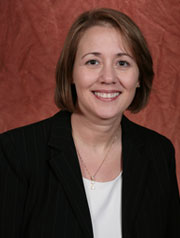
How did the medical school respond quickly to the pandemic and social upheaval? In particular, there were courses created or implemented on a moment’s notice to avoid a complete interruption of the medical education timeline?
“This is like nothing any of us have ever lived through. There will be surprises and we will have to adjust.
“We pulled students from the clinical setting in mid-March. At that time, they were a week-and-a-half from finishing what would have been their fifth, third-year clerkship. And the fourth-year students were approaching graduation.
“What we had to do was envision what meaningful education looked like and develop something super fast that would allow students to have that meaningful education and particularly to not delay the fourth-year students who were about to graduate.
“We needed to get those third-year students something meaningful to do since they had been pulled out of the clinical setting. So we did our best to finish up the rotations they were on by providing online curriculum in the clerkships they were already assigned to.
“We had to figure out a way to continue the educational process. [Geriatrics education director] John Agens was really instrumental in looking at geriatrics since we had a number of them who hadn’t finished that required rotation quite yet. And so he developed a way to do the geriatrics clerkship remotely with some online cases and daily meetings with the clerkship directors and education director. … and that was the model we were using going forward.
“The course that you are asking about is the public-health epidemiology elective. It was on the books – but not really being used – so we didn’t have to apply for a course number, which was fortunate. I worked with some trusted colleagues – and Kathleen Kennedy [clerkship director for internal medicine in Sarasota] was one of the people who was really instrumental in helping get this off the ground.
“We really took a look at four-week pandemics electives that allowed students to, in real-time, learn about what was happening in their lives. We did some basics on epidemiology, and with computer modeling we looked at past pandemics and then we really looked at COVID-19 and what was happening in real time
“In that, we did several days on just looking at health inequities and social determinants of health as they were happening, because it was during that same time there was all this racial unrest, and all of the sudden we were seeing the racial inequities in the way COVID was acting and impacting people of color in a more significant way.
“So we just learned about it as it was happening, which was really interesting because we were watching the news and we had more news articles than scientific articles at the time [in early April]. We were able to get articles that had been published ahead of print. … looking at articles and listening to a podcast, right in the middle of it – and we had students do a project related to what was happening in the pandemic as their final project.
“We talked about funerals, we talked about visiting, we talked about the economic burden we were likely going to see – and that was before it was really happening. So these students did these amazing projects. One of them did a project related to mental-health problems associated with the pandemic; one of them did a project that looked at different fabrics in making masks that would actually work. So there were a wide range of things that students developed and we were learning right along with them, because we’ve never been through a pandemic like this.
“One of the students, Jason Rivera, from the Daytona Beach campus, as his project he developed a model on social determinants of health. It was incredible.
“We met several times a week by Zoom, had online discussions and assignment meetings. The purpose was to give them meaningful, real-time information about what was happening at the time. And we ended up talking about racial injustice a lot because we had to with the pandemic. And then in the second iteration of the course, late April to mid-May, things had changed a little bit. We had more assignments behind it and we were seeing so many deaths and the inequities play out in real time. So we were able to talk about those things in more detail and really talk about the multiplying effects of health inequities and how during a pandemic it was impacted in a significant way. COVID really multiplied those inequities so that we could see them more vividly than people had acknowledged them in the past.”
“The course could have been developed in another time, but it might not have been. We pulled these students out of the clinical setting and I was determined not to let them fall behind. I was looking across the nation and seeing med students being pulled out. It happened across the nation at the same time, and there were so many who paused med school. I was worried that would have pretty serious ramifications – sort of the unintended consequence of a good decision. So I wanted to create meaningful curriculum to keep the students engaged, and how better to do that than to talk about what was happening? That was the reasoning behind the elective. It was very well received by the students.”
Does this period in our history give reason to look closer at what and how we teach?
“I think it definitely does, and change usually comes about because there is a need. I think this is one of those moments in history where we’re really going to evaluate what we’ve been doing, what we’ve been talking about doing, and then what we have to do because we were forced into pulling the students out; and we had to look at what to do with their time, and how do we re-envision medical education, keep our students engaged, keep them learning, even while we are facing this? We really don’t know how long this is going to last. … we don’t know if the vaccines are going to work, we don’t know if people are going to take them; but there are some changes that have been made that I think will be sustainable, and one example is this elective. We’re going to offer it 2-3 more times in this coming year.
“We realized for the deep, deep conversations we were having we really needed a smaller cohort of students, so we’re going to limit it to 20 at a time so we can really get deeper into some of the material, the economics of racial disparities, health equity and how we really make change, and how do these pandemics happen?
“There are other new electives that are being developed that I think will add to our curriculum. We’re really going to look at what does remote learning look like? And how is it not a placeholder, but meaningful education? So as the electives administrator I’m looking very carefully at the curriculum that people are suggesting for electives. I think another change that will likely be sustainable is to do remote proctoring for exams. Lots of times when people can’t come in for one reason or another they end up rescheduling exams.
“The changes that are going to come about in the curriculum because of increased racial awareness and really anti-racism, anti-bias intent in the curriculum is going to be sustained and it isn’t going to go away. It’s unfortunate that we need to be reminded of these things so frequently, and that they are not sustained, but I hope in medical education this sticks.”
What we’ve witnessed is forcing us to step back and reevaluate?
“I do think as I look back at the last six months, that FSU is leading, or is one of the leaders in medical education as changes were being made across the nation. ... to accommodate students during the pandemic.
“I think we definitely have done a good job of recruiting a diverse student body. What we haven’t done as effectively is recruit and retain and reward a faculty that is representative of the student body. We’re slowly getting there, but the changes we’re seeing in our cultural environment are going to accelerate those changes at the medical school on the faculty level, and I see people asking questions and providing feedback on things that a few years ago they might have been hesitant to do.
“I do think schools that are progressive, schools that are listening to their community, whether it’s students, other faculty, clerkship directors, whoever the community is, are really listening and providing meaningful response to what’s happening. I think it’s going to stick.
“We had to make some curricular adjustments to clerkships that we don’t want to be sustainable. Some of it reminded us that what we were doing before was really wonderful and we need to get back to doing it again. But changes like this, and the way we look at the fourth year of medical school? I think they’re going to be sustainable.”
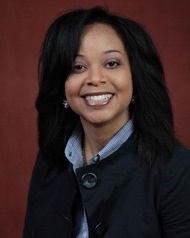
Are the events of 2020 going to drive long-term change in how we teach?
“Should it change us? Yes. We have an excellent mission at the College of Medicine to care for underserved populations, and all the ones, minority, rural, elderly and I think we believe the mission, we live the mission. … people who come here, they come for the mission and … we recruit students from underrepresented backgrounds and hopefully prepare them to go back and practice in underserved areas. But I think what has happened with Covid-19 is seen as a health equity multiplier. It’s not that racism wasn’t there, or inequities weren’t already there, but Covid-19 really brought it to light at the same time people were dealing with tragedies and very visible racist actions by people.
“If you ask people of color, and even others, they’ll tell you racism didn’t just start. It’s been pervasive, it’s been persistent, and it’s not just that interpersonal piece of it, it’s the structural piece and the historical injustices that have taken place, that have permeated so much of what we do, how we design things. A lot of our policies are around racism. And it really keeps people from having the opportunity to be healthy – and I mean in a holistic way, not just physical health, but mental, emotional, all those things.
“We have those barriers and Covid-19 shed light on it. And it pushed us to a place as a college of medicine to say, ‘Hey, what are we doing? Are we sensitive in the things that we do? How are we treating our colleagues? How are we treating each other? How are we responsive to the community?’ And I think that’s the big thing that we’ve talked about over time, like is our school socially responsible? You and I have been a part of filling out those surveys assessing, are we socially responsible? Well, the events we’re seeing really causes us to ask, ‘Are we standing up against racism?’ Not just verbally, but what are we doing? When we had a town hall and students wanted to talk about this, I think the students were pushing and calling us to the higher ground – saying, ‘Are you going to talk to us about it, or what are we doing about our own culture, our own environment?’
“It makes us think about things on several levels internally, like how are we doing here? How are we doing with faculty? How are we doing with students? Even some of the things around equity, gender, it’s an opportunity to look at things like, ‘Are we diverse?’ And not just diverse, but are we inclusive?
“Are we reaching that level where people feel comfortable being here? Are we dealing with the unconscious bias in our own system?
“I think it’s important for us as faculty and staff as well to take that step back and say, ‘How are we doing here? Are we welcoming to people with different backgrounds? And what does that look like, especially as it relates to African-Americans, and what are we doing for the community? Are we showing up for the community? Is our community healthier because there is a college of medicine here in town?
“And are we going above and beyond just being passively anti-racism, but are we actively anti-racism? And I think that’s really the message. I think some people are, ‘I’m not having a prejudice or racist action towards other people,’ but are you being active about it? Are passive about it, or are you being actively anti-racism? And I heard someone say, ‘If you’re not doing something, that is racism, as well.’
“It has made us more aware, and think about what we’re doing here and what things we need to be doing differently.”
Are we a leader in this area among medical schools?
“I hope so. I think we are at the very. … we’re at the edge of it, but I don’t think we’ve gone all the way in as far as we can go. And I’m very happy that we’ve made the progress we’ve made in a short time, like we’ve had ‘racism, health inequity, bias’ sprinkled throughout the curriculum in so many different places and now I see there’s been an increased emphasis on making sure it’s more prominent. It’s very student engaged, which I think is important, and because it was student engaged, other students can see the leadership and collaboration going on. We also made sure with some of the courses it was community engaged.
“We had community leaders come in and share in the teaching and the dialogues. Health Equity 101 with the first-year class. We had a guest speaker and they loved it – hearing about her history. And the racism model we did, the students found it valuable and student leaders stood up and said we want to do more. Not only first and second years, but third and fourth years, as well. So students rise up to take that leadership role, and I think the curricular change helped people know, hey, this is important to us; we think this is a part of your educational experience – that racism impacts peoples’ health. And, yeah, you can be the change you want to see in the world, like, you can be a part of that change learning about it.
“This goes beyond the classroom. It goes to, ‘What are we doing for the community?’ And that’s where we are actively changing the curriculum and being about what we say. Not just teaching about it, but what do we do? How do we show up against racism – the COM, through our policies and procedures, but also in the community, by how we’re impacting the community.
“We had one event at PrimaryHealth which was more of a BLM event for the community and then an event at the Capital, meant to be White Coats 4 Black Lives, but where we pulled together with TMH, Bond, Neighborhood, invited CMS, and students worked closely in the planning and reached out to the sheriff’s office and he agreed to help us with permits.
“It was a community event. Instead of saying this is our thing, we’re the doctors, we joined in their event and it became one event with TMH, CMS, people in the community. That was a very visible thing with several leaders from the college. We did an eight-minute walk in silence to signify the amount of time it took for George Floyd to die. So that was very visible, but then you think, okay, what’s the next step? Yes, we marched; yes, we stand with other people in unity against racism. Now what? What’s our next step?
“We’ve looked at the university’s measures, equity things, and have to see where we go from here. But I think all of this moved us to be more aware. It’s pushing us, for sure.”
Are you optimistic about where we’ll be 5-10 years from now?
“I am optimistic, it’s part of my nature. I believe God is going to help us through this thing and we are going to be in a better place as people, but I think it has to be intentional. We have to be proactive and actively anti-racism. We have to be intentional, and that’s the thing that is so important. It can’t be led by people that are just minority populations, or people that have been at the wrong end of racism. It has to be everybody taking ownership, taking responsibility to educate themselves, to deal with their own personal bias, deal with the institutional systemic things and figure out how to act together. So I think I am optimistic. I think we work with people who care about people.”
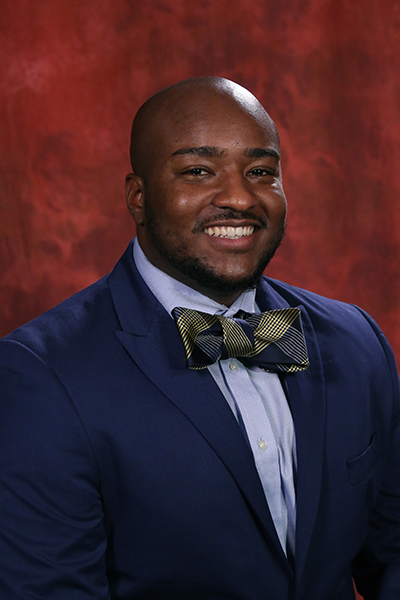
Has your experience at Florida State, whether in the classroom, in the way the mission influences the approach to medicine, or in outside experiences through student activities, helped you to make sense of all that is going on in the world today?
“Honestly, trying to make sense of the current condition of the world is rather impossible. However, I believe that by understanding my role in it all maybe I can make positive change in my circles. I think my experiences at FSU COM have afforded me the opportunity to see how medicine can intersect in different aspects of society. For example, my first two years at FSC COM I had the opportunity to be a co-coordinator for Racism Awareness Week. This event is focused on bringing awareness to racism in various aspects such as medicine, border control and education. As we worked to put this week together, I was made aware of many social issues I personally never faced, however, some of my friends have. This showed me how our experiences create various layers of ourselves and how important it is that we learn and understand each other. As a physician this is at the core of making the correct diagnosis. If we don’t take the time to listen and understand our patients’ stories, we are doing a disservice.”
How has the landscape in medicine changed in your eyes in light of both the pandemic and the need to address social inequalities, whether in health care or society, in general?
“Since the beginning of this pandemic, I’ve been constantly ruminating on what it means to be a part of medicine. As a medical student during this time, I have the rare opportunity of witnessing how both medical professionals and the non-medical public evolve and respond. On one hand I understand the mistrust of science by the public and how fear can manipulate thought. However, on the other hand I understand the frustration of medical professionals whom are constantly under scrutiny because of the spreading of misinformation. In reflection, my love of medicine has not changed. However, I understand that as a physician I will be judged not only on my work, but also how my profession is viewed by the public. Though this scares me at times I am aware, more than ever, of the importance of my role. Especially as a Black male medical student, I represent more than just a guy with a dream. I represent 400 years of suffering by my ancestors. I represent hope where sometimes there is none. Since the establishment of this country, Black people have been viewed as less than human and treated as such. Today not much has changed and many people, whether consciously or subconsciously, still view us in this manner, as seen with the slaying of George Floyd. The current situation of the world has shown me how medicine interconnects with other disciplines, such as social justice and education. As a medical professional, my platform can be used to bridge these disciplines, while giving a voice to the many unheard Black and brown voices. The pandemic has publicized the importance of utilizing medicine as a tool for change.”
So where are we going? Will we recover and become better and stronger?
“It is hard to really know where we are going. If we take a bird’s eye view of our situation we notice how as a country we couldn’t unite on the idea of wearing a mask. However, many of us stood in solidarity as we protested police brutality and for Black Lives Matter. I think we are in a paradigm shift and every choice we make from this moment on is crucial and important. Inevitably, we will recover, but we need to have meaningful conversations and a plan for our future. This plan at minimum needs to incorporate the reformation of our justice system, the reevaluation of health care and a complete renaissance of our education system. In America we are skilled at cutting the branches of our problems. However, we rarely dig up the roots.”
Is our medical school doing the right things in what we teach – whether it be about cultural awareness or public health? Should we step back and reevaluate – make any changes to the curriculum, to better prepare our students for the world they will be practicing in?
“Though our curriculum may focus on doing the right thing, the tools we need cannot be taught in a classroom. It is vital that we are first exposed to these situations in the classroom setting, however. If we are unaware of our personal biases how do we know when we are doing the right thing for that specific patient? I do think we need to take a step back to create a curriculum that not only talks about the problems, but is workshop focused on giving us tools to be prepared for the world. I do think we do a great job. However, there is always room for improvement.”
Are you optimistic about where we’ll be as a country five or ten years from now?
I am not pessimistic about our country for the next 5-10 years, but I wouldn’t say I am optimistic either. I believe that change will be seen not in my generation, but maybe the generation to follow. I do however, support the idea that my generation needs to step up and become the voice for change. We must come together and build a country on love, ingenuity, humility and democracy.”
Are you still glad you decided to go to medical school? And are these events shaping what kind of physician you will become?
Becoming a physician has been my dream since 11th grade and I am grateful each day for my journey. I am more than excited to be a medical student. These events aren’t only shaping the type of doctor I will become however, it revealing the issues with our society and how I can address them. Every day I am learning more about myself and how I want to make change to the world.”
Will the events of 2020 change us?
“I don’t know that it should change us. I think it should take us back to our original mission. Like any other mission, it’s a good thing to pause and reflect on how close we are to fulfilling that mission –and what other elements perhaps may have not yet been addressed.
“I think we’ve had a long history of having a pipeline for our school to bring in a diverse group of students. I think we’ve had a pretty good history in terms of our mission and bringing people back to Florida, and to primary care and those type of things. Where we might look is how well we have done internally. Are we creating within the COM the diversity and cultures reflective in the faculty and the staff so that people from all backgrounds can come in and feel comfortable?
“I remember early on there were those who argued we should only invite students into this school who are open minded and are open to learning about diversity and culture in all its forms in the United States, and I actually argued against [excluding applicants who come from areas where there may be a less receptive perspective on issues of diversity] because I think it is our job as a medical school to accept students from areas that we know they are likely to serve, where there is a need for more doctors, and that their time in medical school should be a developmental journey for them. They would spend four years exposed to each other as a diverse class, exposed to a faculty, hopefully, that would be a diverse faculty with different points of view. ... and that as they walk that path, they may think differently in their fourth year than they did in the first year. And I think that we as a faculty have to be willing to walk that developmental path with them and not be judgmental of them.
“So if we’re going to bring in students from certain communities where they have ideas that are different, if those ideas are contrary to some of the guidance of the actual medical association, we have to be able to gently point out that as a matter of medicine and science it is their job to put some of the personal ideas aside and to work at the literature and evidence-based medicine and have that be their guide. … I don’t think they are going to come to medical school fully baked in the oven. That’s why they come to medical school, and it’s our job to guide that.
“To rephrase the original question, are we fulfilling our mission? Not just in how many graduates we have produced, but during the time those students are with us, have we guided them in a gentle way into learning to be patient-centered for patients from every background, regardless of personal views? Have we guided them to be evidence-based in the science they need to practice in an equitable manner?”
What is the role of the Immokalee Health Education Site in helping students understand and care for patients from a variety of cultural backgrounds?
“Every year, 38-40 students do rotations here. Third- and fourth-year students, and first years who come to Summer Clinical Practicum. So by the time that they leave, about a third of each class has at some point come down to Immokalee to do a rotation here.
“We’re not a regional campus, but we are a focused clinical learning site and we are now the home to cross-cultural medicine and immigrant-health programs. And so it’s a good thing for students to come down because they get that exposure to the Haitian population; to the rural, Caucasian patient population that’s been here in Florida forever; to the Latino migrant farm workers.
“So what we are doing here is good for our students, but there’s a role for all of our regional campuses. How can all the regional campuses reach into their area and try to bring in perspective that reflects our student population? Whether it’s underserved, or just diverse.
“Because we need to understand, a diverse population may not be underserved. Our students need to know how to deal with a healthy diverse population, not just the underserved.
“I think each of the campuses should have a federally qualified health center, community clinics where they can place the students and look to see those patients, or to any practice that has a preceptor that may be of a diverse background and may be more likely to be more diverse researchers. Those doctors are going to see a more diverse population because people go and seek like people. So if you are going to the doctor, a lot of times they will go and see an African-American doctor, or a Latino doctor, or an Asian doctor, and so if your preceptors reflect that diversity you’re going to be more likely to see patients that are diverse.
Is it possible to require one clinical rotation with an underserved population?
“I don’t think it’s realistic. I think we seek a general population for all of the rotations. I mean, Black women have babies. To the doctor, they come in all colors and shapes and so we don’t just need to go to an underserved population to see diversity, what we have to do is try to provide opportunities that go beyond preceptors from suburbia, because that’s going to pull a certain population that has some diversity, but not a lot.
“When students come to Immokalee for required rotations and for their third year, they can come for the required geriatrics rotation, but they can also take electives here in their fourth year – family medicine for underserved populations, or women’s health. … there are a variety of electives where if they want to focus on a certain population they can find it here.
“But I think because of the mission of our school they shouldn’t have to go out of their way, only if they want to, to seek a rotation with an underserved population. I think all of our students, somewhere among all of the required clerkships that they have, they should have rotations that the population they are seeing reflects our students.”
How has the pandemic impacted patients in Immokalee?
“It has been a huge problem because of all the poverty issues that have not allowed for social distancing. Some families may be living together; they don’t have anywhere to go to quarantine.
“There’s also a lot of misinformation and that’s why we have a campaign targeted for migrant farmworkers. We also have to be aware of providing patient information people will understand. Like if you want people to stand six feet apart, ‘six feet’ doesn’t mean anything for some people, so we have to find ways to communicate the message in ways, and in simple language that people understand.
“Immokalee has had a lot of difficulty as farmworkers go out into the fields they go in buses, and so how do you social distance? And the bottom line – if you don’t work, you don’t eat. There have been misrepresentations where they have to get tested and they believe that if you acknowledge you are positive then you can’t go to work and if you don’t go to work then you won’t have any food on your table. We also have parents who may not know the language, or may not be computer savvy, and they’re trying to support their kids during home school. It’s a huge problem.”
We’re living in a very difficult year. Do you remain optimistic?
“I feel optimistic and the reason I feel optimistic is not just because of the faculty, it’s because of the students. I was around for the 60s and 70s when we had a lot of unrest. In Miami, there were a lot of protests that were limited to people from the African-American community. Now when you see a protest or see something going on you see a diverse group of people joining together; I think we have a generation of students that did go to school with kids who were not of their same culture and are now growing up and saying, “Wait a minute, why is this person being treated differently than me?’ And they’re also somewhat, not fully, but somewhat empowered to speak their mind that they could not speak before.
“I have not seen any protests locally or nationally that hasn’t been quite diverse, and to me that’s reason for optimism. It’s not just the African-American students saying something.
“I think that things become complicated when we look for simple solutions to very, very complex problems.”
“We talk about ‘people of color,’ but what does that mean? My grandparents are from Northern Spain, Valencia, where every morning they play the bagpipes, just like the Irish. The Irish were poor, they got on a boat, they came over and they settled in the northeast part of the U.S, and they are seen as American, but my grandparents went to Cuba and then the revolution came and so they had to go to the United States. So it’s like they didn’t have a direct flight to America as the Irish did. Maybe they had a connecting airport, but it’s still the same European people, yet I’m supposed to be a person of color even though it’s not different than the Irish, or the Italians, or anybody else in Europe that came to the new world.
“We try to find these little things that somehow describe an entire population and it’s not that simple. The United States still has not figured out how to deal with diversity, which is still a big challenge.”

Can you tell us more about the virtual systemic racism townhall meeting you helped organize?
“I did a pandemic elective with Dr. Harrison and we focused on the differences in social inequalities and the pandemic. It was really eye-opening because you always know about racism, but it doesn’t really connect to medicine until you actually see the numbers, at least for myself. And so now, it’s on the forefront of my mind. Every time you see a patient, just treat them the same. You just pick up at square one, you don’t want to put any of those biases in your mind.
“Something I thought about was, what are we doing as a school? Our mission is to serve the underserved and I talked to a couple of my classmates and we started brainstorming and ended up being able to have the virtual town hall meeting. My personal realization was that this is something we should really combat as a school, especially considering what our mission is. That’s very important and maybe it wasn’t as productive as it could have been but it at least gave everybody a platform to pose questions and challenge people, including authority figures.
I wouldn’t say I’m outspoken, but I’m not scared to talk to a person of power. But there’s probably people out there that are, they’re scared to voice their opinions or see what’s going on, so I wanted to give them a platform where they had an opportunity to ask questions and start discussions.
“Being an M.D. holds a lot of weight and people will listen to me just because that’s what’s coming out of my mouth, no matter if it’s true or not. So, we have a great responsibility to our population and to the people of our community to fight for them and be their voice.
“It was nice to hear from Dr. Rust who was a big proponent for us. He spoke a lot about us needing to change as a school and maybe do more than we’re doing currently. Not being there on main campus, I don’t really know what curriculum changes are going on there but it was nice to hear that some of it is being changed and maybe even being highlighted because some of these classes or lectures may not be required, which is another issue where people may not be going. But those are important lectures, just as important as learning how to treat a patient - learning about how to handle social inequalities."
On speaking out and advocating against racial injustices…
"I just felt like it’s my responsibility because I have a voice and I’m able to talk about it and not be scared of the consequences. Maybe I am scared too, but either way, it’s a responsibility that I have."
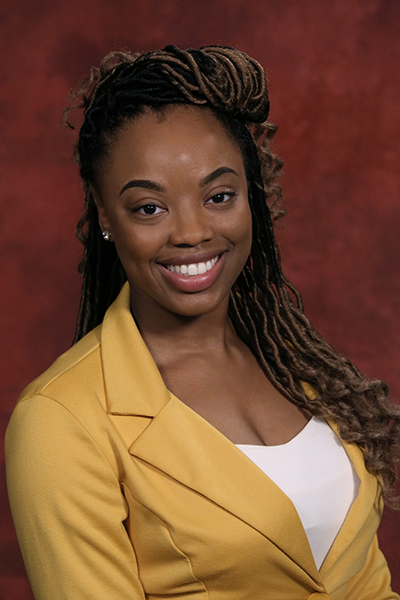
As a speaker at the Strength in Unity March for Justice, what message did you strive to communicate? Can you give a summary of what you said?
“The message that I strived to convey was that we need to do better as humans about caring for each other just because it is right, not for a reward, not because of shared interest, political views, etc.
“I started off by asking the crowd ‘How are you?’ I wanted the crowd to formulate an answer in their head. I continued my speech by stating how the question, ‘How are you?’ has lost its meaning and changed to a casual greeting. It is a greeting that most are taught at a young age that it is deemed rude if this phrase does not proceed a new conversation. It is a question that is stressed in medical professions as an essential key to the patient encounter. I then explained that during these horrific times, a harmless phrase has been a manifested nightmare for me. For a few reasons…
- Lack of empathy; few people reached out. It is especially eye-opening because College of Medicine staff, faculty and students did not reach out to the Black students on campus, but this is an essential key to what you stand for, serving people!
- Fear that the people who want to be and are health-care professionals do not really care about the well-being of the people. Fear that if I was asked the question, then I won’t answer truthfully because I have been taught as a Black woman that I need to be strong and am ‘not allowed’ to be vulnerable. Fear that if I indulge in my emotions, then I won’t be strong enough to continue fighting to be able to serve health-care to the underserved and represent the minority community.
"I then stated how I’ve felt during this time … hurt, disappointed, alone, scared, angry, brave, strong, outnumbered, exploited, silenced, lost, and the most disheartening -- I feel like I’m suffocating.
"I then concluded by suggesting what can be done. For the Black community, accept all help, and with acceptation, be vulnerable and ready to educate and communicate and express your feelings. For our allies, reflect on your actions, listen, be vulnerable and uncomfortable in communication, educate yourself on the true history, and work to create systemic change.
Again, I asked, ‘How are you? Did your answer change? Will you actually wait and want to hear the response when you ask the question?’”
What motivated you to become involved in the March for Justice and similar events? What was the experience like?
“I have always been an advocate for the underserved and also believe in justice. But I never wanted a ‘political platform’ or to be on the ‘frontline.’ The main driver for me was I knew if I did not continue to work to be a health-care professional, if I did not use my voice to speak out for the systemic racism that is indeed embedded in our healthcare system as well, then I would not be following my purpose and I would be breaking the oath that I have taken as a PA student.
My experience was uncomfortable at times because in order to get the message across, I had to be vulnerable. But it was heartwarming to see so many people ready to listen and make changes.”
Why do you think it’s important for students and those in the medical community to actively support the BLM movement?
“When your patient is hurting, what do you do? You try to ‘fix’ the cause. You try to treat the symptoms. Do you do this because you are under oath? Do you do this to avoid lawsuits? Do you do this because your purpose is serving others? Black lives have always been threatened, hurting and suffering. This is an issue that needs to be fixed throughout all systems, especially in the healthcare system. It is important for the medical community to be involved in BLM to, 1) Understand the issues that their Black patients face. This is a social component that affects many realms of Blacks’ lives, and 2) To break their biases. People in the medical community all have biases and BLM can assist with educating individuals, which in turn, can help with patient-centered care to a black patient … 3) To face the issue. Silence is a choice as well. Hypertension is known as the silent killer.”
How do you think experiencing the COVID-19 pandemic, BLM movement, and other strong calls for societal changes as a student might impact your career or future outlook as a PA?
“I think that these experiences, like any others, will shape how medicine operates. For example, due to the COVID-19 pandemic, many practices have had to offer more telemedicine visits, which I believe could be beneficial for rural communities. There are many limitations when it comes to health care in rural areas. I also know that, sadly, in the past, many corporations have cut back on janitorial staff to supply higher salary for other employees. I think the pandemic has and will continue to alter that mentality. I think the medical field may shift to more primary medicine needs. One can only hope that insurance companies, pharmaceuticals, etc., will note the importance of primary health in preventing sequelae of events and being healthier to decrease risk of illnesses like COVID-19.
“I also hope that the BLM movement sheds light to the awful systemic racism among health-care fields. I hope that there will be more studies done appropriately for Blacks to better treat their needs. I hope to destroy biases that cause black women, specifically, to feel unseen, unheard, or misunderstood, which leads to increased health-care risks. I hope that the fear of health care among the Black community can be broken. Sadly, the track record has not been good for the Black community with studies and health-care system as a whole."

What motivated you to become involved in the College of Medicine’s BLM events? What was the experience like?
“My motivation is a combination of previous experiences and the overwhelming responsibility to create the change that I want to see around me. I realized that I had a voice and due to unfortunate events, my feelings were finally validated, which, in turn, gave me confidence to use my voice to educate and eventually create change. The experience of speaking and sharing my thoughts in front of other faculty and staff was empowering and necessary; not just for me, but also for people such as myself who feel invisible in this world most of their lives. The experience also made me aware that my responsibility is not solely to be a great scientist but it’s also to make myself visible to others like (and un-like) me.”
Why do you think it’s important for students and those in the medical community to actively support the BLM movement?
“It is extremely important for students and those in the medical community to actively support the BLM movement because EDUCATION does not end on campus, education is also recognizing the flaws and weaknesses of our community and culture so we can be a better version of ourselves for our community, which, in turn, will lead to a change of this negative culture of bias that is imbedded in our communities today.”
“I have a lot that I could add but I would be writing forever. My speech - my “They see me as if…” piece - is a summation of my past and present experiences.”
“They see me as if…” speech given by Nella Delva at the Strength in Unity March for Justice:
“First off, I want to thank everyone for taking the time during this ongoing pandemic to be present in this Black Lives Matter movement. Your support and your voice are important in order for change to happen.
“Special thanks to our faculty, administration, staff and students for organizing this event because it allows us to express ourselves, and give light to the issue most importantly discuss our part in the solution.
“Here at the FSU College of Medicine, we need to do our part in making sure that we work together to provide resources, education and training to help support Black and brown people everywhere. I must be real and say that this is a first for me, standing in front of you today, but I also understand that I have a responsibility to take up space and speak my mind, especially now I feel that people are finally listening.
“Before you leave today, I want to share a piece with you to give you a glance of my experiences as a Black immigrant woman on how they see me.”
“They see me, as if…”
They see me as if:
My Black life is invisible
My Black life is disposable
My Black life is unworthy
My Black life is dispensable
They see me as if
My Black life is unimportant
My Black life is replaceable
My Black life is insignificant
They see me as if
My Black life is unbalanced
My Black life is disrespectful
My Black life is irresponsible
My Black life is untrustworthy
They see me as if my Black life is worthless
But today, I’m here to remind myself that:
My Black life is beautiful
My Black life is worthy
My Black life is resilient
My Black life is important
I remind myself that
My Black life is strong
My Black life is loving
My Black life is understanding
My Black life is companionate
My Black life is forgiving
I continue to remind myself that
My Black life is intelligent
My Black life is dependable
My Black life is loyal
My Black life is competent
My Black life is successful
And beyond everything else I. am. HUMAN. And my Black life matters.
Every day I will remind myself that my black life is important.
I want to encourage everyone to be conscious of their professional and personal efforts to do better, act better and be a better person in their everyday lives so we can all protect, understand and empathize with Black and brown people such as myself.
The Black Lives Matter movement does not STOP after this protest is over, or after giving a donation. This movement is a conscious effort to remind ourselves that we truly matter.
And because we matter, let’s take a couple seconds to say their names:
George Floyd
Breonna Taylor
Ahmaud Arbery
Botham Jean
Tamir Rice
Trayvon Martin
Eric Garner
Philando Castile
Samuel Dubose
Sandra Bland
Walter Scott
Jordan Davis
Thank you everyone.
My name is Nella, I’m a rising third-year at the FSU Biomedical Sciences department.
Be safe, be conscious and be well.”
What were the challenges you faced when we had to take students out of the clinical setting?
“I think a lot of it was disappointment from the students, they couldn’t go see patients, they couldn’t meet face to face with their faculty. I think it was on both sides. The students, they wanted to get back into it, they didn’t want to jeopardize themselves, but they wanted to continue their training. And they were very appreciative of what the main campus came up with in terms of bridging to online cases, but they also knew that online cases aren’t relay totally exemplary for what you’re going to see in real practice, so they really wanted to get back out there. And the majority of them were anxious to get back and when we sat down and said, ‘Okay, these are the restrictions,’ they all embraced it. They said, ‘Look, we’ll do whatever it takes to get back out there and start seeing patients.’
“The faculty was very receptive to that. We always emphasize to the students that if they need to do PPE, full gear, and there is a shortage, then they should not be wearing it and they should not be seeing those patients. The protection for our students was they don’t see patients who had COVID-19 and from our campus the students were eager to get back and they were willing to wear masks and social distance long before that was popular … and we’re very thankful for the opportunity to be there and the faculty being there and the clerkship directors really picked up the slack.
“Overall, it was tough times, but we all did well.
“We’ve been blessed. Our faculty do a wonderful job teaching students and they enjoy the students. They do everything we ask of them and the hospitals were phenomenal. AdventHealth and Halifax were very gracious. I was able to establish and have relationships with the CEOs of the major institutions and my pitch to them was, ‘Look, we want our students to be safe and we want our students to be able to see patients, but we don’t want to take PPE from people who need it to continue to care for patients who are very ill.’ They were very appreciative there wasn’t a fight about equipment nurses need.
“The hospitals knew good and well early on that our students want to be working alongside their faculty, but we do not want to be an impediment to the care of patients. And they know there’s going to be times where they’re going to be asked not to go see patients or they’re going to be tasked with staying away from the hospital for a certain period of time and they did. Our students embraced it, and the faculty was very supportive
“The majority, when we called them back in the May-June timeframe, hey, we’re putting our students back out there, they’re going to be wearing a mask, they’re going to be social distancing. If they need PPE to see a patient they won’t be seeing that patient – and that’s okay.
“When things shifted, when the AAMC changed the guidance, we had already done a lot of prelim work, so we were ready. We didn’t bring all brand new third years and put them out there. We had the Class of 2021 needing more rotations to finish up their third year, and they were the first ones we allowed to go back and see patients. So, you weren’t dealing with brand new third year students who are trying to find their way around the hospital, these were students who were at the end of their third year. They pretty much knew where to go, how to get things done, and what area they needed to avoid so they wouldn’t be stumbling into something they shouldn’t be exposed to.
“So, I think when we phased it in, when soon-to-be fourth years were getting their last clerkships done, the incoming third-year class was ready. At the main campus – Drs. Christie Alexander and Suzanne Harrison did a wonderful job with the whole process of transition where the third years came here, we were orienting them while the fourth years were going through it, so the fourth years would help the third years to a certain extent, but the third were not sent down here and thrust right into patient care
The fields had been plowed for the incoming third years, so the fourth years had prepared the hospitals, so when the third years came in they weren’t totally raw.”
There were additional challenges with third-year students arriving at the regional campus still in need of taking USMLE Step 1?
“Some of those were a scramble. The USMLE canceled everything, then opened it up, but some of the testing sites weren’t really open. Our students were there with a reservation, but didn’t get to take the test. There was significant disruption. Some students who signed up but didn’t get to take it were left with a feeling of, “I’m not ready to take this now.’
“Some of them have told me, two or three, the reason they are taking it late is because they were ready, only to find out their date was canceled. They couldn’t’ get another date for 2-3 weeks and they were in the process of coming down here [to Daytona Beach from the central campus] and they didn’t want the upheaval of Step 1 along with that.
“We had several who could have taken it earlier if not for the disruption and ended up choosing to take it in September. Others are going to take it in January or February [of 2021].
Is it difficult to begin the clinical rotations while still preparing for Step 1?
“Several students have said it’s different. They’re in the clinical environment all day seeing patients and you come home at night and you’re tired and you really want to study and read versus, ‘Okay, I get up at 7 or 8 in the morning, but I need to study four hours and prepare for this.’ It’s a different pace. A lot of times in preparation for Step 1 you don’t see the reason why you’re learning this, whereas in the clinical learning environment you see it, you go home and read about it, you understand why you’re doing it that way. It’s just a different learning process.”
What about fourth-year students and the process of applying for a residency?
“We’re in uncharted territory. Unlike the business sector, we really haven’t adapted to distance interviews, and I think we’re all a little bit cognizant of that. But our students are really resilient and they are incredible.
“My concern, honestly, they’ve heard me say this, our students’ greatest characteristic is their ability to interact with people. I mean, they come in, they look you in the eye, their interpersonal skills are really good and I think that’s part of the screening process FSU does [in admissions].
“We’re trying to train doctors to interact with human beings. Their greatest strength is their ability to interact with others, and it’s really hard in Zoom meetings to do that.
“And we’re all at the regional campuses doing things to help prepare our students. We’ve always done mock interviews, but we’re emphasizing them much more this year than in previous years. We’ve got faculty willing to do Zoom interviews and in-person interviews to try and help our students and we’re all doing things like that.
“But there’s a little bit of angst on my part. When your greatest strength is the face-to-face interaction, it’s going to be hard to express that. So I encourage our students to practice, do mock interviews and learn from them.
“Dr. [Shenifa] Taite at the central campus gave a wonderful talk about online interviews and tips and things like that, and those are things we’re coaching, but it bothers me that our students’ greatest strengths aren’t going to be seen by the program directors.
“But we’ll see how it goes. We’re not alone. We’re certainly not the only medical school dealing with this.”
Will we change permanently in the way we do things? Should we?
“We’re clearly in uncharted territory. Are we going to revert back to the old way? My experience has been that very rarely do you revert back to the old way, because the good old times are not always as good as maybe you thought they were. The things I look for that we can always improve on is where we can see now a lot of things that medicine is going to. In particular, telehealth and we’ll be looking at ways we can bring that into our training, both in the [Clinical Learning Center at the central campus] and in our clerkships. I think we’re gonna have to change to a certain extent.
“One of the strengths of the FSU College of Medicine is we don’t have that mantra of, ‘Well, we’ve done it this way for decades.’ We haven’t really been around that long, and we’ve got some really incredible educators who have been working – and are working – on different ways to reach our students and to help our students. That’s a great asset, and we don’t have department heads who are pushing back and saying, ‘No, we’ve always done it this way, we’re going to continue to do it this way!’
“You’ve got leaders like Dr. [Jonathan] Appelbaum or Dr. [Alma] Littles or Dr. [J.] Fogarty saying, ‘Okay, what can we do better? How can we improve this?’
“I see a lot more of telemedicine. I see a lot more of routine use of masks and social distancing, even after this is gone. I think we’ll learn kind of like they have done in Japan and in South Korea – if they’ve got an illness they’re gong to be masking up. So I think it’s going to change now. I also think that the face-to-face and the live interaction both in medical education and in the care of patients is vital. I really believe in the benefit of the healing touch.
“One of my preceptors, a doctor I worked with in residency, a cardiologist, he used to tell me he never let a patient leave the room that he didn’t reach out and touch them. Even if you’re in for counseling for depression, he would reach out and touch them on the shoulder, pat them on the back, and he would emphasize it. Look, that may seem insignificant in most cases, but the ability to touch another human being is one of the gifts that medicine gives us, and I think that’s going to continue to be needed and will continue to be cultivated and I think our students are well prepared for that.”
How have you seen the calls for social justice impact medical education?
“We have a couple students who are very active in racial disparities in health care. We have students who are trained in that – they’re focused on a career in areas where there are several ways to get into that.
“I think overall the students that we train are very much geared toward being patient-focused in whatever specialty they go into. I think that aspect of it will always be there.
“I think when you look at the students we graduate – I remember several years ago I got a call from a program director who was working with one of our graduates who was a resident at the time and he said he wanted more students like this kid. And I said, ‘Well, you’ve had an FSU student before. What stands out?’ And his response was kind of interesting. He said, ‘Listen, your students want to go and will see patients. We’re sitting around and if somebody needs to be seen they’re going to pick up the chart and go in and see them. Other medical students or other first-year residents are waiting for us to ask them to go in and see the patient. Your students are knocking on the door, going in there and saying, ‘Hey, I’m Dr. so-and-so, do you mind if I see you or do you want to wait for your doctor?’’
“He said, ‘It’s just refreshing. When you have somebody who wants to go see people they’re really easy to teach.’
“He said, ‘I’ll take your students any time.’ I said, ‘Well, how about [academics]?’ He said, ‘I don’t care about the academics. I can train them. I can teach them how to pass the exams, but I can’t teach that interpersonal skill.’
Can we maintain our ability to find students with great interpersonal skills if we’re forced to do admissions by Zoom?
“I’m getting them two years down the line from the admissions committee. Every now and then I’ll say, ‘Well, how did this guy get past the committee?’ But by and large, we’ve had some phenomenal students. Have had and continue to have, and the selection committee has done an exceptional job.
“They’re all really good, sharp kids and I think they’re doing a great job. Sure, we’ll have some who aren’t quite at that level, but it’s almost like herd immunity: When everybody else in the room is really good at talking to people, if you want to be competitive with them you better get out there and learn how to do it, too. So I think having your peers really good at it makes you better at it, too.
“So even if [Zoom] interviews don’t allow a full picture, I’m confident our selection committee will continue to find the students who are a fit with our mission.”
Our educational model is a part of that?
“I think one of the greatest strengths we have at the regional campuses is we have eight clerkship directors who are practicing physicians and who are also teaching, which is very rare to have [in medical education]. They’ve got one foot on the academic side and one foot in practice, so they’re the ones that are going to bring medicine home for our students. I may not know all the answers, all the differentials, but they’re out there practicing and that’s one of the reasons our students are not only doing well, but coming back to Florida, and when they come back in they bring a vibrance to the community.
“When you look around at our clerkship director meetings, at the physicians who have embraced our method of teaching students, there are some incredible clerkship directors at the regional campuses.
“But let’s don’t stop there. Our education directors could be nationally known. People like Mike Sweeney, Suzanne Bush, Mike Bernardo. I believe we’ve got a truly great model for preparing future physicians.”
Class Notes
In addition to the Class Notes and alumni updates on pages 20-32 of FSU MED, you can see where our alumni are practicing by clicking here. Or, read alumni profiles at the links below.
Alumni can submit a class note by visiting https://public.med.fsu.edu/alumniappl/.