

By Audrey Post
FSU College of Medicine
Almost half of the M.D. Class of 2026 at the Florida State University College of Medicine will be staying in Florida for their residencies, the next step of their medical education that culminates in board certification in their chosen specialty and a license to practice medicine.
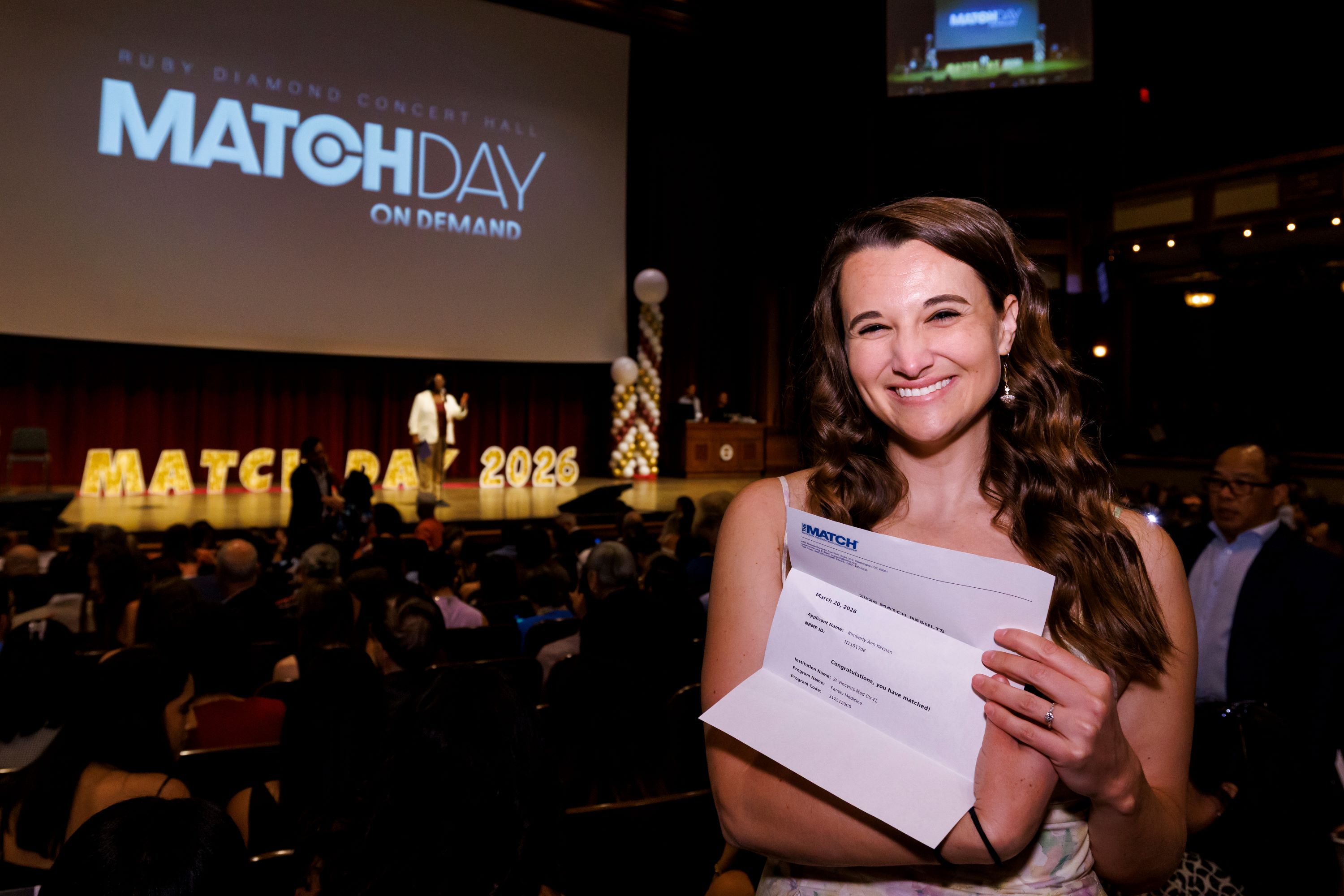
Of the 115 students who participated in the National Resident Matching Program, the primary system matching applicants to residency programs with available positions at U.S. teaching hospitals, 55 (47%) matched in Florida.
“Having almost half of our class stay in Florida bodes well for the future as Florida faces a serious physician shortage,” College of Medicine Dean Alma B. Littles, M.D., said. “Research has shown that almost half of all physicians establish their practices within 50 miles of where they completed their residencies.”
Littles herself is evidence of the trend. The Gadsden County native completed a family medicine residency at what is now Tallahassee Memorial HealthCare in 1989 and opened her practice in her home county the same year.
A little over 31%, 39 students, matched in another state in the Southeast, either Alabama, Georgia, Louisiana, Mississippi, North Carolina, South Carolina, Tennessee, Texas, Virginia or West Virginia. When combined, 94 of the 115, or almost 81%, are staying in the Southeast.
In addition, four students headed for military service – two in the Air Force and one each in the Army and Navy – matched with military hospitals, and one matched in urology through a specialty match administered by the American Urological Association. One student deferred participating in the match to complete a research year.
Almost one-quarter of the 120 students (23%) who participated in one of the match programs, 28 students, did so in internal medicine. Psychiatry was second with 15 (12%); pediatrics and surgery, both general and preliminary, each had 13 matches (11%), while family medicine had 12 matches (10%). Obstetrics and gynecology, orthopedic surgery, physical medicine and rehabilitation, and diagnostic radiology each had four matches (3%).
Transitional programs, otolaryngology, dermatology, child neurology, internal medicine/psychiatry, radiation oncology and urology all had three or fewer matches.
The number of students who matched in primary care specialties, excluding obstetrics and gynecology, was 54 (47%). If ob/gyn is included, the number rises to 59 (51%). Currently, the Association of American Colleges does not count ob/gyn as a primary care specialty, which many medical educators think it should..
The annual residency match, conducted by the National Resident Matching Program, is the primary system matching applicants to residency programs with available positions at U.S. teaching hospitals. Graduating medical students across the country receive their match information at the same time on the same day.
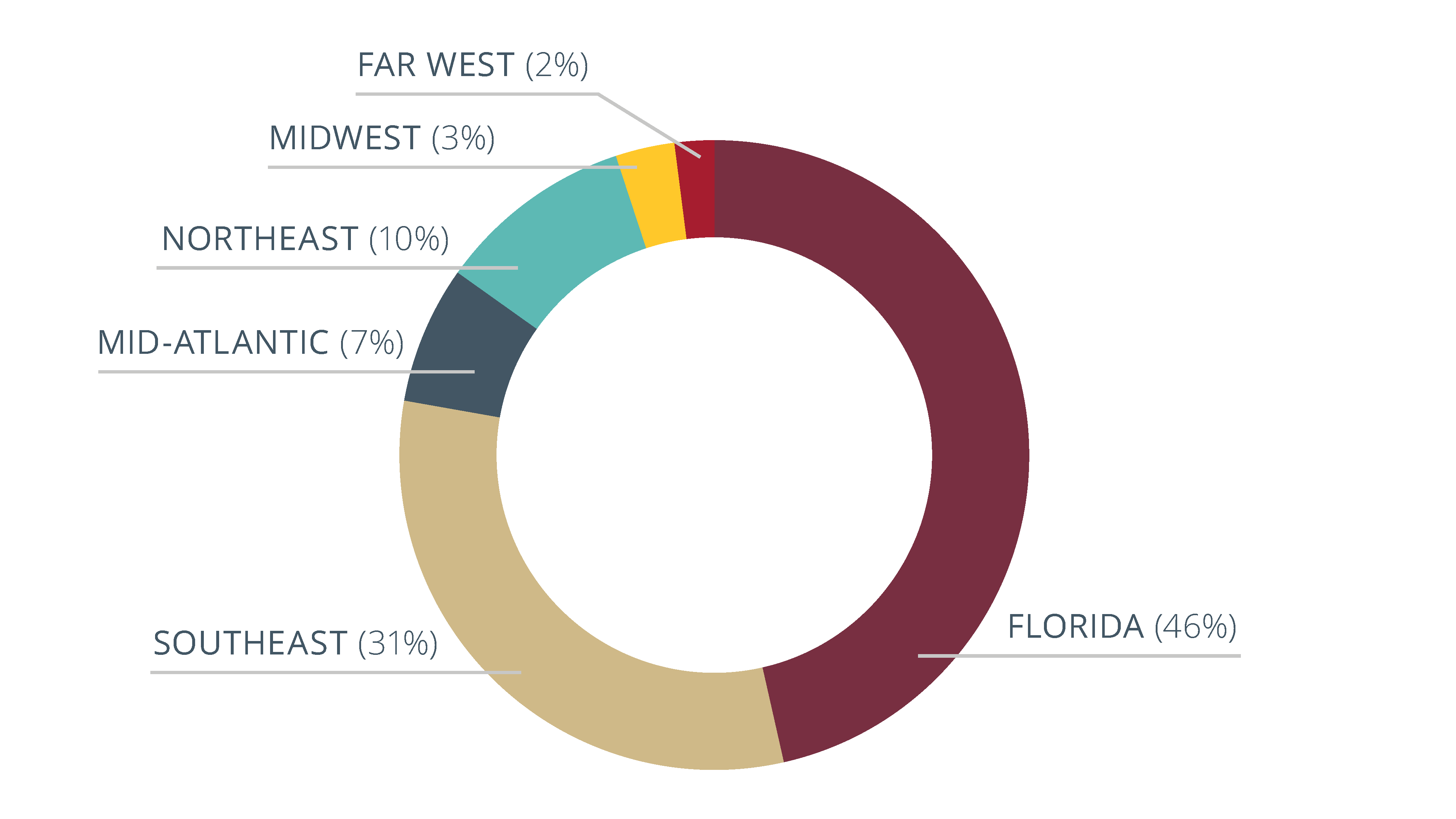
Match Day is a festive affair at Ruby Diamond Concert Hall, with the dean giving a brief welcome to the students, their families and friends, then calling on the graduating class members to “open your envelopes.”
The next few minutes were noisy pandemonium, with whooping, hollering, high-fiving and happy snapshots while showing off match letters. Students then began taking to the stage with their regional campus classmates, sharing their results while beaming loved ones stood alongside.
Class President Alycia “Aly” Savage then addressed the crowd. A 10-year veteran of the U.S. Marine Corps, she shared with her classmates a personal story of her disappointment on a previous “selection day” when she had completed flight training and learned what aircraft she would be piloting. She was assigned to her last choice.
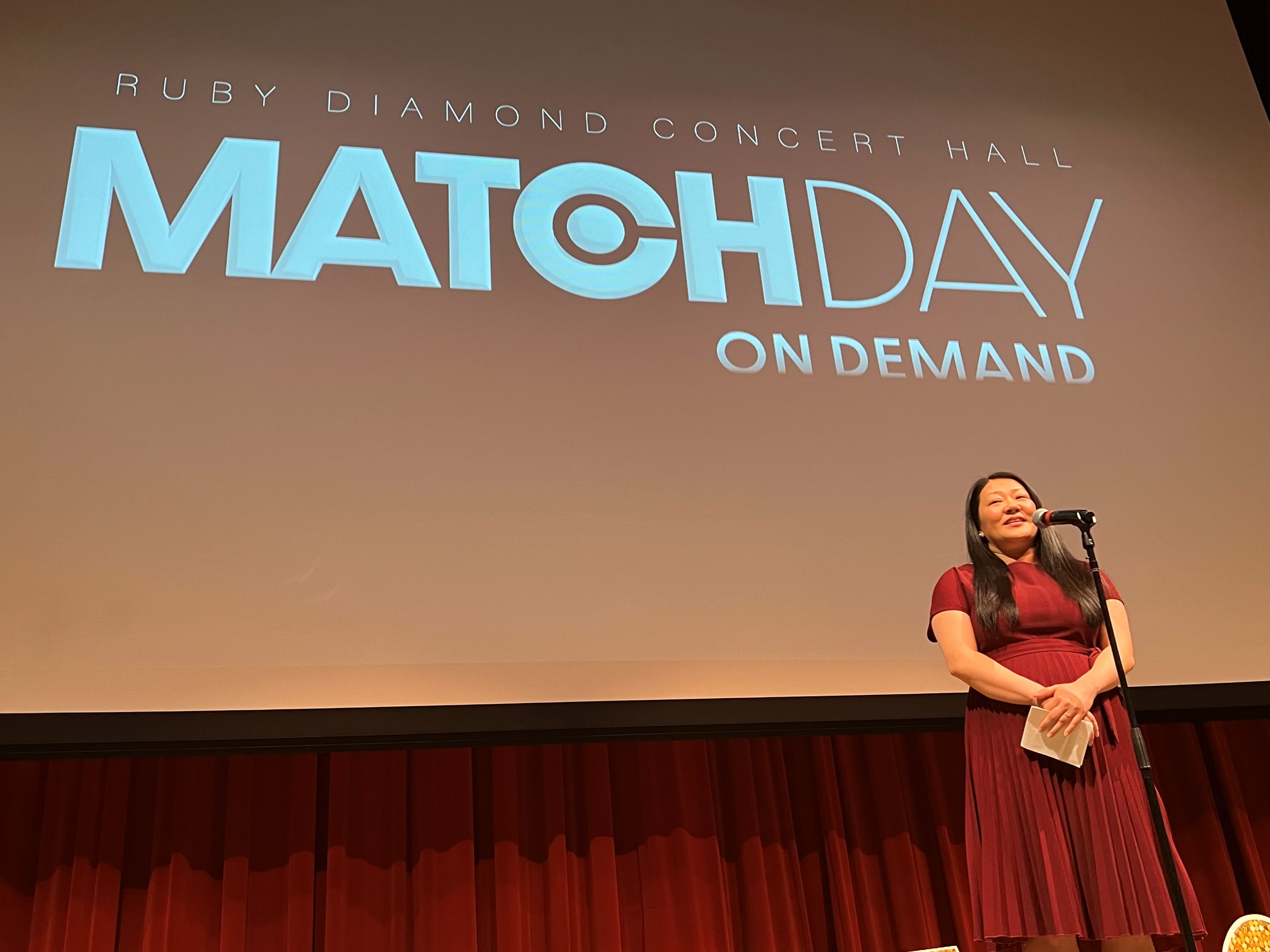
“I did not want to fly the MV-22 Osprey. But the Osprey — an aircraft that combines the vertical takeoff and landing of a helicopter with the speed and range of a turboprop plane -- wanted me," she said. "More accurately, the Marine Corps needed Osprey pilots."
She felt crushed that day, but looking back, she said she couldn't imagine her life any other way. "I became who I am because of a path I didn't choose.
So, whatever you felt today when you opened your envelope, feel it fully. Celebrate. Cry. Laught. Feel the relief, the excitement. If needed, feel disappointment, fear or uncertainty. And then, get to work," said Savage, who will be staying in Tallahassee for an FSU College of Medicine/TMH general surgery residency.
We may not always control where we land, but we absolutely control how we lead, how we serve, and who we become once we get there. Class of 2026, I am so incredibly proud of you," she said. "I cannot wait to walk across this graduation stage with you."
In her closing remarks, Littles reminded the students they were "almost to the mountaintop."
"Eight weeks from tomorrow, we'll gather again in this same place and make it official," she said. "What a day it will be for all of us! See you then."
-- Contact Audrey Post at Audrey.Post@med.fsu.edu