

CMS bridges classroom and community
By Patience Moseley Ph.D.
FSU College of Medicine
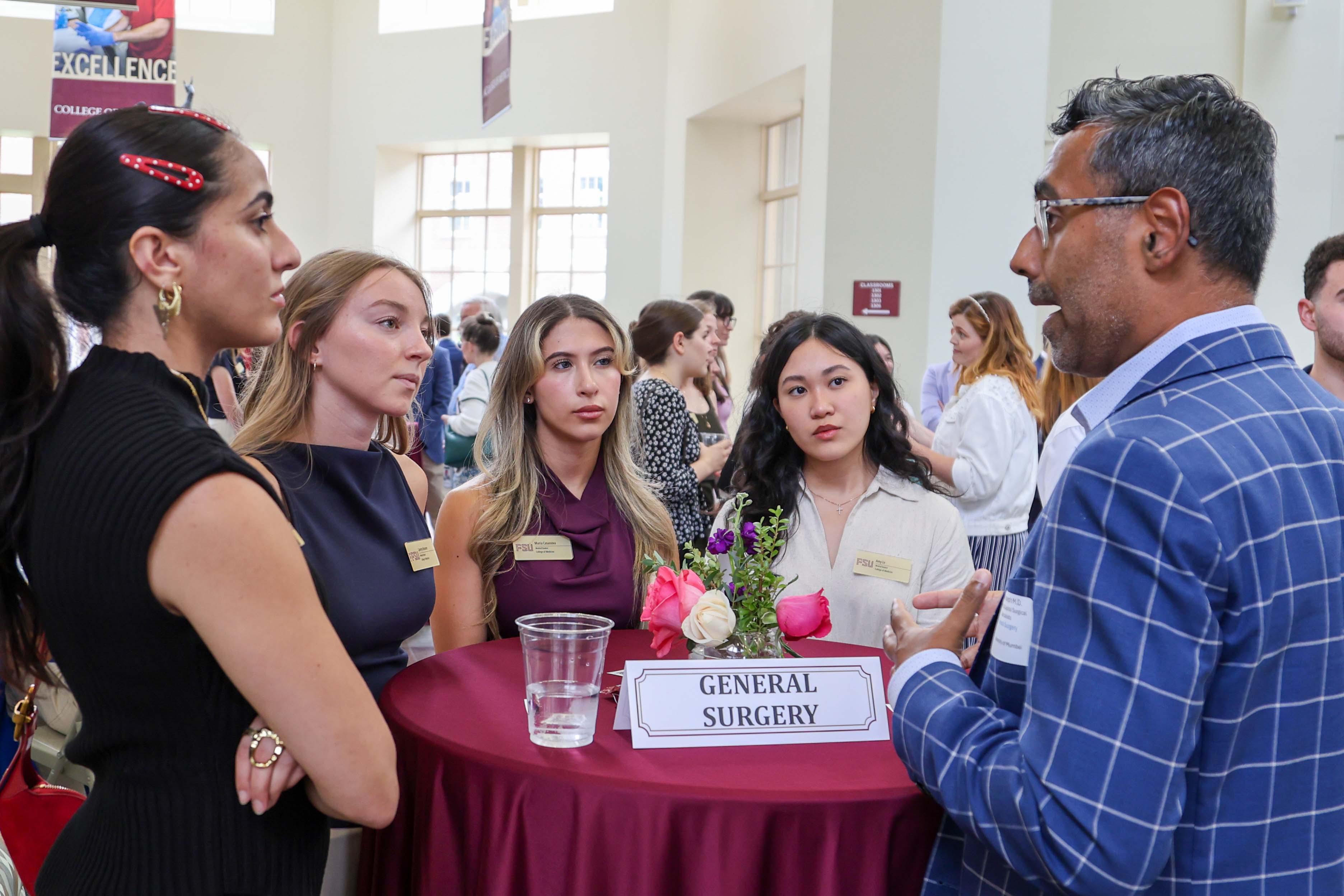
Capital Medical Society, partnering with the College of Medicine’s Division of Student Affairs & Admissions, hosted its second annual Evening Rounds event August 28. More than 30 Tallahassee-area physicians representing 17 specialties spent the evening providing networking, mentorship and career guidance to FSU’s first- and second-year medical students.
“It introduces students to organized medicine and to our organization,” said CMS Executive Director Tom Block. “And for our existing member physicians who are practicing, it's a great way to engage them and to give back.”
Cheryl Porter, Ph.D., assistant dean of Student Affairs said the event directly aligns with the College of Medicine’s mission.
“Part of our mission as a school is to add to the number of physicians in the State of Florida.” Porter said. “It is our hope that connecting students with local and state partners in the medical field will help us do just that.”
That is also an area of importance to the Florida Medical Association, which played a supporting role in the event as well.
College of Medicine Dean Alma Littles, M.D., the recently-installed FMA president, kickstarted the evening by welcoming local physicians and emphasizing the support of CMS and FMA in the success of medical students.
At least 10 participating physicians, representing six specialities, were FSU College of Medicine alumni. They spent the evening reflecting on their own training, providing perspective to students navigating the roadmap to becoming physicians.
“I graduated from FSU 15 years ago — I met my wife here; we were a couple’s match,” said Greg Peters, M.D., describing his own path to becoming a board-certified emergency medicine physician.
“When you’re in med school, it’s somewhat like being in high school or college where you have a lot of people in the same stage of life as you. You’re going through the same things at the same time, and residency is the same way,” he added. “But after that, you don’t really have that level of camaraderie, so it’s nice to come back and get a glimpse of where I was 15 to 20 years ago.”
Aside from sharing their own experiences, physicians addressed the shifting landscape of residency preparation.
“Residency isn’t what it used to be. Now, you can actually have a family; it’s not as intense as it was when I went through,” said David A. Bellamy, M.D., an orthopedic surgeon whose family roots run deep through FSU.
First-year students found calm and clarity in the Evening Rounds atmosphere.
“The physicians were really warm and welcoming,” said first-year medical student Emma Chirila. “It was nice to see that they were excited to talk to students, and we were excited to talk to them.”
Samhita Doranala, another first-year student, found inspiration in the physicians’ residency selection processes. “It was really insightful learning about every physician’s ‘lightbulb moment.’ I am excited to have my own lightbulb moment about what specialty I want to pursue.
Closing out the evening, students reflected on the broader lessons – the ones that weren’t necessarily about medicine.
“I learned a lot about the work-life balance of these professionals,” said Shanelle Gonzalez, also a first-year student. “It gave us insight not only into the profession, but also into the life outside of the profession – which is an important point. You’re not just a doctor; you’re also a person outside of that.”
Beyond career strategies, the evening highlighted local investment.
"Knowing that we're connecting to students, connecting to local physicians, and connecting to the medical society as well — it's about investing in Tallahassee, investing in the community, and in healthcare," said Jordan Priddle, Tallahassee market president of Colony Bank, a sponsor for the event.
For the College of Medicine and CMS, Evening Rounds was about reinforcing a shared priority. Medicine is rooted in community, and events like this bridge the gap between coursework and real-world experiences while establishing lifelong networks and opportunities for mentorship along the way.