
Florida Healthy Liver Program: Primary care physicians are key to liver disease detection
By Patrick Crowley
FSU College of Medicine
Primary care physicians are the first line of defense, often identifying chronic or serious conditions, allowing for early intervention before many become severe. While holding true for many ailments, liver disease is often the exception, quietly progressing under the radar.
One reason it may go undetected is that it happens quietly, unseen and unfelt by the patient. It could also be that primary care physicians are unaware of its prevalence and detect it in the very latest stages. These are some of the issues being addressed by the Florida Healthy Liver Program™ at the Florida State University College of Medicine — and it now has the data to prove how important early detection is and how primary care physicians can play a key role in the process. All it takes is a simple scan.
“The data tell us that liver disease is hiding in plain sight,” said Beau Toskich, M.D., who was instrumental in the creation of the Florida Healthy Liver Program. “Many patients with common conditions like obesity, diabetes and dyslipidemia already have significant liver disease long before symptoms appear.”
Toskich, an FSU College of Medicine alumnus and professor of Interventional Radiology at the Mayo Clinic in Florida, said when he began to see many patients with advanced liver disease, he knew something had to be done. Working with Mayo, he arranged to have an Echosens FibroScan® donated to his alma mater and its FSU PrimaryHealth™ clinic, located in what was a healthcare desert in southwest Tallahassee prior to its opening in 2019.
“I was seeing too many patients diagnosed with cirrhosis and liver cancer after years of missed opportunities for intervention,” Toskich said. “We created the Florida Healthy Liver Program to bring awareness and early detection into primary care, where we have the greatest opportunity to improve outcomes.”
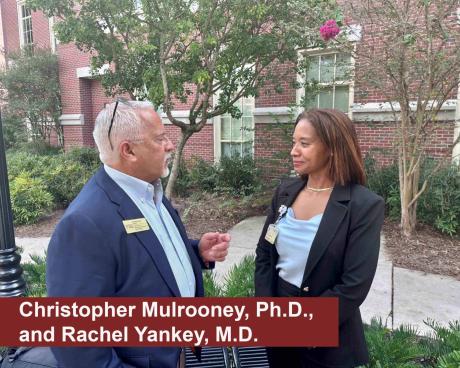
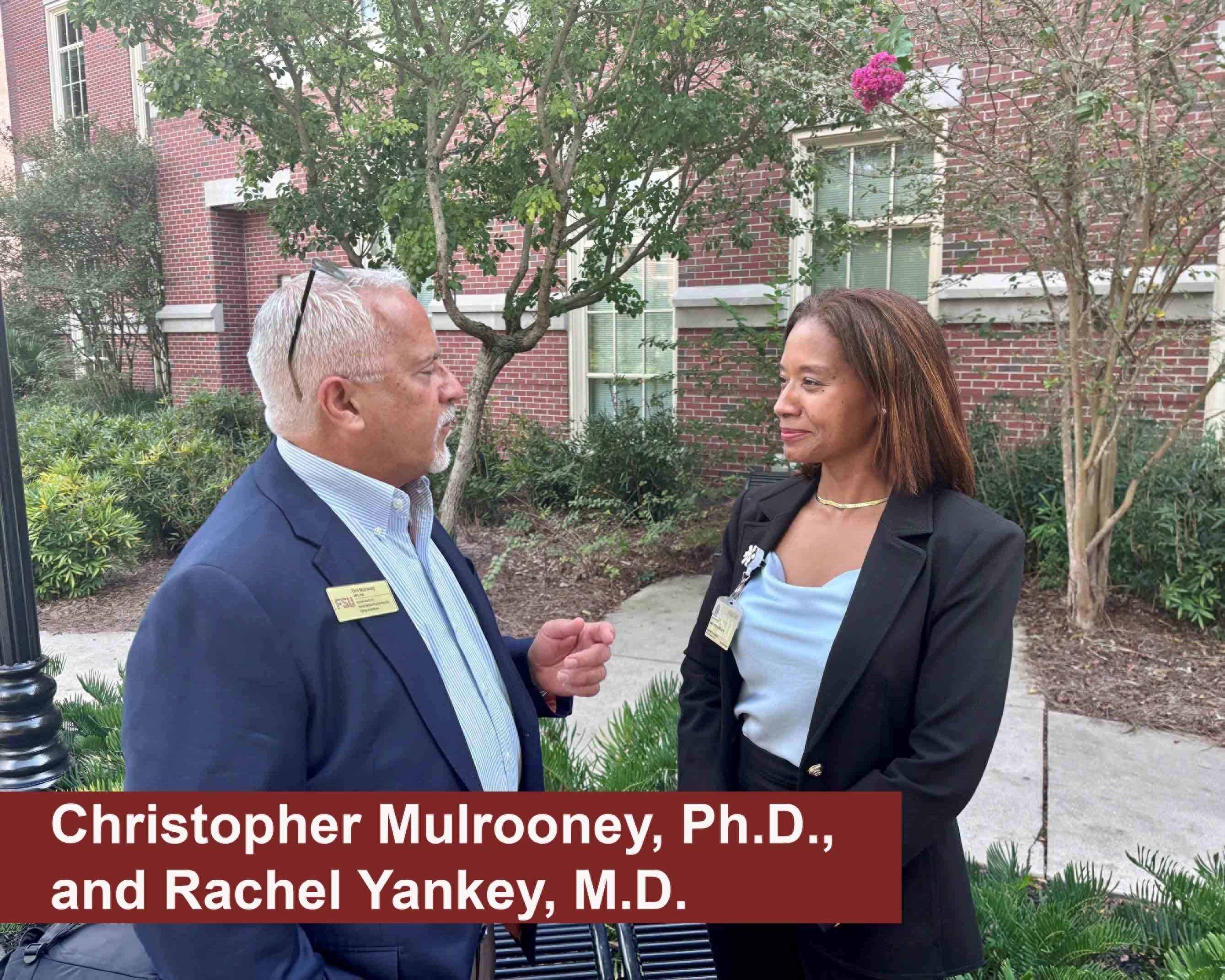
Toskich co-founded the program with Chris Mulrooney, Ph.D., associate dean for clinical and community affairs at the College of Medicine. Mulrooney developed the administrative infrastructure and interdisciplinary partnerships for the program and knows first-hand the realities that Toskich describes.
“My father died from liver cancer at age 66, only eight weeks after he was diagnosed,” Mulrooney said. “He lived less than 50 miles from a global epicenter of clinical care, but that was a world away from his primary care physician who did not have the tools to intervene earlier, despite my father having some of the common conditions known to lead to this disease. The Florida Healthy Liver Program is personal for me as we merge the quaternary care expertise of Mayo Clinic with the primary care network of the FSU College of Medicine.”
Soon after the FibroScan arrived at FSU PrimaryHealth in 2024, primary care physicians Scottie Whiddon, M.D., and Cyneetha Strong, M.D., then co-medical directors of the practice, saw its promise and the positive impact it could have on the lives of their patients. Both also serve on the FSU – Mayo Clinic Joint Task Force, overseeing the liver program.
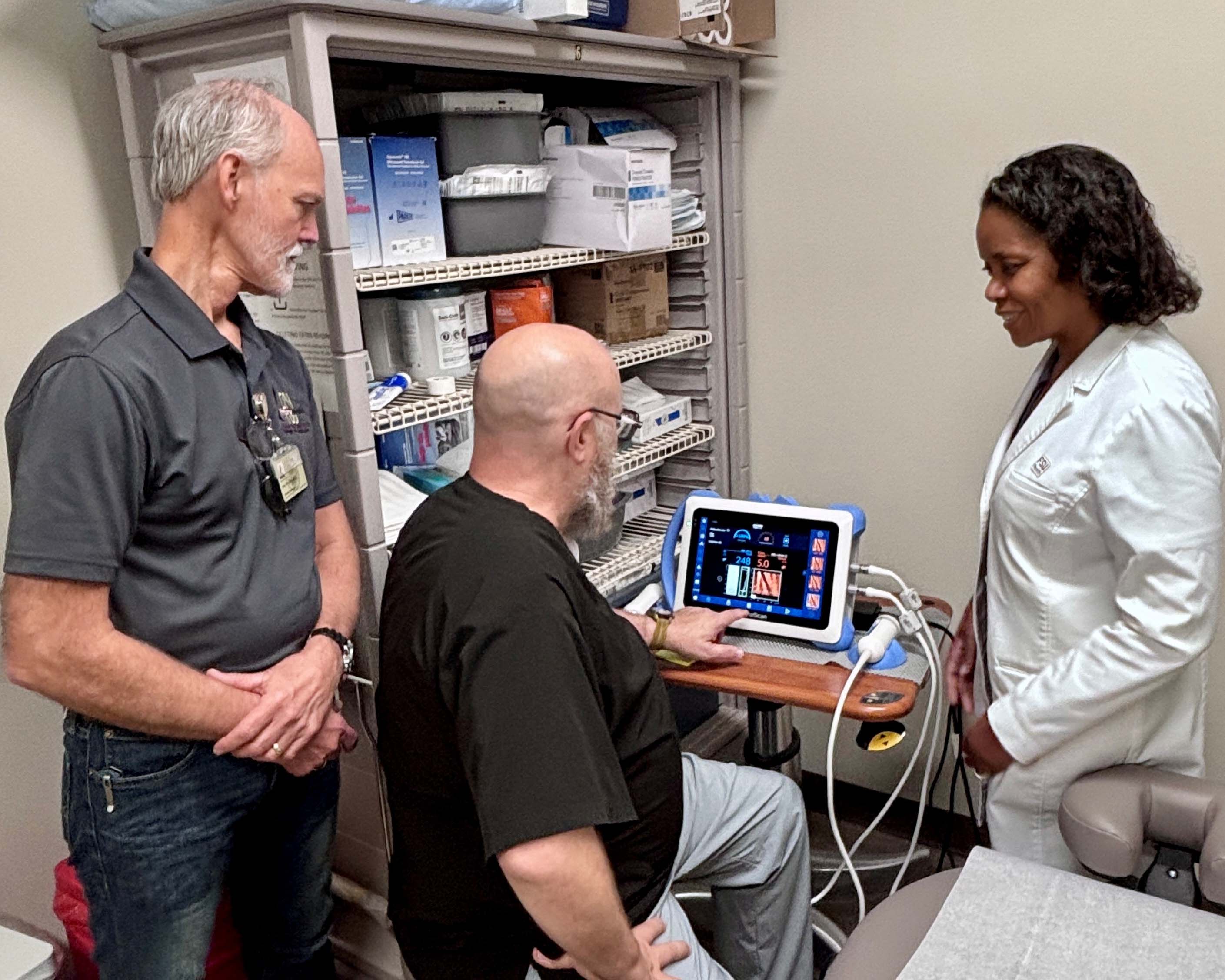
Armed with nearly two years’ worth of data, Whiddon and Strong presented their findings this past summer in Orlando at the second annual Global Liver Institute’s Liver Health Symposium, attended by healthcare professionals, patients, caregivers and health educators. The Florida Healthy Liver Program was a major sponsor, offering free liver screenings to attendees.
“We received a really strong, positive reaction,” Strong said. “People are really starting to think more about metabolic liver disease, and they were excited about what we had accomplished. It was great to be able to present to primary care-focused professionals as well as specialists. The specialists were excited to see that we were able to integrate it into the primary care space. And those who were working in the primary care space were excited about how we’ve been doing it, lessons learned and where we go from here.”
Rachel Yankey, M.D., has been promoting the Florida Healthy Liver Program and delving into its data since coming to the College of Medicine in February 2026. A practicing family physician, Yankey is the strategic director of medical services for Florida Medical Practice Plan, Inc., the college’s faculty practice plan.
“It was striking to see that 22% of those screened were already in the advanced fibrosis range, despite having no obvious symptoms of liver disease,” Yankey said. “You might expect to see jaundice or other signs that something is wrong, but often there are none. What we learned is that some patients had more advanced liver disease than their clinical presentation suggested. The important message is that, even at these stages, there may still be an opportunity to improve or even reverse some of the disease if we identify it and intervene early.”
In addition to taking a broad approach to data analysis, Yankey is applying what has been learned to provide improvements through more holistic patient care. One of those steps includes convening a group of experts from a variety of disciplines.
“We need to reach beyond our individual disciplines and bring together the expertise that already exists across the FSU community,” Yankey said. “Our data reinforce that liver health is closely connected to metabolic health, nutrition, physical activity and behavioral health, so supporting these patients requires more than any one specialty can provide.”
Clinicians and researchers across FSU were instrumental in shaping the thoughts of those involved in the early development of FHLP, including experts in nutritional epidemiology, lifestyle and obesity medicine, exercise science, health psychology and behavioral interventions, social work, diabetes management and lipidology.
“With the help of Dr. Alma Littles, dean of the College of Medicine, and Dr. Mulrooney, we are now in the process of re-engaging that multidisciplinary group and bringing additional expertise to the table as we move FHLP to its next phase,” Yankey added. “The goal is to understand what each discipline can contribute and how we can integrate those resources into meaningful, patient-centered care. We have to offer patients more than simply saying, ‘Don’t eat this’ or ‘Don’t do that.’ We want to give them the tools, support and coordinated care they need to make changes that are realistic and sustainable.”
Everyone involved in the Florida Healthy Liver Program sees the tremendous benefit a simple scan can have on the life of a patient. The trick is integrating it into primary care and finding ways to reduce the cost of the equipment — a new scanner alone runs upwards of $400,000. The Healthy Liver Taskforce is tackling the cost issue by exploring alternatives, such as using the probe that connects to a laptop, which costs a tenth of a full-blown scanner, and finding donor or state and federal funding.
“If we can change a few lives just from 100 scans, imagine what it could be like on a larger scale,” Whiddon said. “The cost [of the scanner] is going to be a huge roadblock for people when they’re only getting maybe $30 per scan. People say, ‘Why are we going to do this?’ Well, it’s because we’re saving lives, but you still have to make a living.”
The value of having a scanner in a primary care setting goes well beyond the simple cost of the unit and the task force is finding ways to make the scanner more economically feasible. Until then, they all agree on the future of the program.
“My vision is to make liver health a routine part of preventive care, just like heart health,” Toskich said. “By integrating liver expertise into primary care, we can empower patients to take action and prevent complications that too often become a life-changing diagnosis.”