Student Voices Archive

David Castillo, M.D. (Class of 2012)

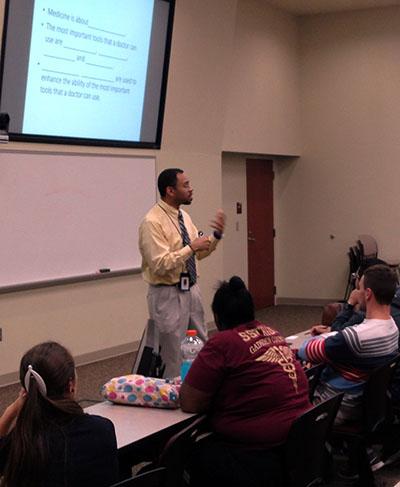
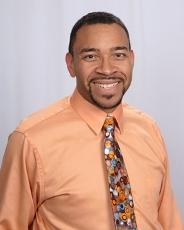
Having played award-winning football for coach Bobby Bowden, David Castillo is one of the College of Medicine’s highest-profile alumni. In October 2013, while he was a resident at the TMH Family Medicine Residency Program, he returned to campus to speak to the Seminole Club. (Oct. 2013, 4m:49s)

Marlisha Jackson, M.D. (Class of 2011)

At the time of this April 2012 interview, Marlisha Jackson had just completed her first year as a family medicine resident at Tallahassee Memorial Hospital and had a lot of observations to share with medical students. (2012, 5m:10s)

Tanya Anim, M.D. (Class of 2010)

Tanya Anim received a National Health Service Corps scholarship in 2009. In February 2014, she returned to campus to speak with students in the Rural Health Association about the NHSC. Five months later, she was scheduled to join the UF Family Medicine Residency Program at the Main Street Clinic as a faculty member, which is part of how she’ll fulfill her requirements for her NHSC scholarship. (Feb. 2014, 43m:28s)

Jimmy Moss, M.D. (Class of 2010)

You’ll see Jimmy Moss elsewhere on this page, for the White Coat Ceremony speech he gave in 2013. This speech is one he gave three years later, at the induction ceremony for MAPS (Minority Association of Premedical Students). He’s a dynamic speaker — and also a generous one. He drove all the way from Jacksonville just to speak with a few dozen undergraduates who are considering careers in health care. And he not only impressed them with his achievements but also shook them up by describing one of his memorable failures. (April 18, 2016, 19m 26s)

Jimmy Moss, M.D. (Class of 2010)

Jimmy Moss (M.D., ’10) earned a standing ovation after his eloquent address to the first-year students. “Everything that’s inside of you is way more important than anything that they can ever teach you,” he said. “The people who taught you how to be brilliant, who taught you how to be resourceful, who taught you how to use your intelligence for a purposeful cause, they’re sitting right behind you” – in the parents’ section. (Aug. 16, 2013, 15m)

Patrick Hawkins, M.D. (Class of 2008)

In 2016, Patrick Hawkins visited the main campus to speak with students who were interested in rural medicine. Like his brother, Nathanael, Patrick grew up in Bonifay – and that’s where he was practicing at the time of this video. (2016, 7m:10s).

Tanya Evers, M.D. (Class of 2008)

At the time of this April 2013 Alumni Reunion interview, Tanya Evers was an OB-GYN faculty member with the Family Medicine Residency Program at TMH. (Her younger daughter appearing in this video, Annelise, was 2.) Tanya did Years 3 and 4 at the Tallahassee campus and did her residency at Vanderbilt. (2013, 3m:52s)

Nathanael Hawkins, M.D. (Class of 2008)

When he was interviewed during Alumni Reunion in April 2013, Nathanael Hawkins was working as an ER doc in two rural towns, Apalachicola and Chipley. He grew up in Bonifay, about an hour and a half west of Tallahassee, and wanted to practice in this area. (2013, 2m:57s)

Sarah & Charles Ritchie, M.D. (Class of 2008)

At the time of this April 2013 Alumni Reunion interview, the Ritchies were at Shands Hospital at the University of Florida in Gainesville, where Sarah was a hospitalist and Charles was chief resident in the diagnostic radiology residency program. (2013, 2m:26s)

Matt & Stephanie Lee, M.D. (Class of 2006)

In addition to their thoughts on medical education at the College of Medicine, these alumni even provide marital advice for med students. (2011, 11m:20s)

Christienne Alexander M.D. (Class of 2005)

Christienne Alexander (M.D., ’05) always knew she wanted to be a doctor, but if life has taught her anything, it is that you can’t plan it all. From getting rejected by the PIMS program, to graduating with the inaugural College of Medicine class in 2005, and becoming a full-time faculty member, her unending positivity has kept her going through thick and thin. (2017, 8m:30s)

Scott Warren, M.D. (PIMS, 1983)

Before Scott Warren became a physician, he was a defensive end for football coach Bobby Bowden. Originally he was in the PIMS T-81 class but took time off to pursue pro football; so he eventually became a T-83 – that is, transferred to UF in 1983. He did this interview in April 2012, when he was a Jacksonville dermatologist doing Mohs surgery. (2012, 6m:56s)

Father and Son: Rick Sheridan, M.D., and Stephen Sheridan (PIMS, 1976 and Class of 2015)

We cheated on this one. Stephen Sheridan was more than two years away from being an alumnus when he did this interview in April 2013. But he attended an alumni reunion with his father, PIMS graduate Rick Sheridan (look for Rick’s solo interview from 2011), and he said some memorable things – especially about pancakes. (2013, 3m:25s)

Rick Sheridan, M.D. (PIMS, 1976)

Rick Sheridan is a PIMS grad who transferred to UF in 1976. He was interviewed at our Alumni Reunion on April 16, 2011. At that time he was a neonatologist in Tampa as well as a member of the Alumni Board. He’s also the father of Class of 2015 member Stephen Sheridan. (2011, 5m:14s)

Mike Sweeney, M.D. (PIMS, 1975)

Mike Sweeney is a graduate of Florida State’s Program in Medical Sciences (PIMS), predecessor of the College of Medicine.. He’s a retired general and vascular surgeon who practiced in Fort Myers for about 20 years. At the time of the interview, he was chair of the Alumni Board, living in Jacksonville but coming over to Tallahassee often to teach anatomy, etc. He did this interview at our Alumni Reunion on April 14, 2012. (2012, 7m:32s)

Beranton Whisenant, M.D. (PIMS, 1975)

Beranton Whisenant attended FSU’s Program in Medical Sciences through a joint program with Florida A&M University, his undergrad institution. (“It was essentially a two-year program integrated with your undergraduate program, and at the completion of your undergraduate degree you also had completed the first year of medical school.”) He transferred to UF in 1975. At the time of this April 2011 interview, he had been an emergency medicine physician at the UF College of Medicine-Shands Hospital in Jacksonville for 10 years. (2011, 1m:21s)

Susanna Zorn,M.D., Class of 2017

When she became a med student, Susanna brought with her a history of mission work and a passion for serving others. In this interview from May 19, 2017, she focuses on the creation of the Chapman Community Health Program, a partnership between the College of Medicine and Maryland Oaks Crossing, a low-income housing community in Tallahassee.

Tamara Marryshow Granados,M.D., Class of 2017

In her enthusiastic interview May 19, 2017, Tamara admits that she expected medical school to be cutthroat – until she encountered the welcoming, collaborative atmosphere here at FSU. She had started a career in finance but took a leap of faith. Her advice to prospective students: “Take a chance on yourself. Dream big!”

Emily Kaltz, M.D., Class of 2017

Emily talks about what she learned from patients, how her medical education prepared her for becoming a physician, and what it was like on the first day of her OB-GYN rotation when the attending physician had her step up ... and deliver a baby. This interview took place May 19, 2017.

Paulin Gotrace, M.D., Class of 2017

What makes FSU different is the support you get from faculty members and fellow students, Paulin says in this May 19, 2017, interview. He especially appreciates the support he got for an outreach project after a hurricane ripped through his hometown in Haiti.

Clint Dunn, M.D., and Clarissa Lomonaco, M.D., Class of 2016

These two got married during their fourth year and were a real power couple. Both were inducted into the Gold Humanism Honor Society. Clarissa was promoted to captain in the Air Force. Clint was inducted into the Alpha Omega Alpha Honor Medical Society and received the J. Ocie Harris Outstanding Student Award and the Orlando Campus Dean’s Award. They both went into pediatrics. She matched with the Naval Medical Center in Portsmouth, Virginia, and he with Eastern Virginia Medical School in Norfolk. They did this interview May 20, 2016.

Ivana Simpson, M.D., Class of 2016

Ivana “Ivey” Simpson was a National Health Service Corps scholar, a Summer Research Fellow and an Alpha Omega Alpha Honor Medical Society inductee. At the end of her fourth year, she received the Access to Care Award and the ACOG District XII Outstanding Medical Student Achievement Award. One of her clerkship directors called her “the student you dream of having on your rotation.” Ivey matched in OB-GYN at the University of Texas Medical School at Houston. She did this interview May 20, 2016.

Kristen Dimas, M.D., Class of 2016

Immokalee was where Kristen Dimas grew up, and it’s where she eventually hopes to practice medicine among migrant families. Her steadfast pursuit of that goal is the reason she received the College of Medicine’s Mission Award. She matched in family medicine with the FSU College of Medicine at Lee Memorial Health System in Fort Myers, not far from Immokalee. She did this interview May 20, 2016.

Alejandro Chavarriaga, M.D., Class of 2016

Childhood asthma gave Alejandro Chavarriaga valuable insights into the world of medicine, but it certainly didn’t slow him down – not as a soccer player and not as a student. At the College of Medicine he was president of his class all four years. And at the end of his fourth year, he received the Individual Achievement Award — and matched in general surgery at Atlanta Medical Center. He did this interview May 20, 2016.

Joanna Meadors Hales, M.D., and J.D. Hales, M.D., Class of 2015

These two high achievers met here at med school; they maintained their relationship even though Joanna was at the Orlando campus and J.D. was at the Daytona Beach campus; and they married just before they headed off to the University of North Carolina for residency. At graduation time, Joanna (who had worked three years at the NIH before med school) received awards for altruism in medicine and excellence in pediatrics; J.D. was recognized for leadership and for being the top student at his regional campus. They did this interview May 15, 2015 — about three weeks after they were married, and one day before they graduated.(10m:34s)

Colin Swigler, M.D., Class of 2014

For a year and a half after college, Colin Swigler worked at Outback Steakhouse — because he had doubts about becoming a physician. Well, he certainly overcame those doubts. Just before graduation, he received the J. Ocie Harris Outstanding Student Award. Then he headed off to the University of Tennessee in Memphis for residency training in orthopedic surgery. But he promises he’ll return to Florida. He did this interview May 23, 2014. (8m:36s)

Brett Thomas, M.D., Class of 2014

Brett Thomas was president of his class all four years, received numerous scholarships and had his name called half a dozen times during the pre-graduation awards ceremony. He matched in the family medicine residency program at Wake Forest Baptist Medical Center in Winston-Sale, N.C., but plans to return to Florida. He did this interview April 28, 2014. (10m:14s)

Jason Boothe, M.D., Class of 2013

At the end of his four years in medical school, Jason Boothe received the Altruism in Medicine Award and was inducted into the Gold Humanism Honor Society. He did this interview May 16, 2013, two days before graduation. (7m:30s)

Laura Davis, M.D., Class of 2013

Laura Davis, who grew up west of Tallahassee in the small town of Blountstown, took home three major honors from the College of Medicine. She received the Mission Award, was named Outstanding Graduate in Family Medicine and was inducted into the Gold Humanism Honor Society. She did this interview May 16, 2013. (9m:44s)

Zach Folzenlogen, M.D., Class of 2013

This former graphic designer at the Miami Herald became the first College of Medicine student to match in neuroscience. He was inducted into the Alpha Omega Alpha and Gold Humanism honor societies, and he received both the Excellence in Surgery Award and the J. Ocie Harris Outstanding Student Award. He did this interview May 17, 2013. (6m:45s)

Katie Alonso, M.D., Class of 2012

Here’s an excerpt from Katie’s interview: “Having that one-on-one experience with [attending physicians] is irreplaceable. They’re giving every bit of knowledge they have to you. And I don’t think you can get that anywhere else.” (5m:15s)

Ricardo Sequeira, M.D., Class of 2012

Having been an illegal immigrant, Ricardo Sequeira hopes to improve medical care to immigrants and migrant workers. Before medical school, he served as a hospital corpsman in the U.S. Navy. In medical school, he received the Pensacola Regional Campus Dean’s Award and was inducted into the Gold Humanism Honor Society. He did this interview after he matched in family medicine at Eglin Air Force Base and just before graduation in May 2012. (5m:21s)

Vanessa Escobar, M.D., Class of 2011

At the end of her years in medical school, Vanessa Escobar received the Regional Campus Dean’s Award in Pensacola. She did this interview just before graduation in May 2011. (3m:25s)

Abby Hunter, M.D., Class of 2011

Abby Hunter, who matched in pediatrics at Wake Forest, received the College of Medicine’s J. Ocie Harris Outstanding Student Award and was inducted into the Gold Humanism Honor Society. She did this interview just before graduation in May 2011. (7m:35s)

White Coat Excitement (Class of 2021)

Donning a white coat for the first time is a humbling experience for most medical students. Three members of the Florida State University College of Medicine Class of 2021 share their thoughts about the path that brought them to medical school – and their excitement about the upcoming White Coat Ceremony. (2017, 5m:04s)

White Coat Highlights (Class of 2020)

Class of 2020 White Coat Highlights (2016, 2m:23s)

Joseph Chen, White Coat Excitement (Class of 2020)

Class of 2020 student Joseph Chen shares the importance of the white coat to him and his family, and what medical school holds for him. (2016, 1m:28s)

April Graham, White Coat Excitement (Class of 2020)

Class of 2020 student April Graham gives insight into how medical school will help her achieve her goals, and what the white coat means to her. (2016, 1m:38s)

Jacob Hentges, White Coat Excitement (Class of 2020)

Class of 2020 student Jacob Hentges shares his journey to medical school, and what the white coat means to him. (2016, 2m:43s)

Abby Peters, M.D. Speaking at White Coat

Abby (Hunter) Peters, who graduated from the College of Medicine in 2011, received her pediatric residency training at Wake Forest and has just returned — along with her husband, classmate Jeff Peters — to practice in Tallahassee. Here she speaks to the Class of 2018 at their White Coat Ceremony, giving them words of wisdom for the tough years ahead of them. (2014, 14m:25s)

Brett Thomas Speaking at Graduation

Class President Brett Thomas got a standing ovation for his 10-minute reflection on the past four years: “We ultimately learned that a ‘good pathological case’ always came with a price. Sometimes it was a left-behind elderly spouse or a stroke survivor, once a social butterfly, now unable to speak. Somewhere during our third and fourth years, we began to understand the weight of the responsibility we’d soon be carrying. But if not for these experiences, we wouldn’t have received clarity on our specialty choice, met our match or gained the experience to care for our future patients.” (2014, 12m:1s)

Myron Rolle Testifying Before Congress

Myron Rolle, a former college football player and Class of 2017 medical student, delivers his opening statement before the Senate Commerce Committee hearing on College Athletes and Academics. (2014, 5m:5s)

Angela Guzman Speaking at the White Coat Ceremony

During her Gold Humanism Induction Ceremony speech at the White Coat Ceremony for the Class of 2017, Angela used the story of a non-compliant patient to remind the first-year students that what ultimately matters is not what you know but what you do. (2013, 8m:33s)

College of Medicine Events Archive

Class of 2023

Aug 09, 2019, 1h:23m - Speakers – Olivia Donnelly (Gold Humanism address), Shermeeka Hogans-Mathews (main speaker)

Class of 2022

Aug 10, 2018, 1h:23m - Speakers – Acton Pifer (Gold Humanism address), Brett Thomas (main speaker)

Class of 2021

Aug. 11, 2017, 1h:16m . - Speakers – Juno Lee (Gold Humanism address), Laura Davis (main speaker)

Class of 2020

Aug. 12, 2016 - Speakers – Angela Malamo (Gold Humanism address), Rachel Bixler (main speaker)

Class of 2019

Aug. 14, 2015, 1h:30m - Speakers – Carson Rodeffer (Gold Humanism address), Zita Magloire (main speaker)

Class of 2018

Aug. 22, 2014, 1h:20m - Speakers – Jonny Salud (Gold Humanism address), Abby Peters (main speaker)

Class of 2017

Aug. 16, 2013, 1h:16m - Speakers – Angela Guzman (Gold Humanism address), Jimmy Moss (main speaker)

Class of 2016

Aug. 17, 2012, 1h:27m - Speakers – Jason Boothe (Gold Humanism address), Luckey Dunn (main speaker)

Class of 2015

Aug. 19, 2011, 1h:17m - Speakers – Natasha Demehri (Gold Humanism address), Paul McLeod (main speaker)

Class of 2020

January 18, 2019, 0h:55m

Class of 2019

This was a big day for the inaugural class of the School for Physician Assistant Practice. Featured speaker (and new faculty member) James Cawley exhorted them: “Today I challenge you to help us reduce demand for health care by constant and consistent and coordinated promotion of health.” (Jan. 19, 2018, 45m)

Class of 2019

March 15, 2019, 1h:41m

Class of 2018

March 16, 2018, 1h:37m

Class of 2017

March 17, 2017, 1h:47m

Class of 2016

March 18, 2016, 1h:29m

Class of 2015

March 20, 2015, 1h:32m

Class of 2014

March 21, 2014, 1h:33m

Class of 2013

March 15, 2013, 1h:30m

Class of 2012

March 16, 2012, 1h:11m

Class of 2011

March 17, 2011, 53m:33s

Class of 2010

March 18, 2010, 1h:14m

Class of 2009

March 19, 2009, 55m:27s

Class of 2019 Graduation Ceremony

May 18, 2019, 1hr:56min - Speakers - Bryno Gay, Michael Muszynski, M.D. (main speaker)

Class of 2018 Graduation Ceremony

May 19, 2018, 1hr:43m - Speakers – Mark Micolucci, Mike Sweeney (main speaker)

Class of 2017 Graduation Ceremony

May 20, 2017, 1hr:50m - Speakers – Alessandra Taylor, Jon Appelbaum (main speaker)

Class of 2016 Graduation Ceremony

May 21, 2016, 1hr:47m - Speakers – Alejandro Chavarriaga, Ricardo Gonzalez-Rothi (main speaker)

Class of 2015 Graduation Ceremony

May 16, 2015, 1h:45m - Speakers – Aaron Hayson, Ken Brummel-Smith (main speaker)

Class of 2014 Graduation Ceremony

May 17, 2014, 1h:57m - Speakers – Brett Thomas, Lynn Romrell (main speaker)

Class of 2013 Graduation Ceremony

May 17, 2013, 1h:42m - Speakers – Austin Henkel, Bob Watson (main speaker)

Class of 2012 Graduation Ceremony

May 19, 2012, 2h:1m - Speakers – Brandon Mauldin, Charlie Ouimet (main speaker)

Class of 2011 Graduation Ceremony

May 21, 2011, 1h:53m - Speakers – Ashley Lucke, Jan “Dr. G.” Garavaglia (main speaker), Mark Elliott

Class of 2010 Graduation Ceremony

May 15, 2010, 1h:52m - Speakers – Anthony Sochet, Ocie Harris (main speaker), Melissa Kozakiewicz

Class of 2009 Graduation Ceremony

May 16, 2009, 1h:33m - Speakers – Corinne Brann, Daniel Van Durme (main speaker), Leslie Davis-Singletary, Charlie Ouimet (charge to the class)

Class of 2008 Graduation Ceremony

May 17, 2008, 56m:1s - Speakers – Tanya Evers, Alma Littles (main speaker), Erkan Alci, Charlie Ouimet (charge to the class)

A Conversation with David Castillo and Myron Rolle

The College of Medicine invited the Tallahassee Seminole Club to visit, to tour our buildings and to hear from two favorite former Seminole football stars. (Oct. 24, 2013, 51m:22s)

Severiano and Josephine Jorge Student Affairs Conference Room Dedication

n appreciation for their philanthropic support of Florida State University's College of Medicine, the student affairs conference room was dedicated in honor of Severiano and Josephine Jorge. (Sept. 3, 2013, 12m)

Great Floridian

Gov. Rick Scott visits the College of Medicine to honor Dr. Charlotte Maguire. (June 13, 2013, 24m:48s)

Summer 2018

Jul 19, 2018

Spring 2018

May 01, 2018

Our Campus at a Glance

Oct 17, 2017

Yes, Florida State University’s College of Medicine is in Tallahassee, but it’s also here in Pensacola,
along with Fort Pierce, Orlando, Daytona Beach and Sarasota. Each of these cities (as well as
Tallahassee itself) has a regional campus.

Don’t look for a giant academic medical center, though. During their clinical third and fourth years
of medical school, our students go out into the community and learn directly from some of the
hundreds of physicians on our clerkship faculty. These one-on-one apprenticeships take place in
real-world settings — such as your doctor’s office.

As a result, by the time our students graduate, they have a distinct advantage over graduates from
most other medical schools: They’re already comfortable working with patients, and they’ve already
delivered babies, been the first assistant in surgery and acquired an abundance of other hands-on
experience. Plus, they’ve become familiar with how a community medical practice works.

The required rotations during Years 3 and 4 are emergency medicine, family medicine, advanced
family medicine, geriatrics, internal medicine, advanced internal medicine, obstetrics-gynecology,
pediatrics, psychiatry and surgery. After our students complete those rotations, they’re ready to make
a smooth path into residency training.

And with each passing year, an increasing number of our alumni — even some who’ve left the state
for residency — are returning to communities surrounding Pensacola and our other regional
campuses to put down roots and practice medicine.


ABOUT THIS REGIONAL CAMPUS (as of June 2017)

  • Third-year students now at Pensacola campus: 13
  • Fourth-year students now at Pensacola campus: 19
  • Students who’ve trained at Pensacola campus: 241
  • College of Medicine partner institutions/organizations in Pensacola area: 10
  • Physicians in Pensacola area serving as College of Medicine clerkship faculty: 270

ABOUT COLLEGE OF MEDICINE ALUMNI (as of June 2017)

  • Total alumni since 2000: 1,147
  • Completed residency training and practicing: 562
  • Practicing in Florida: 298
  • Practicing in Pensacola, Crestview, Panama City and elsewhere in Northwest Florida: 22
  • Of those 22, practicing primary care: 14
  • Of those 22, seeing primarily rural patients: 2

ABOUT THE COLLEGE OF MEDICINE IN GENERAL

  • Our principal focus is on meeting the primary-care needs of Florida, with a particular emphasis on rural, minority, elderly and other underserved populations.
  • We strive for a student body as diverse as the patients these future physicians will serve. For example, years before it’s time to apply, we reach out to promising Florida students who are minorities or belong to other groups underrepresented in medical schools.
  • We take great care in choosing our students. Grades and test scores are important, but so are
    other factors. If you’re trying to develop physicians who will serve in rural areas, for example, it makes sense to seek students who are more likely to want to live in rural areas — which often means students who grew up there.
  • Course content reflects the college’s mission. The curriculum is comprehensive, preparing students for any medical specialty and setting.
  • Problem-based and small-group learning experiences help students develop their clinical acumen and learn to work as a team.
  • The clinical training program in Years 3 and 4 extends into more than 100 hospitals, skilled nursing facilities, managed-care organizations, private clinics and other outpatient settings across the state.
  • Besides the six regional campuses, there are also rural training sites in Marianna and Immokalee.

2016 Annual Newsletter

Jan 04, 2016

The Center recently distributed its 2016 annual newsletter. This newsletter contains: 

  • 2016 Annual Conference: Medical, Legal, and Ethical Aspects of Pain Management in Florida
  • POLST News
  • 2015 Center events
  • 2015 Annual Conference: The Future of Medical Malpractice Law in Florida
  • Retirement Research Grant Awarded to Center
  • Undergraduate Research Opportunity Program Student Melissa Villalta
  • Professor Kapp's Publications and Presentations
  • Selected Faculty Associate and Affiliate Activities
  • 2015 Student Activities
  • The Mollie and Paul Hill Student Writing Competition
  • Center Media Mentions
  • Center on Social Media

To view the newsletter, please click here.
 

Charles R. Mathews Geriatrics Scholarship Recipients' Research Published

Jan 03, 2017
student in presentation

Through a generous donation from the late Charles R. Mathews, M.D., the Department of Geriatrics has been able to offer summer research scholarships to FSU students. In 2016, two of the recipients of this prestigious scholarship were FSU medical student Wyndham Bonett and FSU law student Katherine Perdomo.

Their research project, Assessment of Chronic Pain Curriculum in Florida Medical Schools, was advised by Center Director Marshall Kapp and assisted by Suzanne Baker, M.A. Research Program Director in the Department of Geriatrics. The results will be published in Florida Public Health Review, 2017; 14, 22-32. To view the article, click here.

On October 25, 2016, Wyndham Bonett and Katherine Perdomo presented their research at a HALO event on Prescribing Opioid Pain Medications.
 

Purchase of Illumina NovaSeq 6000

Sep 26, 2017

Use thisFlorida State University is now the home of the most advanced DNA sequencer in the state of Florida, allowing FSU researchers access to genome sequencing at a scale and cost never before available.
Located in the College of Medicine’s Translational Science Laboratory, the Illumina NovaSeq 6000 is the platform expected to enable the sequencing of a human genome for one hundred dollars, while producing the sequences of forty-eight human genomes in each forty hour run. To put that in perspective, COM’s previous DNA sequencer, which was state-of-the art when it was purchased five years ago, required four days to produce a human genome at a cost of approximately $3500, while the sequencing of the first human genome in the late 1990s by the publicly-funded Human Genome Project took almost fifteen years and cost nearly three billion dollars.
The decrease in cost and increase in speed for DNA sequencing is a result of massively parallel operations in modern sequencers. The devices used in the Human Genome Project could sequence approximately one hundred DNA fragments simultaneously. In contrast, the NovaSeq 6000 is capable of sequencing up to twenty billion DNA fragments at the same time.
In addition to enabling rapid and inexpensive sequencing of human genomes, the NovaSeq also allows FSU researchers to perform de novo sequencing of organisms whose genomes are unknown, to determine the extent to which each of an organism’s genes are turned on, to measure how closely related different organisms are, and to precisely determine the three dimensional structure of an organism’s chromosomes, along with many other applications.
The purchase and operation of the NovaSeq is a collaboration between many groups on campus. Funding was provided by Professor of Biology Peter Fraser, the College of Arts and Sciences, and the FSU Office of Research, in addition to the College of Medicine. The Translational Science Laboratory will operate the sequencer and will pay for its maintenance and repair.

Publications

Nov 13, 2017


FSU colleges collaborate to pave smoother pathway into health professions

Jun 23, 2016

 Alumna and student w patient - Copy1Every year, thousands of new students arrive at Florida State hoping to enter a career in health care. For a variety of reasons, most of these would-be physicians, nurses, pharmacists and others wind up in different careers — and communities lose out on the health care they could have provided.

In an effort to turn that trend around, fully half of FSU’s colleges are working together to create a student-friendly pathway into the health professions. Called the Interdisciplinary Medical Sciences Program (IMS for short), it’s unlike anything else in the country — and with the provost’s blessing it’s on a super-fast track.

Students are taking part in orientation sessions this summer. The curriculum is being fine-tuned for the fall semester. And hopes are running high.

“It’s an exciting moment for Florida State,” said Provost Sally McRorie. “We will vigorously pursue this innovative approach to preparing students and helping them find jobs in medical fields. I predict we will become the destination for students from Florida who want access to the full range of health professions.”

Most of the program’s courses already exist, though some are being revised with pre-health students in mind. The biggest change is in the way the students are guided along the pathway – and in the sense that the participating colleges are all working together as program partners.

Some universities have premed programs, College of Medicine Senior Associate Dean Myra Hurt said, but they’re not as flexible, all-encompassing or student-centered as this one.

“There’s no straightforward path to figure out, ‘Do I really want to go into the health professions?’” said Hurt, who conceived this idea in 2012. “Eventually we’ll see such a difference in how students feel about the path they’re on.”

Representatives from seven colleges served on a taskforce charged with getting IMS off the ground: Arts & Sciences (Departments of Biological Science, Chemistry and Psychology); Communication and Information; Human Sciences; Medicine; Nursing; Social Sciences and Public Policy; and Social Work. In addition, students from the College of Business will be conducting case studies to determine the best way to recruit the right students as well as employers.

Universities everywhere are wrestling with the same challenge. Four years ago, Hurt helped lead a Harvard Macy Institute session where participants from around the world focused on creating an interdisciplinary path to medical school. Hurt, the driving force behind the creation of FSU’s medical school, is no stranger to big ideas. She immediately started wondering how she could adapt this one for FSU. She ran her ideas past several people but got nowhere — until McRorie became provost. “We’re going to do this,” McRorie said.

The timing was good. FSU needed to boost its total number of STEM (science, technology, engineering and math) graduates; cut the time to graduation; and increase the number of graduates getting jobs with good salaries.

Here’s a sampling of what IMS offers students:

Choice of three majors. The pathway has three branches: Pre-Professionals, including physicians, nurses, physician assistants and pharmacists; Patient Care in the Community, including social workers, patient navigators and health advocates; and Health Policy and Technology, including social scientists and health informaticists.
Core sciences for everyone. During the first two years, every IMS student will take the core sciences. “When you finish this,” said Associate Dean Helen Livingston, Hurt’s go-to curriculum planner, “you have a fundamental basis for any field in health care, wherever you go.”
Real-world experiences. Science is important, but it’s only part of the picture. So every student will have regular contact with health professionals in the community, through shadowing and seminars. They’ll get answers to key career questions: “What professions are available?” “Could I see myself doing this job?” “Hours? Income? Training required?” “What are the social and psychological components of being in health professions?”
Flexibility. In the past, students sometimes chose a narrowly defined major without all the information they needed — then wasted time and money changing their major. Sometimes they ended up with a degree but no profession. The interdisciplinary approach provides new opportunities to take electives and explore options. “For example, there are a number of College of Human Sciences courses, like child development, that someone interested in pediatrics could take,” Hurt said. “That really wasn’t an option before.”
Continual advising. Students don’t come to college equally prepared. Some get poor advising along the way. Some don’t cope well with life’s surprises. “So we hope to provide lots of guidance,” Livingston said. “Not just in an academic sense, but in terms of how they’re growing personally and professionally and helping them determine a career path.”
Team-based approach. These future health professionals will work side by side, mirroring the real world’s increasing demand for collaboration.
Hurt predicts as many as 140 students will sign up this first year. One of those pioneers is Emilie Miller. Right now she hopes to become a physician assistant focused on pediatrics, but she appreciates IMS’ array of options.

“I had planned to major in nursing as a bridge to the career path I wanted,” said Miller, who graduated in May from Tallahassee’s St. John Paul II Catholic High School, but then her mom learned about IMS. “After reading the description, it was exactly what I was looking for. I am beyond excited to be a part of something so new and creative.”

In some cases, IMS has been an opportunity for departments to carry out changes they’d already been considering.

“Chemistry is called the ‘Central Science’ because it is so strongly tied to all of the physical and biological sciences, and students in each of these majors require a solid grounding in the basic principles of chemical structure and reactivity,” said Tim Logan, chair of the Department of Chemistry and Biochemistry. “These topics are currently taught in a framework that has worked well for generations. However, there is increasing awareness that the full traditional chemistry curriculum is not necessarily needed by non-chemistry students and, in particular, by premedical students. We are trying to accommodate changes in the education needs of premedical/pre-professional students by designing these new courses.”

Judith McFetridge-Durdle, dean of the College of Nursing, particularly likes the options IMS offers her students.

“As a limited-access major, the College of Nursing must turn away hundreds of qualified applicants each year,” she said. “The IMS program will allow students who are not accepted into the Bachelor of Science in Nursing Program at the end of their sophomore year to continue on and graduate with a degree from Florida State that will prepare them for a career in another health-related field.”

Late last month, Florida Gov. Rick Scott hosted a two-day Degrees to Jobs Summit. College of Medicine Dean John P. Fogarty thinks the IMS program fits right in.

“We want our graduates to be fully prepared to get jobs in this economy,” Fogarty said. “Even during the lowest part of the recent recession, health care was still a dependable career for employment. With this program, we can make sure that our students get a great education while meeting the health-care needs of our state and nation.”

IMS is based in the College of Medicine, and Hurt and Livingston will direct it. Hurt predicts that in five years, if things go well, there may be 800 IMS students. “Eventually,” she said, “it could be a lot. It could be a whole lot.”

Learn More