

From classroom to community. . . and back

Patience E. Moseley, Ph.D.
FSU College of Medicine
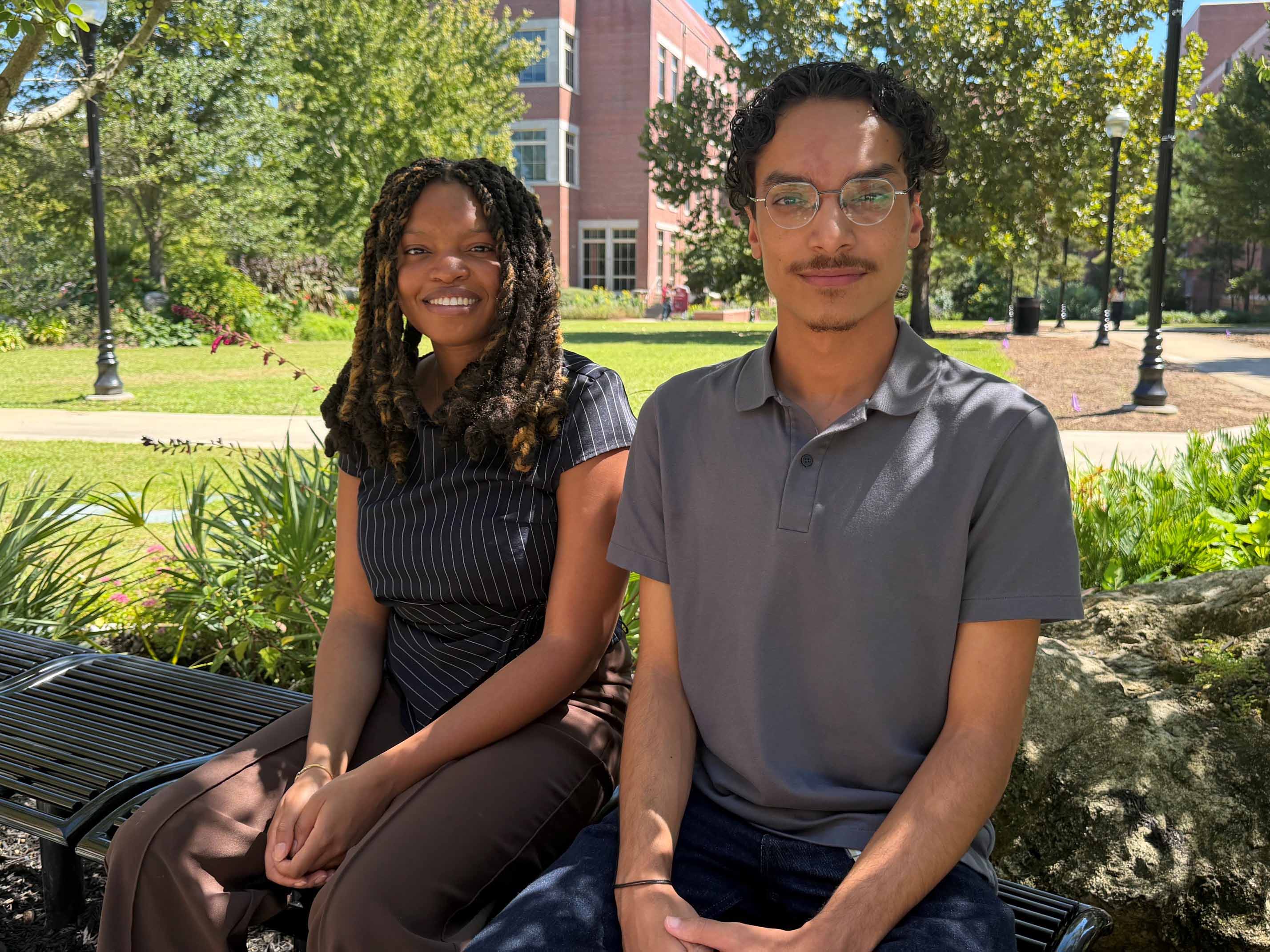
Second-year medical students Christopher Santana and Chenia Coulanges returned to the FSU College of Medicine from a six-week summer program carrying larger toolkits than they possessed prior to departure.
They were selected for the Robert A. Winn Clinical Investigator Pathway Program, gaining experience in clinical research, with a particular emphasis on ensuring all communities have access to the latest advances in medicine.
The experience provided Santana and Coulanges with new skills and perspectives about academic medicine while building their network within the medical community.
“I always knew I wanted to work in underserved populations, which the Winn CIPP really emphasizes, but I didn’t really have a clear idea of what that looked like,” said Santana, who landed at Ronald Regan UCLA Medical Center in Los Angeles. There he was paired with Ricky Savjani, M.D., Ph.D., an early-stage physician clinical investigator in radiation oncology studying the use of multilingual animated educational videos to make information about radiation therapy and its side effects more accessible to patients.
“The program showed me how physicians can combine clinical care and research to better serve underserved communities, and it really solidified my interest in pursuing clinical research as a physician.”
Coulanges carries a similar sentiment. She spent six weeks with the David M. Einhorn Center for Community Engagement through Weill Cornell Medicine in New York City, where she learned to conceptualize, design and execute clinical research studies.
“I’ve done research in the past, but I always joined an ongoing project. The Winn CIPP gave me the chance to really learn how to initiate a project,” Coulanges said. “That will really help when I find a topic in the future that I would like to pursue.”
The program aims to improve access and participation in clinical trials and community healthcare, but its immediate impact on future clinicians is transformative.
“It was an amazing experience. We were able to build networks and interact with community leaders who gave us pointers as to how to build trust with that community. And I think those were things that I wanted to bring back to Florida,” she added.
“The program gave us the opportunity to meet amazing people and have amazing mentorship that continue to serve us after the program,” Santana added.
The Winn CIPP program is designed for first- through third-year medical students, with emphasis on first-generation medical students or those from disadvantaged backgrounds. Selected participants receive a stipend to cover their travel, housing and living expenses during program.
For Santana and Coulanges, the Winn CIPP offered new experiences, new skills and new perspectives that will now guide them through their academic and medical careers.
If you are interested in applying for the program, visit: https://winnawards.org/