

PA Class of 2025 commencement celebration brings joy, humor to forefront

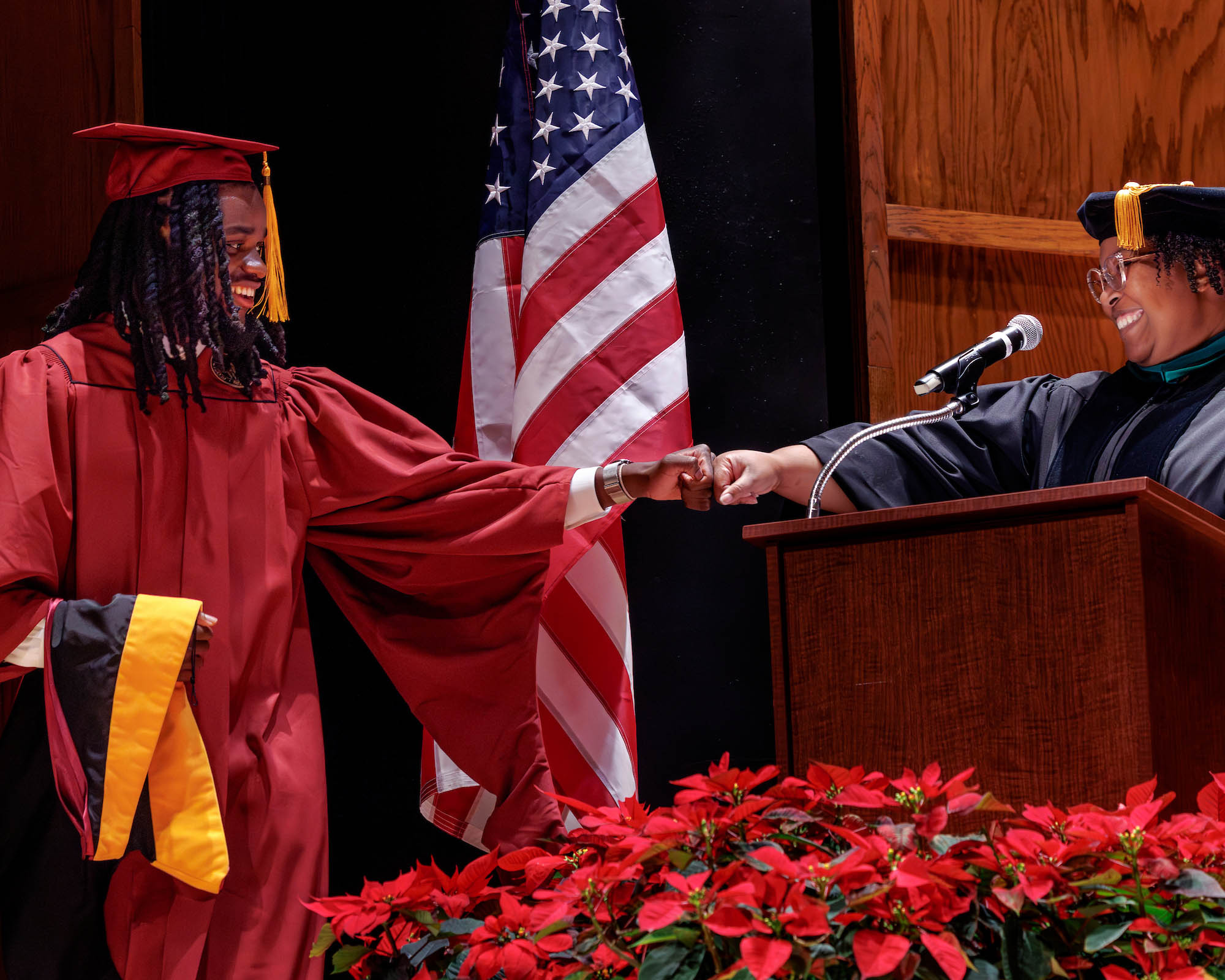
Alex Jeantinor wasn’t surrendering when he took a knee on center stage at Opperman Music Hall. He was joyfully celebrating the fruits of his labor – the completion of 27 months of intense training – during Saturday morning’s commencement ceremony for the College of Medicine’s School of Physician Assistant Practice Class of 2025.
One of 56 members of PA program’s seventh graduating class, Jeantinor was just heeding the advice College of Medicine Dean Alma Littles, M.D. offered in her opening address:
“This is a big deal and you have every right to be proud and celebrate what you have accomplished!”
After fist-bumping Tallahassee Regional Campus Dean Kerwyn Flowers, D.O., a nod to her French pronunciation of his name – Alex Zhahn-tin-or – and his Haitian heritage, Jeantinor sauntered to center stage, dropping to a knee so he could be hooded by Tallahassee Regional Campus Associate Clinical Education Director Cassandra Yusz, PA-C. Then, preening for the camera alongside Littles, he posed for a photo before exiting the stage.
“It’s still not fully like setting in for me that this is what I've been fighting to get to for the past 10 years or so,” said Jeantinor, whose on-hand supporters included parents Rosni and Marie, brothers Nietzche and Matthew, and longtime friends, Trever St. Paul and Damian Printemps. “With the PANCE [certification exam] lingering, it’s not something that my brain is fully allowing me to settle with. …
“Having your family in the audience - they're present for you to do this – is real helpful; a weight off my shoulders. But in three days, I’ll be focused up [to take the exam].”
 Saturday’s hour-long ceremony, at times tinged with humor, was minimally, a celebratory diversion.
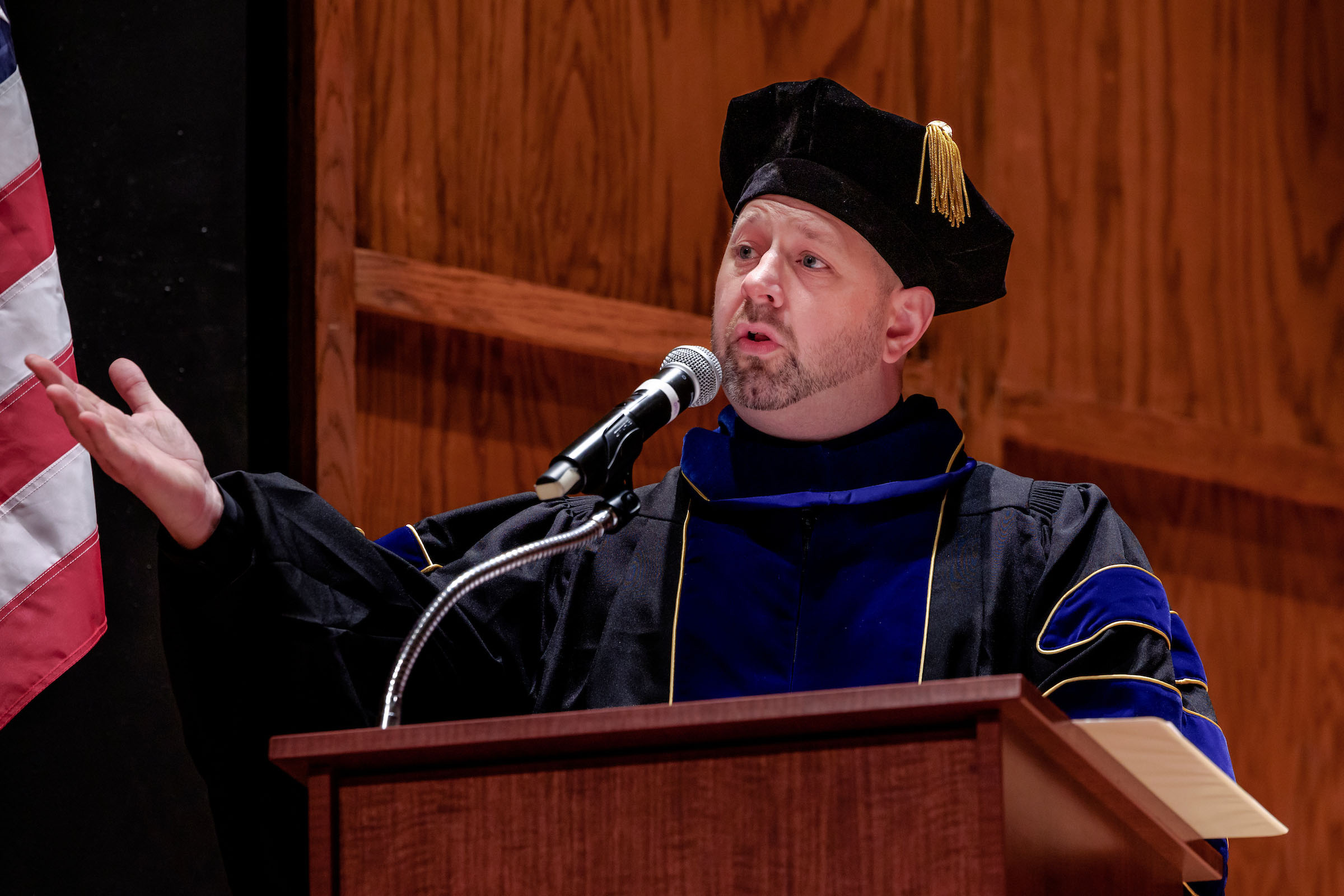
College of Medicine Associate Professor Robert Tomko Jr. Ph.D., known for dispensing equal doses of wit and wisdom while lecturing students in pharmacology, provided a similar sampling for the audience.
“This is my first time delivering a commencement address, and it feels a little weird,” Tomko said. “I’m not used to being asked to speak. I’m much more familiar with having you all trapped in my classroom for 90 minutes being forced to listen to me. … I’ve managed to condense this address down to about 73 minutes and only 57 PowerPoint slides”
After offering his congratulations, Tomko’s address focused on the timing of the graduating class’s arrival into the medical profession.
“You are entering the profession at a time when the future of medicine may seem both more exciting, but also more uncertain than ever before,” he said. “Your graduation coincides with the dawn of artificial intelligence in medicine. …The quality of care that you will be able to provide for your patients due to these advances are likely beyond our imaginations.
“Ironically, the exceptional health that these types of advances have blessed us with, coupled with the increasing complexity of modern clinical practice, has also made many Americans more skeptical and less trusting of medicine than at any time in our recent history.”
He reminded the class of the importance of staying true to the College of Medicine’s mission - being patient-centered and compassionate providers – at a time when medicine is becoming more “depersonalized.”
“All of the world’s screens and processors cannot replace the personal connection and compassion that you bring to clinical practice,” Tomko said. “An algorithm will never understand a patient’s needs in the same way a compassionate and sympathetic ear will.
Your humanity – and the relationships you build with your patients – is how you will combat the erosion of trust in medicine.”
PA program director and associate dean Benjamin Smith, DMSc, PA-C, shared some insight into the clinical training the class had collectively compiled over their final 12 months at one of the sixth regional campuses.
In total, the class completed104,160 hours in a clinical setting, which included 74,630 patient encounters. The hours and encounters took place across multiple specialties, including family medicine, pediatrics, women’s health, behavioral health, internal medicine, emergency medicine, geriatrics, surgery and selected electives.
That’s a per-student average of 1,796 hours in a clinical setting and 1,268 patient encounters.
“These numbers reflect not just time, but impact. Real lives touched. Real care delivered,” Smith said. “As you step into your careers, remember this: your education has prepared you for a future full of opportunity and responsibility.”
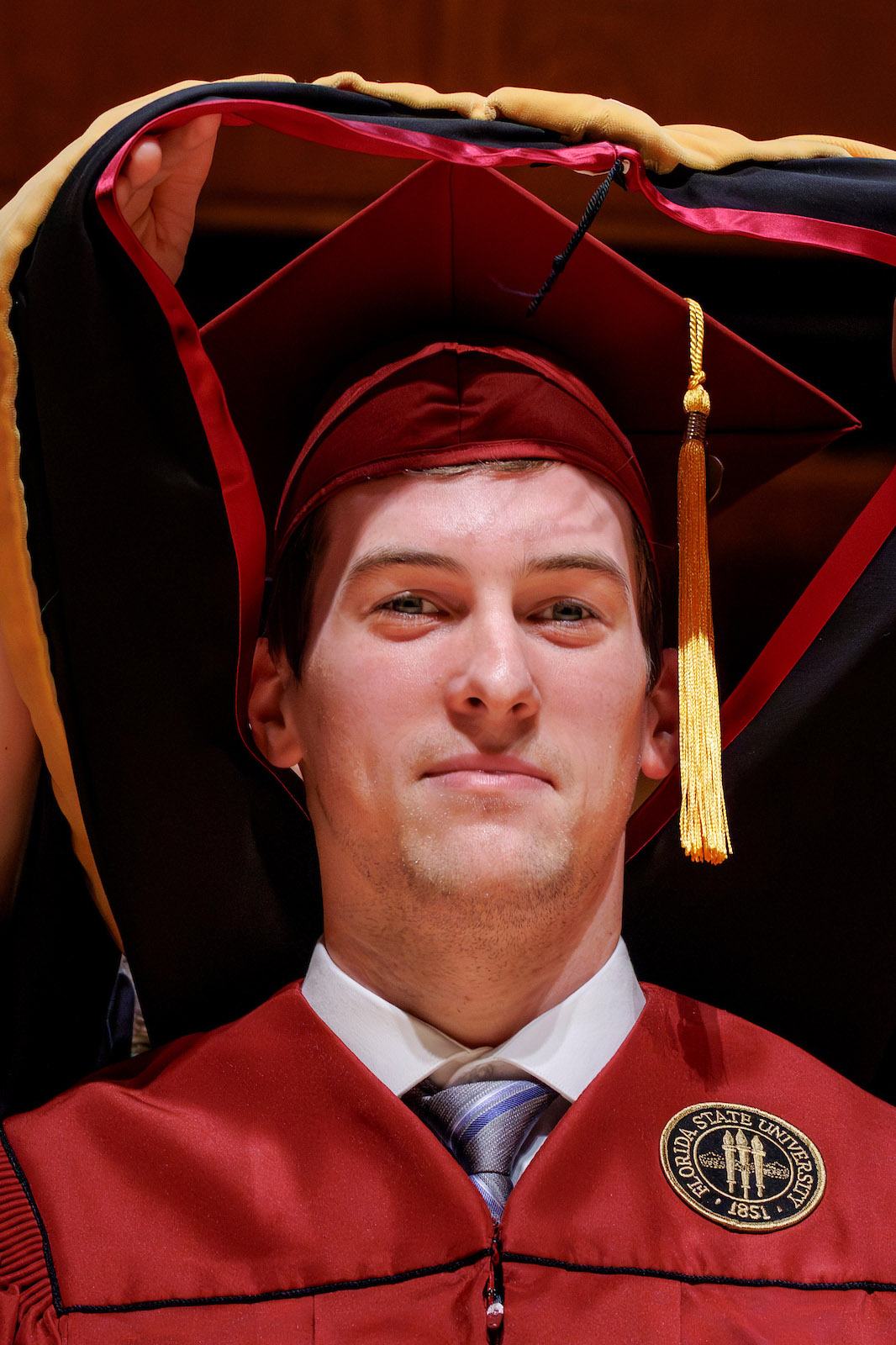 Graduate Nevada Wood’s clinical training came while living at home in Pensacola, surrounded by family.
“It was a very good experience, just being able to stay with family,” Wood said. “Like a last hurrah.”
Wood spent his undergraduate years in Tallahassee, completing his Interdisciplinary Medical Sciences degree while also competing for the Florida State swim team as a walk-on. He said the discipline required to be a successful student-athlete – Wood was a two-time ACC Championships scorer and ranks among FSU’s top 10 in the 100- and 200-meter breaststroke – translated well in the classroom.
“Learning to be efficient with whatever time you do have helped me a ton during PA school,” he said. “Also, when I was swimming there was a group of us that were all in pretty much the same classes each semester. That helped with studying and just keeping everyone kind of on track.”
Like many of his classmates, Wood will take the five-hour, 300-question Physician Assistant National Certifying Examination (PANCE) next week. A passing mark is required before a PA can practice medicine. Pending a positive outcome, he will return to Tallahassee and join the staff at Tallahassee Orthopedic Clinic, working alongside Garrison Rolle, M.D.
Emily Nennstiel is also planning to stay close to her Big Bend home. The Monticello native, who delivered the Invocation, has long had a heart for service. Her call to a career medicine came while making multiple mission trips to Belize in Central America, beginning at 15 years of age.
“There wasn't anyone else in my family in medicine,” Nennstiel said. “The only medicine I ever really came in contact with was seeing my one family medicine doctor out of two in the entire county. … So when I started going to Belize, I got this behind the curtain look of what it was like to run a clinic when you just have a couple nurses, a doctor and a trunk full of meds.
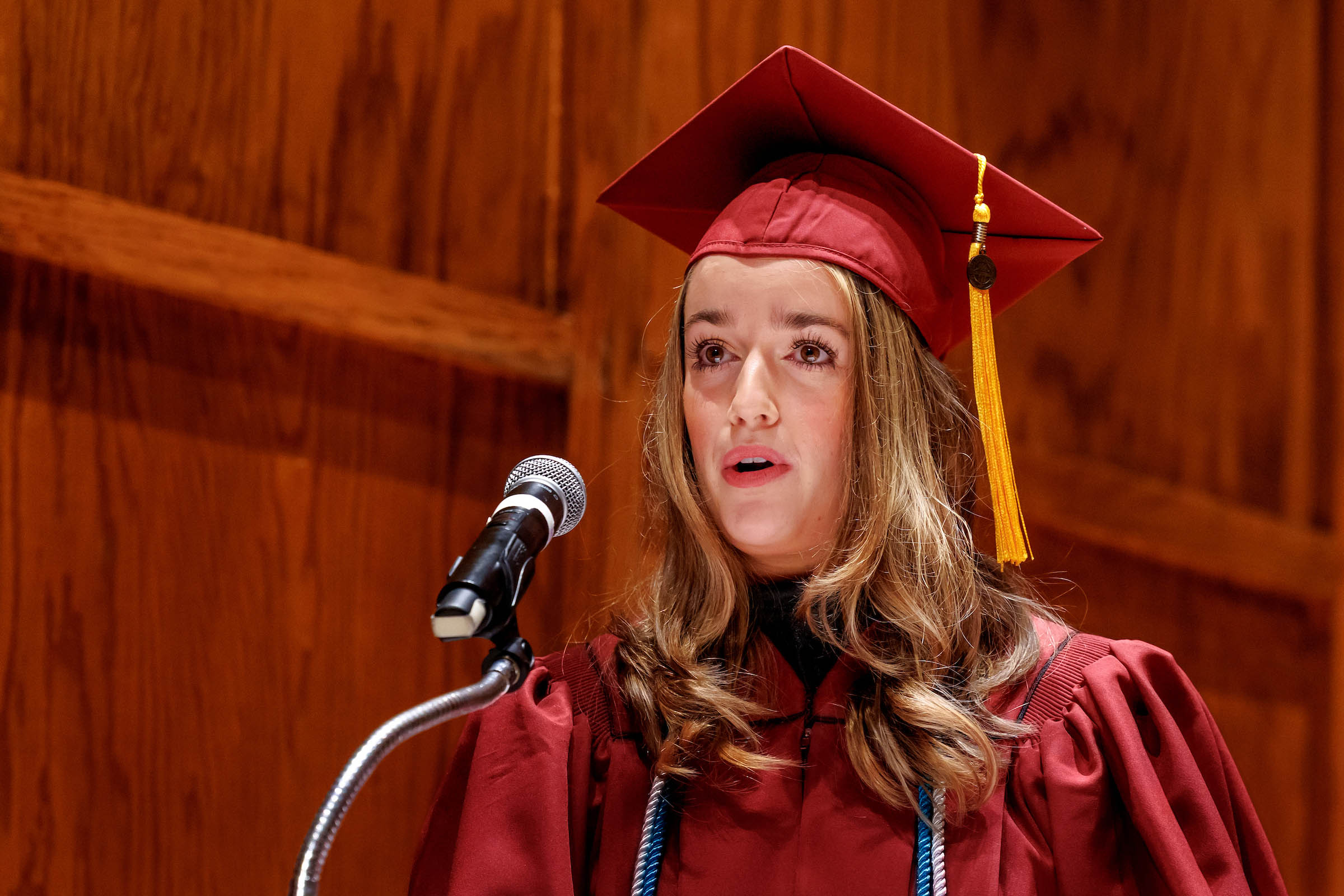 “People were lined up. They would hike two days from a further village to come and speak with this doctor. … This is what really made me want to go into medicine. I remember thinking, ‘He doesn't have to have any technology. He is just using what is in his brain and he is helping hundreds of people just today.’”
Nennstiel’s decision to pursue a PA career was further cemented as an Interdisciplinary Medical Sciences student working at TOC, alongside surgeon William Thompson and his PA.
“I saw what she got to do - the PA - and I saw what he did, and that further solidified it for me,” she said. “I want to be able to go in, take ample time with my patients, and then I want to be able to leave at the end of the day, and go home. … I also knew that I had other dreams in life. I want to be a mom. I wanted to be a wife [she married her Aucilla Christian high school sweetheart, Gavin, three years ago]. I want to be involved in my community and have free time.”
The flexibility in work hours, time with patients and movement between specialties, are frequently cited as among the most attractive aspects of a PA career.
Class president Mary Beth Brown playfully reminisced about the last “two years and four months” they shared together, including karaoke night and line dancing during orientation week, volleyball breaks in the courtyard, hot dog-eating contests and the wildly divergent personalities that set each other apart.
She closed by encouraging her “family” of classmates to take a “fast-forward” look ahead as they prepare to embark on their careers.
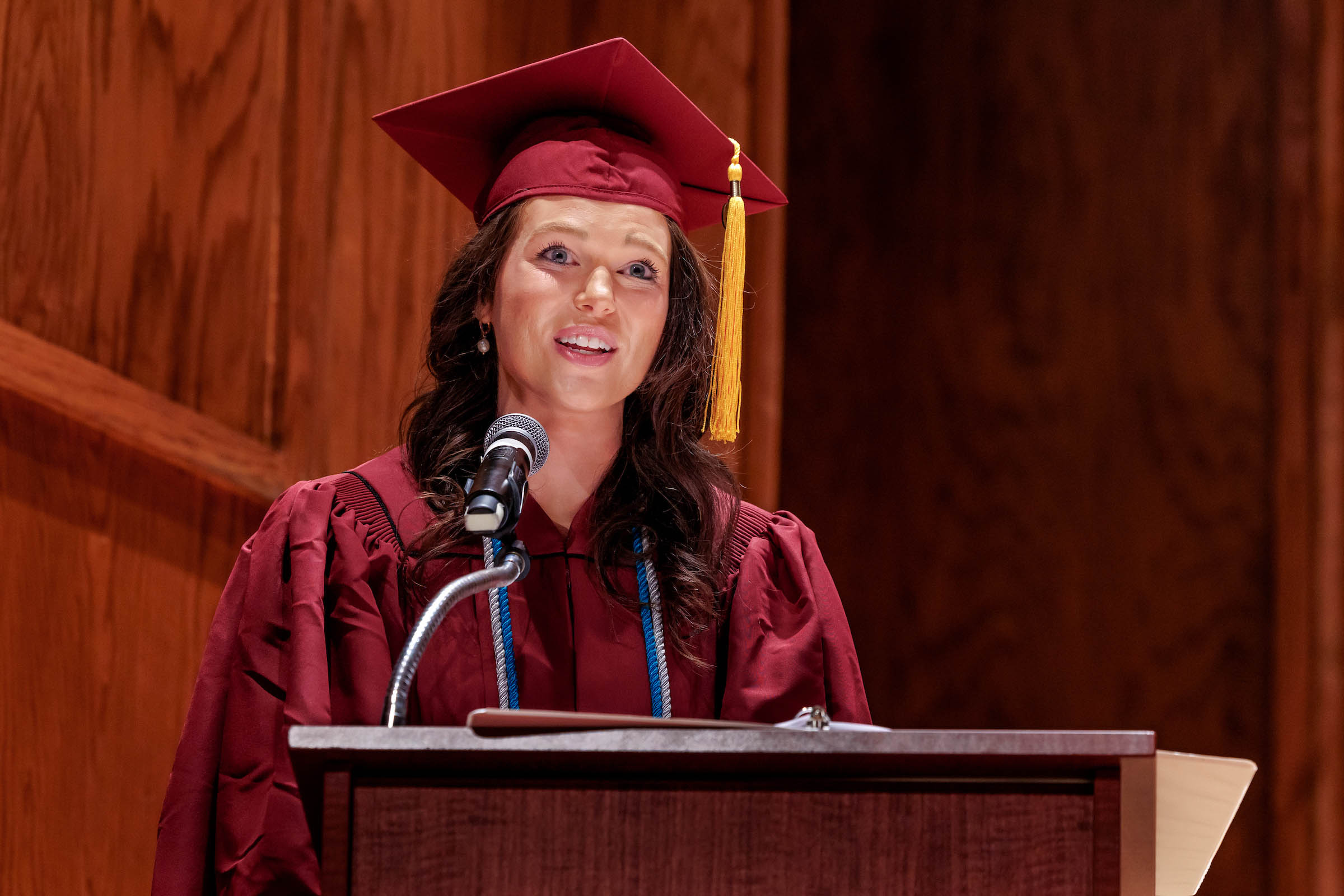 “One day we will write our last prescription. One day we will set down our stethoscopes, never to listen to a patient again. One day we will walk out the door of our facility, concluding the career we worked so hard to attain,” Brown said. “Will we be satisfied with the impact we made?
“My challenge to each of us is to live by the mantra, ‘Leave it better than you found it.’ This was taught to me by my Mama in reference to cleaning vacation rentals, but I believe it applies seamlessly to a career in medicine. … Ensure that each person in your presence is left better than you found them.”
Contact Bob Thomas at robert.thomas@med.fsu.edu