Spring 2018

May 01, 2018

Our Campus at a Glance

Oct 17, 2017

Yes, Florida State University’s College of Medicine is in Tallahassee, but it’s also here in Pensacola,
along with Fort Pierce, Orlando, Daytona Beach and Sarasota. Each of these cities (as well as
Tallahassee itself) has a regional campus.

Don’t look for a giant academic medical center, though. During their clinical third and fourth years
of medical school, our students go out into the community and learn directly from some of the
hundreds of physicians on our clerkship faculty. These one-on-one apprenticeships take place in
real-world settings — such as your doctor’s office.

As a result, by the time our students graduate, they have a distinct advantage over graduates from
most other medical schools: They’re already comfortable working with patients, and they’ve already
delivered babies, been the first assistant in surgery and acquired an abundance of other hands-on
experience. Plus, they’ve become familiar with how a community medical practice works.

The required rotations during Years 3 and 4 are emergency medicine, family medicine, advanced
family medicine, geriatrics, internal medicine, advanced internal medicine, obstetrics-gynecology,
pediatrics, psychiatry and surgery. After our students complete those rotations, they’re ready to make
a smooth path into residency training.

And with each passing year, an increasing number of our alumni — even some who’ve left the state
for residency — are returning to communities surrounding Pensacola and our other regional
campuses to put down roots and practice medicine.


ABOUT THIS REGIONAL CAMPUS (as of June 2017)

  • Third-year students now at Pensacola campus: 13
  • Fourth-year students now at Pensacola campus: 19
  • Students who’ve trained at Pensacola campus: 241
  • College of Medicine partner institutions/organizations in Pensacola area: 10
  • Physicians in Pensacola area serving as College of Medicine clerkship faculty: 270

ABOUT COLLEGE OF MEDICINE ALUMNI (as of June 2017)

  • Total alumni since 2000: 1,147
  • Completed residency training and practicing: 562
  • Practicing in Florida: 298
  • Practicing in Pensacola, Crestview, Panama City and elsewhere in Northwest Florida: 22
  • Of those 22, practicing primary care: 14
  • Of those 22, seeing primarily rural patients: 2

ABOUT THE COLLEGE OF MEDICINE IN GENERAL

  • Our principal focus is on meeting the primary-care needs of Florida, with a particular emphasis on rural, minority, elderly and other underserved populations.
  • We strive for a student body as diverse as the patients these future physicians will serve. For example, years before it’s time to apply, we reach out to promising Florida students who are minorities or belong to other groups underrepresented in medical schools.
  • We take great care in choosing our students. Grades and test scores are important, but so are
    other factors. If you’re trying to develop physicians who will serve in rural areas, for example, it makes sense to seek students who are more likely to want to live in rural areas — which often means students who grew up there.
  • Course content reflects the college’s mission. The curriculum is comprehensive, preparing students for any medical specialty and setting.
  • Problem-based and small-group learning experiences help students develop their clinical acumen and learn to work as a team.
  • The clinical training program in Years 3 and 4 extends into more than 100 hospitals, skilled nursing facilities, managed-care organizations, private clinics and other outpatient settings across the state.
  • Besides the six regional campuses, there are also rural training sites in Marianna and Immokalee.

SPRING 2018 DROP/ADD WEEK-Current FSU Students Wishing to Change Your Major into IMS

Jan 04, 2018

• The Interdisciplinary Medical Sciences (IMS) Degree Program will have Drop/Add Week Walk-In Hours from 8:00 am to 4:00 pm daily due to high student volume. Academic advisors will not be taking appointments during the week of Monday, January 8 – Thursday, January 11. Please consult the IMS Anouncements Module on the IMS Homepage for the latest information on Drop/Add procedures. We will be responding to email as time allows.

1. You can find more information about our program here. You may email imsadvising@med.fsu.edu for general information.

2. You will need to be on track with our mapping milestones to be approved for a major change.
a.To view Clinical Professions (previously known as Pre-Health Professions) academic map click here.
b.To view Community Patient Care academic map click here.
c. To view Health Management, Policy, & Information academic map click here.3. Submit our IMS Experiential Seminar Placement Form. Please click here for more information.

3. Submit our IMS Experiential Seminar Placement Form. Please click here for more information.

4. After your placement form has been reviewed by our office, you will be notified by email regarding your next steps.

SPRING 2018 DROP/ADD WEEK-Current IMS Students Drop/Add Procedures

Jan 04, 2018

• The Interdisciplinary Medical Sciences (IMS) Degree Program will have Drop/Add Week Walk-In Hours from 8:00 am to 4:00 pm daily due to high student volume. Academic advisors will not be taking appointments during the week of Monday, January 8 – Thursday, January 11. Please consult the IMS Anouncements Module on the IMS Homepage for the latest information on Drop/Add procedures. We will be responding to email as time allows.

Chemistry: https://www.chem.fsu.edu/undergrad/course-announcements.php
• ADD a Course (lecture or lab): Attend first day of class and instructor will provide information on how to be added to the course if seats become available.
• NOTE -check student central when drop/add opens, January 6- all available seats will be shown. To see more informaiton regarding the drop/add schedule please click here.


Biology: http://www.bio.fsu.edu/undergrad/advising.php
• ADD a Course (lecture or lab): Attend first day of class and instructor will provide information on how to be added to the course if seats become available.
• NOTE -check student central when drop/add opens, January 6- all available seats will be shown. To see more informaiton regarding the drop/add schedule please click here.


English and Math:
• Any student wishing to drop a Freshman Writing course (ENC 1101, ENC 2135) or a Mathematics course (MAC 1105, MAC 1140, MAC 1114, MAC 2311, MAC 2312 or MAC 2313), will need to contact the Division of Undergraduate Studies. The system will allow you to swap these courses for similar courses, but will not allow you to drop them from your schedule. If you wish to drop one of these courses during the drop/add period or during the semester, please contact the Division of Undergraduate Studies located at the stadium A3300 University Center-(850)-644-2740, www.undergrad.fsu.edu/.


IMS Seminars:
Enrollment in all of the IMS Seminars is handled by the IMS Degree Program Office. Students cannot enroll themselves into an IMS seminar. Please see below for important information regarding enrollment.

-Students needing to add an IMS Seminar for Spring 2018 will need to come in during drop/add week to complete a seminar registration form. Seats in each seminar are limited. 

-Students currently registered in a Spring 2018 IMS Seminar that have a course conflict should come in during drop/add week hours.

-NOTE: For more information regarding the IMS Seminar Series click here.

DROP/ADD WEEK-Current FSU Students Wishing to Change Your Major into IMS

Aug 25, 2017

 • The Interdisciplinary Medical Sciences (IMS) Degree Program will have Drop/Add Week Walk-In Hours from 8:00 am to 4:00 pm daily due to high student volume. Academic advisors will not be taking appointments during the week of Monday, August 28 – Friday, September 1. Please consult the IMS Anouncements Module on the IMS Homepage for the latest information on Drop/Add procedures. We will be responding to email as time allows.

1. You can find more information about our program here. You may call 644-1843 or email imsadvising@med.fsu.edu for general information.


2. You will need to be on track with our mapping milestones to be approved for a major change.
a. To view Community Patient Care academic map click here.
b. To view Health Management, Policy, & Information academic map click here.
c. To view Clinical Professions (previously known as Pre-Health Professions) academic map click here.


3. You will need to email Maribel Amwake at Maribel.Amwake@med.fsu.edu about your major change.

4. Submit our IMS Experiential Seminar Placement Form. Please click here for more information.


2016 Annual Newsletter

Jan 04, 2016

The Center recently distributed its 2016 annual newsletter. This newsletter contains: 

  • 2016 Annual Conference: Medical, Legal, and Ethical Aspects of Pain Management in Florida
  • POLST News
  • 2015 Center events
  • 2015 Annual Conference: The Future of Medical Malpractice Law in Florida
  • Retirement Research Grant Awarded to Center
  • Undergraduate Research Opportunity Program Student Melissa Villalta
  • Professor Kapp's Publications and Presentations
  • Selected Faculty Associate and Affiliate Activities
  • 2015 Student Activities
  • The Mollie and Paul Hill Student Writing Competition
  • Center Media Mentions
  • Center on Social Media

To view the newsletter, please click here.
 

Charles R. Mathews Geriatrics Scholarship Recipients' Research Published

Jan 03, 2017
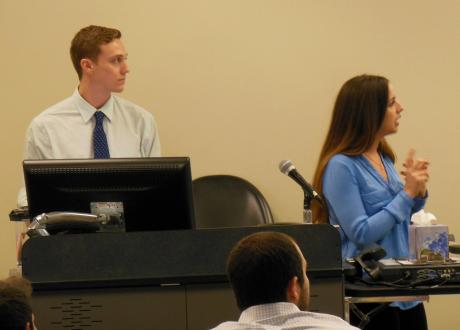
student in presentation

Through a generous donation from the late Charles R. Mathews, M.D., the Department of Geriatrics has been able to offer summer research scholarships to FSU students. In 2016, two of the recipients of this prestigious scholarship were FSU medical student Wyndham Bonett and FSU law student Katherine Perdomo.

Their research project, Assessment of Chronic Pain Curriculum in Florida Medical Schools, was advised by Center Director Marshall Kapp and assisted by Suzanne Baker, M.A. Research Program Director in the Department of Geriatrics. The results will be published in Florida Public Health Review, 2017; 14, 22-32. To view the article, click here.

On October 25, 2016, Wyndham Bonett and Katherine Perdomo presented their research at a HALO event on Prescribing Opioid Pain Medications.
 

Purchase of Illumina NovaSeq 6000

Sep 26, 2017

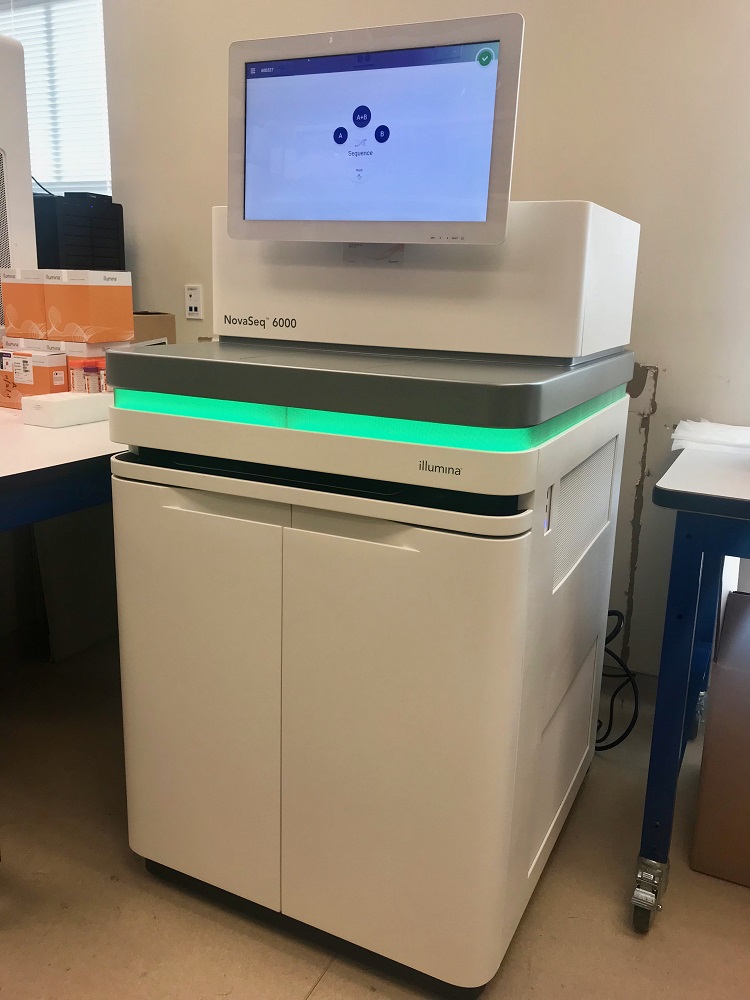
Use thisFlorida State University is now the home of the most advanced DNA sequencer in the state of Florida, allowing FSU researchers access to genome sequencing at a scale and cost never before available.
Located in the College of Medicine’s Translational Science Laboratory, the Illumina NovaSeq 6000 is the platform expected to enable the sequencing of a human genome for one hundred dollars, while producing the sequences of forty-eight human genomes in each forty hour run. To put that in perspective, COM’s previous DNA sequencer, which was state-of-the art when it was purchased five years ago, required four days to produce a human genome at a cost of approximately $3500, while the sequencing of the first human genome in the late 1990s by the publicly-funded Human Genome Project took almost fifteen years and cost nearly three billion dollars.
The decrease in cost and increase in speed for DNA sequencing is a result of massively parallel operations in modern sequencers. The devices used in the Human Genome Project could sequence approximately one hundred DNA fragments simultaneously. In contrast, the NovaSeq 6000 is capable of sequencing up to twenty billion DNA fragments at the same time.
In addition to enabling rapid and inexpensive sequencing of human genomes, the NovaSeq also allows FSU researchers to perform de novo sequencing of organisms whose genomes are unknown, to determine the extent to which each of an organism’s genes are turned on, to measure how closely related different organisms are, and to precisely determine the three dimensional structure of an organism’s chromosomes, along with many other applications.
The purchase and operation of the NovaSeq is a collaboration between many groups on campus. Funding was provided by Professor of Biology Peter Fraser, the College of Arts and Sciences, and the FSU Office of Research, in addition to the College of Medicine. The Translational Science Laboratory will operate the sequencer and will pay for its maintenance and repair.

Publications

Nov 13, 2017


FSU colleges collaborate to pave smoother pathway into health professions

Jun 23, 2016

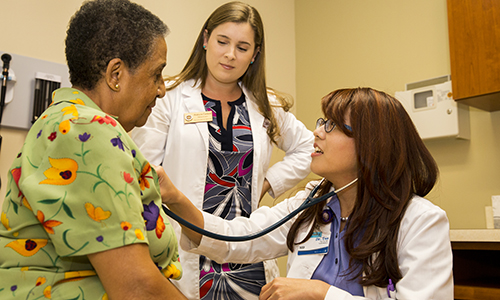
 Alumna and student w patient - Copy1Every year, thousands of new students arrive at Florida State hoping to enter a career in health care. For a variety of reasons, most of these would-be physicians, nurses, pharmacists and others wind up in different careers — and communities lose out on the health care they could have provided.

In an effort to turn that trend around, fully half of FSU’s colleges are working together to create a student-friendly pathway into the health professions. Called the Interdisciplinary Medical Sciences Program (IMS for short), it’s unlike anything else in the country — and with the provost’s blessing it’s on a super-fast track.

Students are taking part in orientation sessions this summer. The curriculum is being fine-tuned for the fall semester. And hopes are running high.

“It’s an exciting moment for Florida State,” said Provost Sally McRorie. “We will vigorously pursue this innovative approach to preparing students and helping them find jobs in medical fields. I predict we will become the destination for students from Florida who want access to the full range of health professions.”

Most of the program’s courses already exist, though some are being revised with pre-health students in mind. The biggest change is in the way the students are guided along the pathway – and in the sense that the participating colleges are all working together as program partners.

Some universities have premed programs, College of Medicine Senior Associate Dean Myra Hurt said, but they’re not as flexible, all-encompassing or student-centered as this one.

“There’s no straightforward path to figure out, ‘Do I really want to go into the health professions?’” said Hurt, who conceived this idea in 2012. “Eventually we’ll see such a difference in how students feel about the path they’re on.”

Representatives from seven colleges served on a taskforce charged with getting IMS off the ground: Arts & Sciences (Departments of Biological Science, Chemistry and Psychology); Communication and Information; Human Sciences; Medicine; Nursing; Social Sciences and Public Policy; and Social Work. In addition, students from the College of Business will be conducting case studies to determine the best way to recruit the right students as well as employers.

Universities everywhere are wrestling with the same challenge. Four years ago, Hurt helped lead a Harvard Macy Institute session where participants from around the world focused on creating an interdisciplinary path to medical school. Hurt, the driving force behind the creation of FSU’s medical school, is no stranger to big ideas. She immediately started wondering how she could adapt this one for FSU. She ran her ideas past several people but got nowhere — until McRorie became provost. “We’re going to do this,” McRorie said.

The timing was good. FSU needed to boost its total number of STEM (science, technology, engineering and math) graduates; cut the time to graduation; and increase the number of graduates getting jobs with good salaries.

Here’s a sampling of what IMS offers students:

Choice of three majors. The pathway has three branches: Pre-Professionals, including physicians, nurses, physician assistants and pharmacists; Patient Care in the Community, including social workers, patient navigators and health advocates; and Health Policy and Technology, including social scientists and health informaticists.
Core sciences for everyone. During the first two years, every IMS student will take the core sciences. “When you finish this,” said Associate Dean Helen Livingston, Hurt’s go-to curriculum planner, “you have a fundamental basis for any field in health care, wherever you go.”
Real-world experiences. Science is important, but it’s only part of the picture. So every student will have regular contact with health professionals in the community, through shadowing and seminars. They’ll get answers to key career questions: “What professions are available?” “Could I see myself doing this job?” “Hours? Income? Training required?” “What are the social and psychological components of being in health professions?”
Flexibility. In the past, students sometimes chose a narrowly defined major without all the information they needed — then wasted time and money changing their major. Sometimes they ended up with a degree but no profession. The interdisciplinary approach provides new opportunities to take electives and explore options. “For example, there are a number of College of Human Sciences courses, like child development, that someone interested in pediatrics could take,” Hurt said. “That really wasn’t an option before.”
Continual advising. Students don’t come to college equally prepared. Some get poor advising along the way. Some don’t cope well with life’s surprises. “So we hope to provide lots of guidance,” Livingston said. “Not just in an academic sense, but in terms of how they’re growing personally and professionally and helping them determine a career path.”
Team-based approach. These future health professionals will work side by side, mirroring the real world’s increasing demand for collaboration.
Hurt predicts as many as 140 students will sign up this first year. One of those pioneers is Emilie Miller. Right now she hopes to become a physician assistant focused on pediatrics, but she appreciates IMS’ array of options.

“I had planned to major in nursing as a bridge to the career path I wanted,” said Miller, who graduated in May from Tallahassee’s St. John Paul II Catholic High School, but then her mom learned about IMS. “After reading the description, it was exactly what I was looking for. I am beyond excited to be a part of something so new and creative.”

In some cases, IMS has been an opportunity for departments to carry out changes they’d already been considering.

“Chemistry is called the ‘Central Science’ because it is so strongly tied to all of the physical and biological sciences, and students in each of these majors require a solid grounding in the basic principles of chemical structure and reactivity,” said Tim Logan, chair of the Department of Chemistry and Biochemistry. “These topics are currently taught in a framework that has worked well for generations. However, there is increasing awareness that the full traditional chemistry curriculum is not necessarily needed by non-chemistry students and, in particular, by premedical students. We are trying to accommodate changes in the education needs of premedical/pre-professional students by designing these new courses.”

Judith McFetridge-Durdle, dean of the College of Nursing, particularly likes the options IMS offers her students.

“As a limited-access major, the College of Nursing must turn away hundreds of qualified applicants each year,” she said. “The IMS program will allow students who are not accepted into the Bachelor of Science in Nursing Program at the end of their sophomore year to continue on and graduate with a degree from Florida State that will prepare them for a career in another health-related field.”

Late last month, Florida Gov. Rick Scott hosted a two-day Degrees to Jobs Summit. College of Medicine Dean John P. Fogarty thinks the IMS program fits right in.

“We want our graduates to be fully prepared to get jobs in this economy,” Fogarty said. “Even during the lowest part of the recent recession, health care was still a dependable career for employment. With this program, we can make sure that our students get a great education while meeting the health-care needs of our state and nation.”

IMS is based in the College of Medicine, and Hurt and Livingston will direct it. Hurt predicts that in five years, if things go well, there may be 800 IMS students. “Eventually,” she said, “it could be a lot. It could be a whole lot.”

Learn More