

Learning with compassion
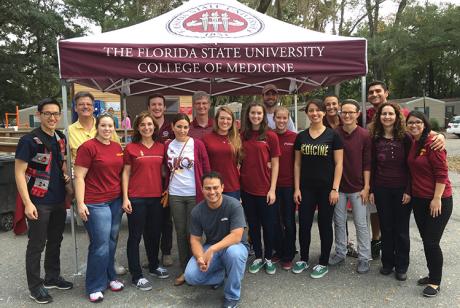
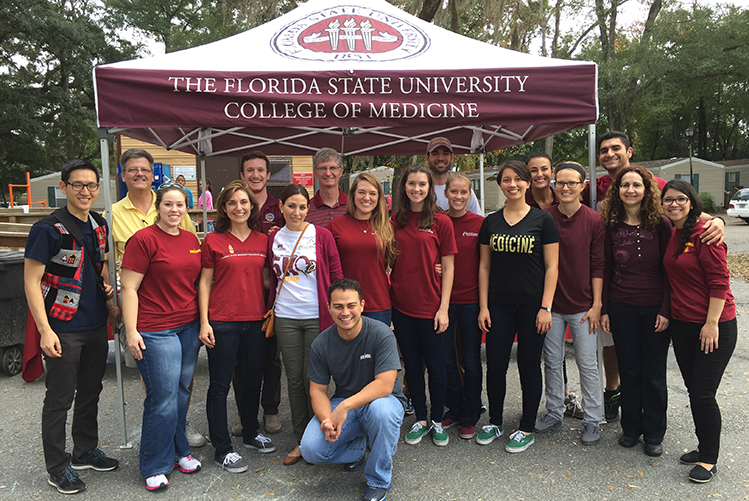
Florida State University College of Medicine students have been engaged in health-outreach activities with a variety of patient populations since the school’s opening in 2001. Now they’ve created a permanent and more expansive outlet for putting the college’s mission to work: the Chapman Community Health Program (CCHP).
The program, operating as part of the medical student organization FSUCares, was created in June to support a medically underserved population in Tallahassee and to create an enduring platform through which FSU medical students can serve their community.
“It not only continues a tradition of service, but it delves deeper by establishing a lasting relationship with a medically underserved community,” said Christie Alexander, assistant professor of family medicine and rural health at the College of Medicine and faculty advisor for the program. “It took a great deal of hard work from the students and a monetary contribution from a generous donor to bring the Chapman Community Health Program to life.”
CCHP is the College of Medicine’s first outreach program that will be involved with a local community on a long-term basis. The program also provides an additional opportunity for students to work closely with physicians who exemplify the College of Medicine’s values by volunteering their time in service of the underserved.
Most of the physicians are from the Tallahassee Memorial HealthCare Family Medicine Residency Program and the FSU Internal Medicine Residency Program at TMH.
The program operates at Maryland Oaks Crossing, a transitional housing community established by Good News Outreach that provides housing and other services to individuals and families who have experienced, or are at risk for, homelessness. The goal is to assist those people in transitioning to a more stable lifestyle.
Alexander said the medical school seeks to provide health-education and preventive-health services tailored to Maryland Oaks residents. Students, physicians and residents organize and host monthly health-screening events for the community. The screenings provide an opportunity for the CCHP volunteers to develop an understanding of the community’s needs.
The physicians and residents also help students identify Maryland Oaks residents who need additional medical attention. Those individuals are referred to one of the residency programs, or to Neighborhood Medical Center.
“The program provides an opportunity to work on the preventive side of medicine,” said second-year medical student Susanna Zorn, who helped write the grant application and get the program started.
“During preceptorships with community doctors, medical students see the challenges of treating chronic medical problems, including finding ways to treat the underlying issues. At Maryland Oaks we are in the process of trying to develop relationships through a program that educates and motivates the residents to achieve their health-care goals through prevention.”
CCHP also opens up an avenue for other medical students and student organizations to get involved.
“FSU attracts many well-rounded and talented people, and we have been able to utilize those talents – including photography, art, agricultural skills and fitness – to help implement holistic health programs," Zorn said.
The medical student organization Allopathic Integrative Medicine Group, for example, worked with CCHP and the residents of Maryland Oaks to build a community garden. In accordance with the goals of long-term service and care, CCHP has followed through with that project.
Not only are the students planning nutritional counseling and cooking classes, but also they have written and illustrated a health-conscious cookbook that uses ingredients from the garden, a copy of which will be given to each family.
“We originally thought about providing more advanced medical care to the people of Maryland Oaks,” Zorn said. “But I believe the most significant impact we can make is through education and prevention – tobacco cessation programs, nutrition education, exercise programs, stress management skills, and other mental health services.”
Alexander, a family physician, is thrilled with how quickly the program has grown.
“I am inspired by the countless hours the students have put in to make this a success,” she said. “I think the community members have responded quickly because they can see and feel how much the students truly care about them.
“It is exciting to see such a rewarding project take hold and to watch the students, medical residents, and local agencies come together to take care of this community.”
(Cover photo by first-year medical student Juno Lee)